
Call us
301-363-4651 (Available 9 a.m. to 5 p.m. CST from Monday to Friday)

| Code | CSB-RA097946A0HU |
| Size | US$210 |
| Order now | |
| Image |
|
| Have Questions? | Leave a Message or Start an on-line Chat |
| Application | Recommended Dilution |
|---|---|
| WB | 1:500-1:5000 |
| IHC | 1:50-1:200 |
| IF | 1:50-1:200 |
| FC | 1:50-1:200 |
VPS35 serves as a core component of the retromer complex, a critical machinery responsible for retrograde transport of cargo proteins from endosomes to the trans-Golgi network. This protein has garnered significant research attention due to its established links to Parkinson's disease, where mutations in VPS35 represent one of the few confirmed causes of autosomal dominant familial parkinsonism. Beyond neurodegeneration, VPS35 plays essential roles in receptor recycling, autophagy regulation, and mitochondrial dynamics, making it a compelling target across multiple research disciplines.
This recombinant rabbit monoclonal antibody, clone 7G12, offers the reproducibility and consistency that demanding research applications require. Generated against a synthetic peptide derived from human VPS35, the antibody is produced using recombinant technology, ensuring sequence-defined specificity and eliminating the lot-to-lot variability that can compromise longitudinal studies. Affinity chromatography purification further enhances performance by removing non-specific immunoglobulins.
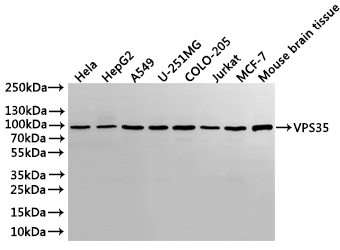
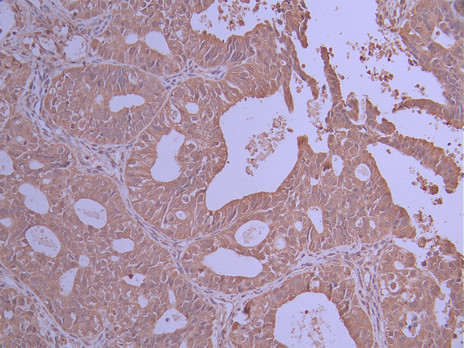
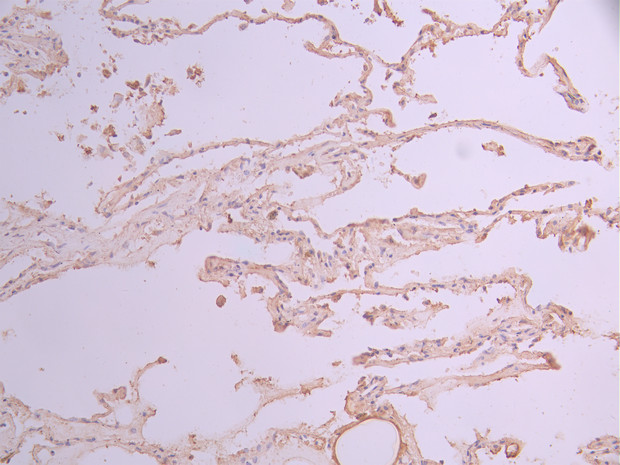
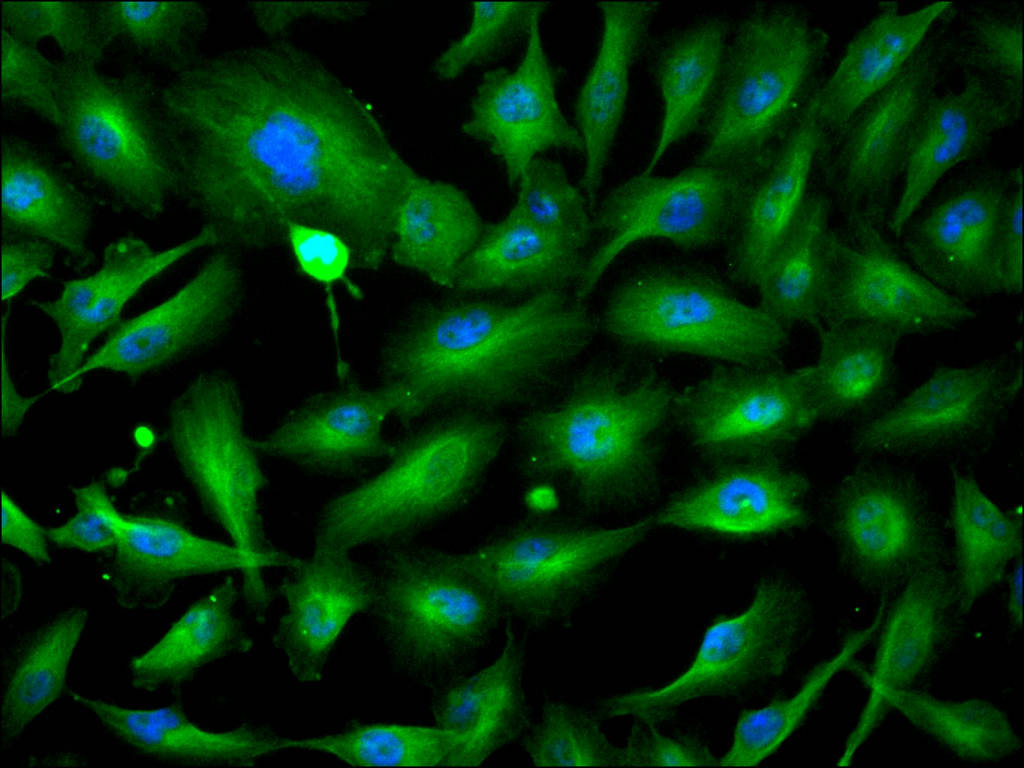
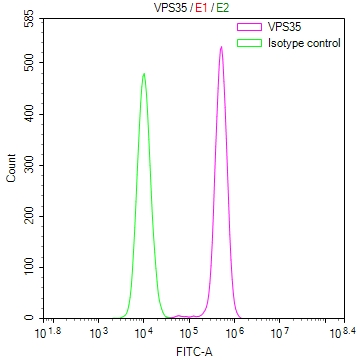
Validation studies demonstrate robust detection across diverse experimental platforms. Western blot analysis reveals a clean band at the expected 92 kDa molecular weight across multiple human cell lines including HeLa, HepG2, A549, U-251MG, COLO-205, Jurkat, and MCF-7, as well as mouse brain tissue lysate, confirming cross-species reactivity. Immunohistochemistry staining has been validated in paraffin-embedded human ovarian cancer and lung tissue sections using citrate buffer antigen retrieval. Immunofluorescence studies in U-251MG cells show clear cytoplasmic localization patterns, while flow cytometry analysis in Raji cells demonstrates distinct positive population shifts compared to isotype controls.
This antibody provides researchers investigating retromer biology, neurodegenerative disease mechanisms, or endosomal trafficking pathways with a reliable tool validated across multiple complementary techniques.
There are currently no reviews for this product.





