
Call us
301-363-4651 (Available 9 a.m. to 5 p.m. CST from Monday to Friday)

| Code | CSB-RA621777MA1HU |
| Size | $49.9 |
| Order now | |
| Promotion |

|
| Image |
|
| Have Questions? | Leave a Message or Start an on-line Chat |
| Application | Recommended Dilution |
|---|---|
| IHC | 1:50-1:200 |
WFDC2, also known as Human Epididymal Protein 4 (HE4), is a secreted glycoprotein belonging to the whey acidic protein family characterized by its four-disulfide core domain structure. Originally identified in epididymal tissue, WFDC2 has gained substantial research interest due to its elevated expression in various malignancies, particularly ovarian and endometrial cancers, where it serves as a clinically relevant biomarker. The protein's putative protease inhibitor function and its differential expression patterns make it a valuable target for researchers investigating tumor biology, biomarker development, and reproductive tissue physiology.
This recombinant monoclonal antibody, clone 19B12, offers the reproducibility and consistency that demanding research applications require. Produced using recombinant technology with a defined sequence, this antibody eliminates the lot-to-lot variability often encountered with traditional hybridoma-derived reagents, ensuring your experimental results remain comparable across studies and over time. The human IgG1 isotype format and affinity-chromatography purification deliver a high-purity reagent suitable for sensitive detection methods.
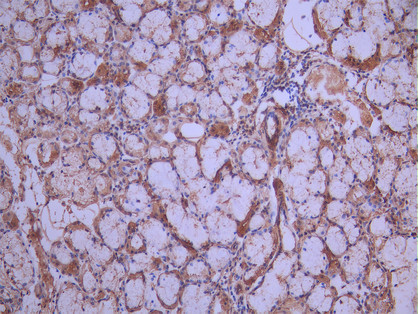
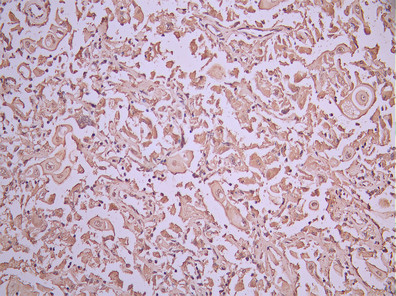
Validation studies demonstrate reliable performance in immunohistochemistry applications on human tissues. Testing in paraffin-embedded human salivary gland tissue and cervical cancer specimens at 1:50 dilution using citrate buffer antigen retrieval confirms specific staining patterns, with recommended working dilutions ranging from 1:50 to 1:200 depending on your experimental system. The antibody is also validated for ELISA applications, providing flexibility across different experimental workflows.
Whether you are investigating WFDC2 as a diagnostic marker, exploring its role in epithelial biology, or characterizing its expression in pathological specimens, this recombinant antibody provides a dependable tool for advancing your research objectives.
There are currently no reviews for this product.





