
Call us
301-363-4651 (Available 9 a.m. to 5 p.m. CST from Monday to Friday)

| Code | CSB-RA878859MA1HU |
| Size | $49.9 |
| Order now | |
| Promotion |

|
| Image |
|
| Have Questions? | Leave a Message or Start an on-line Chat |
| Application | Recommended Dilution |
|---|---|
| IHC | 1:20-1:200 |
| FC | 1:20-1:200 |
XPNPEP1, also known as X-prolyl aminopeptidase 1 or cytosolic aminopeptidase P, is a metalloprotease that specifically cleaves N-terminal amino acids from peptides containing proline in the penultimate position. This enzymatic activity positions XPNPEP1 as a key regulator in the metabolism of bioactive peptides, including those involved in cardiovascular function and inflammatory responses. Its involvement in peptide processing pathways makes it a relevant target for researchers investigating cancer biology, metabolic regulation, and signal transduction mechanisms.
This recombinant monoclonal antibody, clone 4D12, offers the reproducibility and consistency that demanding experimental workflows require. Generated against recombinant human XPNPEP1 protein and produced using recombinant technology, this antibody provides sequence-defined specificity with minimal lot-to-lot variation, ensuring that your results remain comparable across extended studies and collaborative projects.
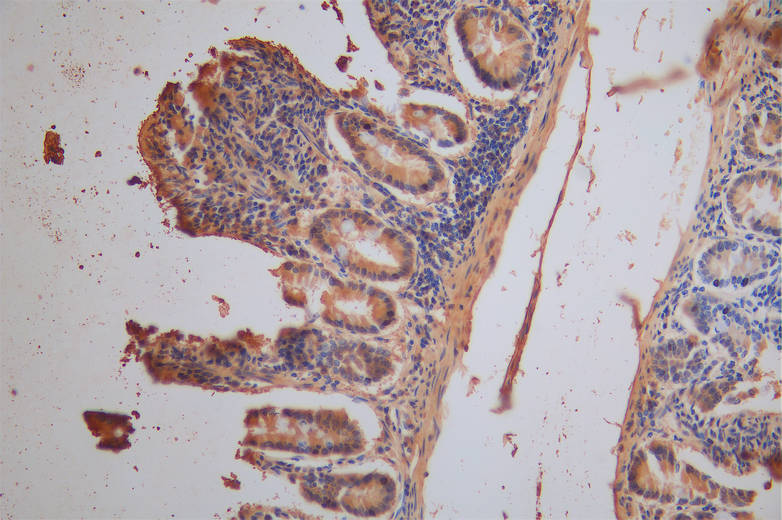
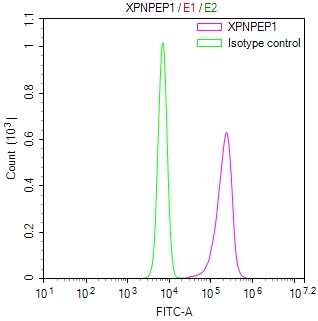
Validation studies demonstrate reliable performance across multiple applications. Immunohistochemistry testing in paraffin-embedded human small intestine tissue shows clear target detection when used at dilutions between 1:20 and 1:200, with antigen retrieval performed using citrate buffer at pH 6.0. Flow cytometry analysis using JK cells confirms intracellular detection capability, with the antibody producing a distinct positive shift compared to isotype control when cells are fixed and permeabilized prior to staining.
The unconjugated format provides flexibility for researchers to pair this antibody with their preferred secondary detection systems. Whether you are mapping XPNPEP1 expression patterns in tissue sections or quantifying protein levels in cell populations, this antibody supports investigations into peptide metabolism and its connections to disease processes.
There are currently no reviews for this product.





