
Call us
301-363-4651 (Available 9 a.m. to 5 p.m. CST from Monday to Friday)

CD74 is the classic chaperone protein of major histocompatibility complex class II (MHC II) molecules and plays a key role in antigen presentation and adaptive immunity. Recent studies have shown that CD74 is also an important receptor for macrophage migration inhibitory factor (MIF), participating in multiple non-classical biological processes including inflammation, immune regulation, cell proliferation and tumor progression. This article systematically reviews the molecular characteristics, classical and non-classical mechanisms of action, key signaling pathways of CD74, and its role in malignant tumors, autoimmune diseases, and inflammatory diseases. Current evidence indicates that CD74 is not only involved in tumorigenesis, immune suppression, and drug resistance formation, but also related to the diagnosis and prognosis evaluation of multiple diseases. Targeted intervention around CD74, particularly antibody-drug conjugates (ADCs) and MIF-CD74 axis inhibitors, has shown considerable translational potential. Although the field still faces challenges such as complex mechanisms, isoform functional differences, and insufficient clinical stratification, with the development of single-cell sequencing, multi-omics analysis, and precision therapeutic strategies, CD74 is expected to become an important target in the treatment of inflammation, autoimmune diseases, and tumors.
2. Molecular Characteristics and Classical Functions of CD74
3. Non-classical Functions and Signaling Pathways of CD74
CD74, also known as the invariant chain (Ii), is a key chaperone protein for MHC class II molecules and plays a fundamental role in the antigen presentation process. By binding to MHC class II molecules, it prevents premature binding of endogenous peptides and guides the complex into antigen presentation-related intracellular compartments, ultimately promoting exogenous peptide loading and CD4+ T cell response initiation. Traditionally, CD74 has been regarded as a molecule necessary for maintaining MHC class II maturation, transport, and antigen presentation.
With deeper research, the function of CD74 is no longer limited to antigen presentation. Studies have shown that CD74 is also a high-affinity receptor for MIF, mediating cell proliferation, migration, survival, and inflammatory cytokine release, thereby participating in innate immunity, adaptive immunity, inflammatory responses, autoimmune diseases, and tumor microenvironment regulation [2]. This dual identity makes CD74 an important hub connecting antigen presentation pathways with inflammatory/proliferative signaling pathways, and also makes it a high-interest target in basic research and clinical translation.
Therefore, systematically sorting out the molecular characteristics, mechanism of action, disease associations, and drug development progress of CD74 helps to more comprehensively understand its biological significance and provides a theoretical basis for subsequent precise intervention strategies.
CD74 is a type II transmembrane glycoprotein that contains a short cytoplasmic region, a transmembrane region, and a large extracellular region [1]. Its extracellular region contains CLIP (Class II-associated invariant chain peptide)-related fragments, which play a key role in MHC II antigen presentation and are also important binding sites for MIF [2]. CD74 exists in multiple isoforms, such as the p35 isoform, and different isoforms may have differences in cellular localization and function [3].
Under normal physiological conditions, CD74 is mainly expressed on various immune cells, including B cell compartments and thymic medullary cells [1, 4]. In human CD4+ T cells, CD74 is mainly located intracellularly in the resting state, and its expression is upregulated after activation, and can be detected on the cell surface [2]. This characteristic suggests that CD74 is not only involved in classical antigen presentation, but may also be related to activated T cell migration and inflammatory responses [2].
In addition to normal immune cells, CD74 is also highly expressed in various tumors. For example, in multiple myeloma, CD74 mRNA can be detected in almost all newly diagnosed patients' CD138+ plasma cells [5]; CD74 also has a high expression frequency in various lymphomas, including Hodgkin lymphoma, B-cell lymphoma, extranodal NK/T-cell lymphoma, and mature T-cell lymphoma [4]. This widespread expression makes it a potential therapeutic target [5, 6].
CD74 plays a core chaperone role in the biosynthesis and antigen presentation pathway of MHC class II molecules. Its main functions include stabilizing newly synthesized MHC class II molecules, preventing endogenous peptides from prematurely occupying the peptide-binding groove in the endoplasmic reticulum, guiding the MHC II-CD74 complex into endosome/lysosome compartments, and promoting CLIP dissociation and exogenous peptide loading under subsequent protease cleavage and HLA-DM or H2-M mediation.
This process is crucial for exogenous antigen presentation and directly affects whether helper T cells can recognize antigens and initiate adaptive immune responses. Studies have shown that expression of humanized invariant chain can enhance the expression of MHC class II molecules in thymic epithelial cells, increase the number of mature B cells in the spleen, and improve antigen presentation efficiency [1]. In addition, similar to MHC class II gene expression, CD74 is strictly regulated by CIITA; for example, IL-27 can induce the expression of MHC II and CD74 in intestinal epithelial cells through the STAT1/IRF1/CIITA axis, further indicating that CD74 is a key component of the antigen presentation network.
In addition to the classical chaperone function, CD74 is also a high-affinity receptor for MIF, which plays an important role in inflammation, immune regulation, and tumor progression [2]. MIF and its superfamily members trigger multiple cellular responses by binding to CD74. In acute lung injury, CD74 is expressed on the surface of lung macrophages, and the increase of its soluble form sCD74 is also related to the severity and prognosis of lung injury [7]. These findings suggest that the MIF-CD74 axis is not only an important regulatory pathway for inflammatory responses, but may also serve as a disease marker and intervention target.
After activation of the MIF-CD74 axis, multiple classic signaling networks can be initiated, including ERK, PI3K/AKT, mTOR, JAK/STAT, and NF-κB. Studies have shown that in lung adenocarcinoma, the MIF-CD74 interaction between tumor cells and macrophages is enhanced, and MIF expression is related to patient overall survival [8]. In RUNX1-related familial platelet disease, both CD74 and MIF are upregulated, forming a positive feedback cycle of inflammation and pro-survival signaling [9]. In ADPKD, CD74 can also promote MIF expression, further aggravating cyst growth and renal fibrosis [10].
At the functional level, the MIF-CD74 axis can integrate inflammation, survival, and tissue remodeling signals. Studies in the EAE model have shown that blocking MIF-CD74 interaction can inhibit ERK activation, reduce inflammation, and promote myelin repair [12]. In FPD, MIF-CD74 signaling upregulates the PI3K/mTOR and JAK pathways, promoting abnormal hematopoiesis and inflammation amplification [9]. In intestinal fibrosis, this axis can also activate fibroblasts by promoting STAT3 phosphorylation and IL-22 expression [14]. These results indicate that CD74 is not only a receptor for MIF, but also an integration node for multiple inflammatory and proliferative signaling pathways.
The pathogenic role of CD74 does not completely depend on MIF. Studies have shown that in ADPKD, CD74 can act as a transcriptional regulator, directly binding to the promoters of fibrosis markers such as collagen I, fibronectin, and α-SMA, promoting their expression [10]. In addition, CD74 can also regulate MIF autotranscription, forming a further amplified positive feedback loop [10]. This suggests that CD74 may also directly participate in tissue remodeling and fibrosis processes through intracellular regulatory mechanisms.
CD74 is also widely involved in cross-regulation with other signaling pathways. For example, in ADPKD, the MIF-CD74 axis can cooperate with the TGF-β/Smad3 pathway to promote renal interstitial fibrosis [10]; in activated CD4+ T cells, CD74 can form a heterologous complex with CXCR4, participating in MIF-induced T cell migration [2]. In addition, the CD74-NRG1 fusion protein can bind ERBB3 and drive ERBB2:ERBB3 heterodimerization, thereby promoting tumorigenesis [16]. These phenomena indicate that CD74 does not function in isolation, but interacts with multiple key pathways in complex signaling networks, thereby determining biological effects in different disease contexts.
CD74 has multiple roles in malignant tumors, including promoting tumor cell survival, participating in tumor microenvironment shaping, driving fusion gene-related tumorigenesis, and mediating drug resistance. Its expression is particularly widespread in hematological malignancies, and high expression can be seen in Hodgkin lymphoma, B-cell lymphoma, extranodal NK/T-cell lymphoma, mature T-cell lymphoma, and plasma cell myeloma [4]. In multiple myeloma, CD74 is almost ubiquitously expressed, providing a clear basis for targeted therapy [5, 21].
In solid tumors, CD74 is also of great significance. For example, in pancreatic ductal adenocarcinoma, CD74 knockdown can inhibit tumor cell proliferation, migration, and invasion, and reduce S100A8/S100A9 secretion, thereby affecting the pro-inflammatory tumor microenvironment [17]. In lung cancer and pancreatic cancer, CD74-NRG1 fusion is an important carcinogenic event that can activate ERBB2:ERBB3 signaling and drive tumor progression [16]. In addition, in ROS1 or ALK fusion-positive tumors, upregulation of CD74 is also associated with TKI resistance, suggesting that it is involved in the maintenance of drug-resistant cells and tumor adaptive evolution.
At the tumor microenvironment level, the MIF-CD74 axis is considered an important immunosuppressive mechanism. In cervical cancer, upregulation of CD74 restricts the phagocytic function of tumor-associated macrophages and promotes M2 polarization [25]; in LUAD, MIF-CD74-related immunosuppressive features are significantly associated with poor survival [8]. On the other hand, high CD74 expression is associated with a more "inflammatory" immune microenvironment and better response to PD-1/CTLA-4 bispecific therapy in some solid tumors [27]. This suggests that the role of CD74 in tumor immunity has obvious context dependence.
CD74 also plays an important role in various autoimmune and inflammatory diseases. In ALI/ARDS, elevated sCD74 levels are associated with increased lung permeability, increased inflammation, and poor prognosis [7]. in the multiple sclerosis model EAE, blocking the MIF-CD74 axis can reduce inflammation, promote myelin repair, and improve nerve function [12, 28, 29]. In experimental autoimmune uveitis, Cd74high Ccl5high microglia have been identified as a pro-inflammatory subset, and blocking Cd74 or Ccl5 can reduce disease phenotype [30].
In addition, in ankylosing spondylitis, upregulation of anti-CD74/CLIP autoantibodies and B cell-related activation pathways suggests that CD74 is involved in abnormal B cell immune responses [31]. In inflammatory bowel disease-related fibrosis, MIF-CD74 signaling promotes intestinal fibrosis progression by upregulating IL-22 expression in ILC3 and enhancing STAT3 activation [14]. These results indicate that CD74 has widespread roles in inflammation amplification, immune cell dysfunction, and tissue damage.
Currently, drug development targeting CD74 is diversifying, encompassing monoclonal antibodies, antibody-drug conjugates (ADCs), antisense oligonucleotides (ASOs), and gene therapies, among other modalities. The indications cover autoimmune diseases (e.g., systemic lupus erythematosus, multiple sclerosis), hematologic malignancies, cachexia, and Alzheimer's disease. Regarding the development stage, most projects are in the preclinical stage, with a few having entered Phase 1 and Phase 2 clinical trials. Selected pipelines are listed in the table below:
| Drug Name | Target | Drug Type | Indications | Institutions | Highest Development Phase |
|---|---|---|---|---|---|
| Milatuzumab | CD74 | Monoclonal Antibody | Systemic Lupus Erythematosus | Immunomedics, Inc. | Phase 2 |
| Bezetabart debotansine | CD74 x Tubulin | ADC | Hematologic Malignancy | Sutro Biopharma, Inc.; CanBridge Pharmaceutical Technology (Shanghai) Co., Ltd. | Phase 1 |
| Bud-ADC | CD74 | ADC | Systemic Lupus Erythematosus | Chinese Academy of Sciences | Preclinical |
| THOR-213 | CD74 x MIF | ASO | Cachexia | Thor Therapeutics Inc. | Preclinical |
| S-227928 | CD74 x Mcl-1 | ADC | Acute Myeloid Leukemia; Other Hematologic Malignancies | Institut de Recherches Servier SAS; Novartis Institutes for Biomedical Research, Inc.; SARL Technologie Servier | Preclinical |
| SY2026 | CD74 | Antibody | Tumors | Shanghai Xunyao Biotechnology Co., Ltd. | Preclinical |
| AAV-CD74 gene therapy (University of Nebraska Medical Center) | CD74 | Adeno-associated virus gene therapy | Alzheimer's Disease | uniQure NV; UNeMed Corp. | Preclinical |
| DRalpha1-hMOG-35-55 (Virogenomics Biodevelopment) | CD74 x HLA class II antigen x MIF | Recombinant Protein | Multiple Sclerosis | Virogenomics, Inc. | Preclinical |
(Data as of March 19, 2026, sourced from Synapse)
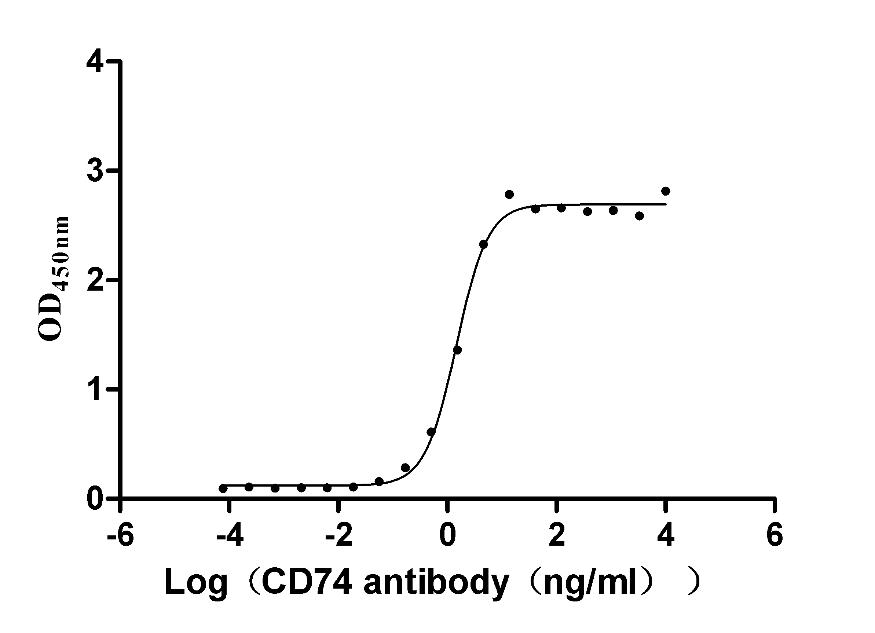
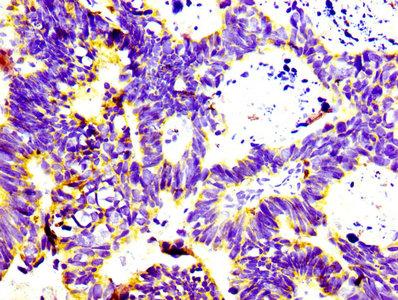
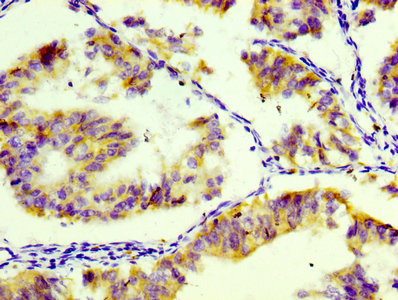
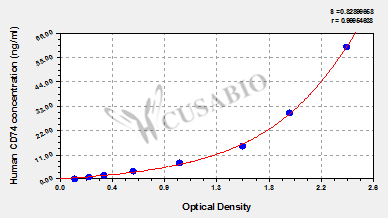
CD74 is an important molecule connecting classical antigen presentation function with non-classical inflammation/proliferation signals. As a chaperone protein for MHC class II molecules, it plays a fundamental role in adaptive immunity; as a MIF receptor and signaling regulatory node, it is widely involved in inflammation, autoimmunity, fibrosis, and tumor progression. Current evidence indicates that CD74 is not only an important biomarker for multiple diseases, but also has high targeted therapeutic potential. CUSABIO provides CD74 recombinant proteins, antibodies, and ELISA kits to support your research on related mechanisms and targeted drug development.
● CD74 Recombinant Proteins
-SDS.jpg)
-AC1.jpg)
● CD74 Antibodies
● CD74 ELISA Kits
References
[1] L. Romero-Castillo, Taotao Li, Nhu-Nguyen Do, O. Sareila, Bingze Xu, Viktoria Hennings, Zhongwei Xu, Carolin Svensson, Ana Oliveira-Coelho, Zeynep Sener, V. Urbonaviciute, O. Ekwall, Harald Burkhardt, Rikard Holmdahl. (2024). Human MHC Class II and Invariant Chain Knock‐in Mice Mimic Rheumatoid Arthritis with Allele Restriction in Immune Response and Arthritis Association.
[2] Lin Zhang, Iris Woltering, Mathias Holzner, Markus Brandhofer, Carl-Christian Schaefer, Genta Bushati, Simon Ebert, Bishan Yang, Maximilian Muenchhoff, J. Hellmuth, C. Scherer, Christian Wichmann, David Effinger, Max Hübner, O. El Bounkari, Patrick Scheiermann, J. Bernhagen, A. Hoffmann. (2024). CD74 is a functional MIF receptor on activated CD4+ T cells.
[3] H. Bergmann. (2012). Business as usual: the p35 isoform of human CD74 retains function in antigen presentation.
[4] Shuchun Zhao, A. Molina, Abigail S. Yu, J. Hanson, Harry Cheung, Xiaofan Li, Y. Natkunam. (2018). High frequency of CD74 expression in lymphomas: implications for targeted therapy using a novel anti‐CD74-drug conjugate.
[5] C. Abrahams, Xiaofan Li, M. Embry, Abigail S. Yu, Stellanie Krimm, S. Krueger, Nancy Y. Greenland, K. Wen, C. Jones, V. Dealmeida, W. Solis, S. Matheny, T. Kline, A. Yam, R. Stafford, Arun P. Wiita, T. Hallam, M. Lupher, A. Molina. (2018). Targeting CD74 in multiple myeloma with the novel, site-specific antibody-drug conjugate STRO-001.
[6] Xiaofan Li, C. Abrahams, Abigail S. Yu, M. Embry, R. Henningsen, V. Dealmeida, S. Matheny, T. Kline, A. Yam, R. Stafford, T. Hallam, M. Lupher, Arturo Molina. (2023). Targeting CD74 in B-cell non-Hodgkin lymphoma with the antibody-drug conjugate STRO-001.
[7] Guosheng Wu, Yu Sun, Kangan Wang, Zhengli Chen, Xingtong Wang, Fei Chang, Ting Li, P. Feng, Z. Xia. (2016). Relationship between elevated soluble CD74 and severity of experimental and clinical ALI/ARDS.
[8] Rossin Erbe, M. Stein, Tim A. Rand, J. Guinney. (2024). Abstract 2281: A tumor-intrinsic signature involving immunosuppression via MIF-CD74 signaling is associated with overall survival in ICT-treated lung adenocarcinoma.
[9] Mona M.Hosseini, Trevor Enright, Adam S. Duvall, Alex Chitsazan, Hsin-Yun Lin, A. Ors, B. Davis, Olga Nikolova, Erica Bresciani, J. Diemer, K. Craft, Catarina Menezes, M. Merguerian, Shawn Chong, Katherine R. Calvo, Shira G Glushakow-Smith, K. Gritsman, Lucy Godley, M. Horwitz, Sioban Keel, Lucio H Castilla, Emek Demir, H. Mohammed, Paul Liu, A. Agarwal. (2024). CD74 Signaling Regulates Inflammatory Stress to Drive Defective Hematopoiesis and Fitness Advantage of Progenitors in RUNX1-Familial Platelet Disorder.
[10] J. Zhou, Alice Shasha Cheng, Li Chen, L. X. Li, Ewud Agborbesong, Vicente E Torres, Peter C. Harris, Xiaogang Li. (2024). CD74 Promotes Cyst Growth and Renal Fibrosis in Autosomal Dominant Polycystic Kidney Disease.
[11] Sarah Zerimech, Hung Nguyen, A. Vandenbark, H. Offner, S. Baltan. (2023). Novel therapeutic for multiple sclerosis protects white matter function in EAE mouse model.
[12] Y. Zhao, Y. Tu, Q. Yang, Y. Zhang, D. Zou. (2025). OP21 MIF-CD74 signaling promotes intestinal LTi-like ILC3s activation and gut fibrosis via upregulating pSTAT3.
[13] Lisa Werr, Dennis Plenker, M. A. Dammert, C. Lorenz, J. Brägelmann, H. Tumbrink, Sebastian Klein, A. Schmitt, R. Büttner, T. Persigehl, K. Shokat, F. Wunderlich, A. Schram, M. Peifer, M. Sos, H. Reinhardt, Roman K. Thomas. (2022). CD74-NRG1 Fusions Are Oncogenic In Vivo and Induce Therapeutically Tractable ERBB2:ERBB3 Heterodimerization.
[14] Woosol Chris Hong, D. Lee, H. Kang, Myeong Jin Kim, Minsoo Kim, J. Kim, S. Fang, H. Kim, Joon Seong Park. (2023). CD74 Promotes a Pro-Inflammatory Tumor Microenvironment by Inducing S100A8 and S100A9 Secretion in Pancreatic Cancer.
[15] J. Burton, S. Ely, P. K. Reddy, R. Stein, D. Gold, Thomas M Cardillo, D. Goldenberg. (2004). CD74 Is Expressed by Multiple Myeloma and Is a Promising Target for Therapy.
[16] Zixiang Wang, Bingyu Wang, Yuan Feng, Jinwen Ye, Zhonghao Mao, Teng Zhang, Meining Xu, Wenjing Zhang, Xinlin Jiao, Qing Zhang, Youzhong Zhang, Baoxia Cui. (2024). Targeting tumor-associated macrophage-derived CD74 improves efficacy of neoadjuvant chemotherapy in combination with PD-1 blockade for cervical cancer.
[17] Jianghua Wang, Xiaoting Li, Guanxi Xiao, Jayesh Desai, S. Frentzas, Z. Wang, Yu Xia, Baiyong Li. (2024). CD74 is associated with inflamed tumor immune microenvironment and predicts responsiveness to PD-1/CTLA-4 bispecific antibody in patients with solid tumors.
[18] A. Ghoochani, M. Schwarz, E. Yakubov, T. Engelhorn, A. Doerfler, M. Buchfelder, R. Bucala, N. Savaskan, I. Eyüpoglu. (2016). MIF-CD74 signaling impedes microglial M1 polarization and facilitates brain tumorigenesis.
[19] R. Meza‐Romero, G. Benedek, Grant Gerstner, G. Kent, Ha Nguyen, H. Offner, A. Vandenbark. (2018). Increased CD74 binding and EAE treatment efficacy of a modified DRα1 molecular construct.
[20] Jiangyi Liu, Xingyun Liao, Na Li, Zongren Xu, Wang Yang, Hongxiu Zhou, Yusen Liu, Zhi Zhang, Guoqing Wang, Shengping Hou. (2024). Single‐cell RNA sequencing reveals inflammatory retinal microglia in experimental autoimmune uveitis.
[21] R. Wilbrink, A. Spoorenberg, F. Kroese, G. Verstappen. (2023). POS0436 INCREASED EXPRESSION OF PATHWAYS INVOLVED IN B CELL ACTIVATION IN PATIENTS WITH ANKYLOSING SPONDYLITIS.




Comments
Leave a Comment