


Call us
301-363-4651 (Available 9 a.m. to 5 p.m. CST from Monday to Friday)

Thank you for your continued support of CUSABIO! In May 2026, articles related to CUSABIO products were published in excess of 200. The total number of articles has now reached 31,200.
Thank you for choosing CUSABIO research products on your scientific research journey. Your trust and support are deeply appreciated. We will continue to work hard to provide you with even better products and services.
Now, let's take a moment to share these wonderful research results.

Impact Factor: 14.6
Journal Name: Science Translational Medicine
CUSABIO Citation Product:
Mouse Glycated hemoglobin A1c,GHbA1c ELISA Kit; CSB-E08141m
USP46 expression is reduced in podocytes of diabetic nephropathy patients, and its deficiency leads to TDP-43 aggregation and podocyte injury. Acarbose activates USP46, reduces TDP-43 aggregation, ameliorates albuminuria and glomerular lesions in a USP46-dependent manner, suggesting direct renoprotective effects beyond glycemic control.
Impact Factor: 14.1
Journal Name: Advanced Science
CUSABIO Citation Product:
Mouse Interleukin 1β,IL-1β ELISA Kit; CSB-E08054m
In early-onset preeclampsia, trophoblasts highly express GSDME, which is cleaved by activated CASP3, switching apoptosis to pyroptosis and releasing inflammatory cytokines. Pyroptotic trophoblasts promote M1 macrophage polarization, forming a feedback loop that amplifies inflammation. Gsdme knockout attenuates systemic inflammation in mice, and vitamin D suppresses GSDME activation, offering a potential therapeutic target.
Impact Factor: 13.6
Journal Name: Interdisciplinary Medicine
CUSABIO Citation Product:
WLS Antibody; CSB-PA716359LA01HU
This study optimized urinary small extracellular vesicle (suEV) isolation, identifying and validating SNX3, VPS4B and SMO as non-invasive biomarkers for renal allograft fibrosis. The 3-protein model achieved an AUC of 0.9909 with diagnostic and prognostic value, applicable to CKD. Mechanistically, SNX3 drives fibrosis via Wnt secretion, offering a new strategy for graft injury monitoring.
Impact Factor: 13.3
Journal Name: Theranostics
CUSABIO Citation Product:
Human activated protein C,APC ELISA Kit; CSB-E09909h
Human Insulin,INS ELISA Kit; CSB-E05069h
Mouse activated protein C,APC ELISA Kit; CSB-E09914m
Mouse Insulin,INS ELISA Kit; CSB-E05071m
This study focuses on aortic dissection (AD), finding that activated protein C (aPC) alleviates mitochondrial oxidative stress via epigenetic and O-glycosylation regulation of p66Shc. AD patients show reduced plasma aPC and elevated endothelial p66Shc. Through EPCR/PAR1 signaling, aPC epigenetically represses p66Shc transcription and promotes p66Shc-Thr29 glycosylation via the YB1/OGT axis, blocking its mitochondrial translocation and reducing ROS, offering a novel therapeutic target for AD.
Impact Factor: 13.1
Journal Name: Nucleic Acids Research
CUSABIO Citation Product:
RBM10 Antibody; CSB-PA019400LA01HU
This study reveals an RS domain-dependent mechanism of splicing factor U2AF2. The RS domain governs its nuclear speckle localization, protein interactions and genome-wide alternative splicing. Its phosphorylation regulates U2AF2 oligomerization and binding strength. Transcripts with short introns near speckles are most sensitive to U2AF2 loss, uncovering a novel mechanism linking nuclear protein availability to splicing regulation.
Impact Factor: 13
Journal Name: Journal of Advanced Research
CUSABIO Citation Product:
Goat Anti-Mouse IgG(H+L) Antibody; CSB-PA477109
Quinoa peptides alleviate HFD-induced lipid disorders by reducing high-activity BSH-producing bacteria, lowering intestinal BSH activity, and preserving conjugated bile acids. This inhibits the FXR-FGF15 axis while activating TGR5 signaling, enhancing hepatic bile acid synthesis and lipid metabolism, thereby improving obesity, dyslipidemia, and insulin resistance.
Impact Factor: 13
Journal Name: Journal of Advanced Research
CUSABIO Citation Product:
Mouse follicle-stimulating hormone,FSH ELISA Kit; CSB-E06871m
Mouse Estradiol,E2 ELISA Kit; CSB-E05109m
Mouse anti-Mullerian hormone (AMH) ELISA kit; CSB-E13156m
Exposure to carbon-based nanomaterials (MWCNTs, graphene, fullerene) causes ovarian dysfunction in mice, including estrous cycle disruption, hormone imbalance, follicle loss, and increased atresia. Mechanistically, these nanomaterials activate NLRP3 inflammasome in granulosa cells via oxidative stress, inducing pyroptosis rather than apoptosis, and promote M1 macrophage infiltration. The NLRP3 inhibitor MCC950 alleviates ovarian injury, offering a potential therapeutic target.
Impact Factor: 13
Journal Name: Journal of Advanced Research
CUSABIO Citation Product:
Monkey Insulin,INS ELISA Kit; CSB-E10047Mo
Monkey adiponectin (ADP) ELISA kit; CSB-EL001366Mk
Monkey Leptin,LEP ELISA Kit; CSB-E14936Mk
Intermittent fasting (20h fast/4h feed) ameliorates obesity-related metabolic dysregulation in overweight female cynomolgus monkeys, reducing body weight, triglycerides, insulin, and insulin resistance, with sustained insulin-lowering effects after refeeding. However, prolonged fasting increases lymphocyte-to-neutrophil ratio, disrupting immune homeostasis. Gut microbiota shows limited compositional changes but enrichment of beneficial genera; serum metabolome exhibits dynamic alterations.
Impact Factor: 12.9
Journal Name: Experimental & Molecular Medicine
CUSABIO Citation Product:
Recombinant Human Epithelial splicing regulatory protein 1 (ESRP1); CSB-YP007832HU
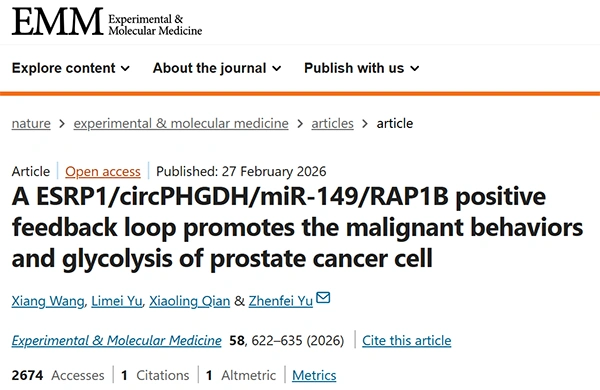
This study finds circPHGDH is upregulated in prostate cancer (PCa), promoting cell proliferation, migration, invasion and glycolysis. Mechanistically, splicing factor ESRP1 drives circPHGDH biogenesis. CircPHGDH sponges miR-149 to upregulate RAP1B and activate PI3K/AKT pathway. Glycolysis-derived lactate stabilizes ESRP1 via lactylation, forming a positive feedback loop, offering novel therapeutic targets for PCa.
Impact Factor: 12.6
Journal Name: Journal of Nanobiotechnology
CUSABIO Citation Product:
Mouse Interleukin 1β,IL-1β ELISA Kit; CSB-E08054m
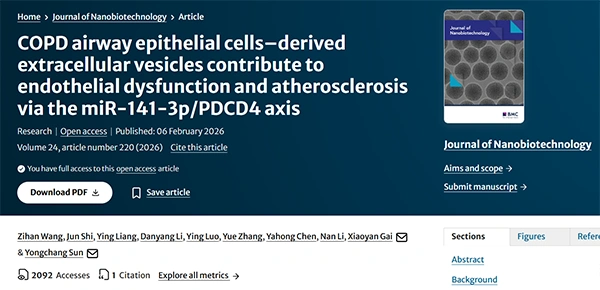
This study reveals that extracellular vesicles (EVs) from COPD airway epithelial cells drive endothelial dysfunction and atherosclerosis via the miR-141-3p/PDCD4 axis. Clinical data show COPD patients have higher cardiovascular risk. Mechanistically, miR-141-3p is downregulated in COPD-EVs, de-repressing PDCD4 and activating NF-κB signaling to trigger endothelial inflammation and apoptosis. Restoring miR-141-3p reverses injury and attenuates atherosclerosis, identifying miR-141-3p as a promising therapeutic target for COPD-related cardiovascular complications.


