
Call us
301-363-4651 (Available 9 a.m. to 5 p.m. CST from Monday to Friday)

The chemokine receptor CCR5 (C-C chemokine receptor type 5, CD195) gained fame for its critical role in HIV infection—it was once the "essential gateway" for HIV entry into host cells, making it a core target for anti-AIDS drug development. However, CCR5's biological functions extend far beyond this. In 2025, a research team from Fujian Medical University published a study in the Journal of Radiation Research revealing that the CCR5 antagonist Maraviroc significantly enhances radiosensitivity in hepatocellular carcinoma; in 2024, a study in the Journal for ImmunoTherapy of Cancer elucidated the prognostic value of the CCR5/CCL5 axis in colorectal cancer; earlier, the Cell journal reported that CCR5 is a therapeutic target for recovery after stroke and traumatic brain injury. CCR5 is evolving from a single HIV target to a multi-dimensional research frontier spanning tumor immunity, neural repair, and autoimmune diseases.
1. CCR5/CCL5 and HIV Infection: From Molecular Mechanism to Gene Therapy
2. CCR5/CCL5 and Tumor Microenvironment Remodeling
3. CCR5 and the Nervous System: A New Target for Stroke Recovery
4. CCR5 and Autoimmune Diseases
CCR5 is a seven-transmembrane G protein-coupled receptor (GPCR) belonging to the β-chemokine receptor family, primarily expressed on immune cells including T cells, macrophages, dendritic cells, and monocytes, with detectable expression in neurons and glial cells in the brain. Its natural ligands include chemokines such as CCL3 (MIP-1α), CCL4 (MIP-1β), CCL5 (RANTES), and CCL8 (MCP-2), which mediate directed migration of immune cells and calcium ion signal transduction, playing critical roles in immune surveillance, inflammatory responses, and cellular defense.
The reason CCR5 became a focus of HIV research stems from its function as a co-receptor for HIV-1 entry into host cells. After HIV-1 envelope glycoprotein gp120 binds to the CD4 molecule, it must further interact with CCR5 or CXCR4 to trigger viral membrane fusion and cell entry. Based on co-receptor preference, HIV-1 is classified into R5-tropic (using CCR5) and X4-tropic (using CXCR4) types. R5-tropic viruses are the dominant strains in early HIV infection and sexual transmission routes, accounting for over 80% of all infection cases.
This discovery explains why individuals carrying the CCR5Δ32 homozygous mutation have natural resistance to HIV-1 infection—a 32-base pair deletion causes premature termination of CCR5 gene transcription, expressing a truncated, non-functional receptor protein that viruses cannot use for cell invasion. This mutation has higher frequency in European populations (~10%) but is extremely rare in Asian and African populations.
In 2009, the famous "Berlin Patient" Timothy Brown became the world's first HIV functional cure case. He had both acute myeloid leukemia and HIV infection. After receiving a hematopoietic stem cell transplant from a donor carrying the CCR5Δ32 homozygous mutation, not only was his leukemia resolved, but HIV virus remained undetectable after discontinuing medication. This milestone case opened a new era of gene editing therapy for HIV.
To date, there have been 9 officially confirmed HIV cure cases globally, including the Berlin Patient, London Patient, Düsseldorf Patient, and others, all related to CCR5Δ32 mutation hematopoietic stem cell transplantation. These cases confirm that eliminating CCR5 function through gene editing or cell transplantation can achieve HIV functional cure.
CCR5 gene editing based on CRISPR/Cas9 technology has become a hot research direction for HIV treatment. A clinical study published in the New England Journal of Medicine by Professor Carl H. June's team at the University of Pennsylvania confirmed that CCR5 gene-modified autologous CD4+ T cell infusion therapy shows promise for controlling AIDS. The study showed that edited T cells can survive long-term in patients without serious adverse reactions.
However, CCR5 gene editing also faces important challenges:
In recent years, CCR5's role in the tumor microenvironment (TME) has received increasing attention. The CCR5/CCL5 axis profoundly influences tumor progression, metastasis, and treatment resistance by regulating immune cell infiltration, angiogenesis, and cancer stem cell maintenance.
Schlechter et al. published a study (2024) in the Journal for ImmunoTherapy of Cancer systematically analyzing the relationship between CCR5/CCL5 axis expression and patient prognosis in metastatic colorectal cancer. The study integrated CALGB/SWOG 80405 clinical trial data and large sample cohorts from the Caris NGS database, finding:
This finding reveals the core role of the CCR5/CCL5 axis in tumor immune evasion: by recruiting immunosuppressive cells and upregulating immune checkpoint molecules, it constructs a "cold tumor" microenvironment that weakens anti-tumor immune responses.
Chen et al. published a study (2025) in the Journal of Radiation Research that first revealed the core mechanism of CCR5 in radiotherapy resistance of liver cancer. The research team established an H22 tumor-bearing mouse model and found:
Core Findings:
Molecular Mechanism:
Maraviroc does not directly enhance radiation-induced tumor cell death, but rather blocks CCR5/CCL5 signaling, inhibiting PMN-MDSC differentiation from bone marrow progenitors, blocking their migration to the tumor microenvironment, and restoring T cell proliferation and cytotoxic function. This study provides important evidence for the "drug repurposing" strategy: the approved CCR5 antagonist Maraviroc can serve as a potential combination drug for radiosensitization in liver cancer.
In breast cancer, CCR5/CCL5 axis expression is closely related to tumor progression and metastasis. Studies show:
In pancreatic cancer, CCR5-mediated MDSC infiltration is a key mechanism for immune evasion. Targeting CCR5 can reduce tumor-associated macrophage infiltration and remodel the anti-tumor immune microenvironment.
CCR5's function in the nervous system was only revealed in recent years. In 2019, a breakthrough study published in Cell confirmed that CCR5 is a therapeutic target for recovery after stroke and traumatic brain injury.
Neuroscientist Alcino Silva's team at UCLA discovered:
CCR5 is the first gene discovered to be associated with human stroke recovery. Individuals carrying the CCR5Δ32 mutation are more likely to recover memory and cognitive function after stroke and traumatic brain injury.
This study also raised concerns about CCR5 gene editing safety:
The CCR5/CCL5 axis plays important roles in the inflammatory processes of multiple autoimmune diseases:
| Disease Type | CCR5 Mechanism | Research Evidence |
|---|---|---|
| Multiple Sclerosis (MS) | Participates in CNS inflammation and damage | CCR5 signaling correlates with neuroinflammation, affects IFN-β treatment response |
| Rheumatoid Arthritis (RA) | Mediates inflammatory cell infiltration into joints | CCR5-Δ32 allele has protective effect |
| Inflammatory Bowel Disease (IBD) | Regulates intestinal inflammatory response | CCR5 is highly expressed in active IBD |
| Type 1 Diabetes | Participates in insulitis and autoimmunity | CCR5-Δ32 associated with T1D risk |
Studies show that CCR5 is highly expressed in active inflammatory bowel disease, positively correlating with lymphocyte grade and negatively correlating with β-arrestin2 expression. This suggests the potential value of CCR5 antagonists in autoimmune disease treatment.
Currently, CCR5-targeted drug development has expanded from HIV infection to multiple therapeutic areas, including neurodegenerative diseases, oncology, and inflammation, encompassing diverse modalities such as small molecules, monoclonal antibodies, and gene therapies, with most pipeline candidates having advanced to mid‑to‑late clinical stages:
| Drug | Mechanism of Action | Drug Type | Indications in Development | Research Institutions | Highest Development Phase |
|---|---|---|---|---|---|
| Maraviroc | CCR5 antagonist | Small molecule | HIV infection; Post-COVID-19 sequelae; Dementia; Huntington's disease | HealthBioAI; University of Cambridge; ViiV Healthcare BV; Viatris Pharmaceutical (Dalian) Co., Ltd.; ViiV Healthcare Co.; ViiV Healthcare Ltd. | Approved |
| Cenicriviroc mesylate | CCR2 antagonist; CCR5 antagonist | Small molecule | Obesity; Primary sclerosing cholangitis; Cognitive impairment; HIV infection | Takeda Pharmaceutical Co., Ltd.; Tobira Therapeutics, Inc. | Phase 3 |
| AD-101 | CCR5 antagonist; T‑type calcium channel modulator | Small molecule | Alzheimer's disease; HIV infection | AmyriAD; Amyriad Therapeutics, Inc.; Albert Einstein College of Medicine, Inc. | Phase 3 |
| Leronlimab | CCR5 antagonist | Monoclonal antibody | Alzheimer's disease; Encephalitis; Neuroinflammation; Metastatic colorectal cancer; et al. | Weill Medical College of Cornell University; CytoDyn, Inc. | Phase 2 |
| BMS-813160 | CCR2 antagonist; CCR5 antagonist | Small molecule | Hepatocellular carcinoma; Non‑small cell lung cancer; Advanced pancreatic ductal adenocarcinoma; Locally advanced pancreatic adenocarcinoma | Bristol Myers Squibb Co. | Phase 2 |
| Lentiviral vector transduced CD34+ cells (Great Ormond Street Hospital for Children NHS Foundation Trust) | CCR5 antagonist; TRIM5 modulator | Gene therapy; Hematopoietic stem cell therapy | Cytochrome b‑positive autosomal recessive chronic granulomatous disease type I; X‑linked combined immunodeficiency disease | — | Phase 1/2 |
| SB 728 HSPC | CCR5 modulator; Cell replacement; Gene silencing; Zinc finger nuclease | Cell replacement; Gene silencing; Zinc finger nuclease | HIV infection | Sangamo Therapeutics, Inc. | Phase 1 |
| Sailavino | CCR5 antagonist | Small molecule | HIV infection; Amyotrophic lateral sclerosis; Multiple sclerosis | Shanghai Institute of Materia Medica, Chinese Academy of Sciences; Kunming Institute of Zoology, Chinese Academy of Sciences; Beijing Tiantan Hospital, Capital Medical University | Phase 1 |
| OB-002 | CCR5 antagonist; GPR75 inhibitor | Synthetic peptide | HIV infection; Obesity; Metastatic colorectal cancer | Orion Biotechnology Canada Ltd.; Evofem, Inc. | Phase 1 |
| Recombinant viral macrophage inflammatory protein (Jinan University) | CCR5 antagonist; CXCR4 antagonist | Recombinant protein | Viral pneumonia | Guangzhou Hongrun Biotechnology Co., Ltd. | Clinical trial application approved |
(Data as of July 14, 2026, sourced from Synapse)
As an approved drug, Maraviroc's "drug repurposing" strategy has unique advantages:
To assist research teams in conducting CCR5-related mechanism studies, drug screening, and tumor immunotherapy exploration, CUSABIO offers high-activity CCR5 recombinant protein products:
CUSABIO CCR5 Protein
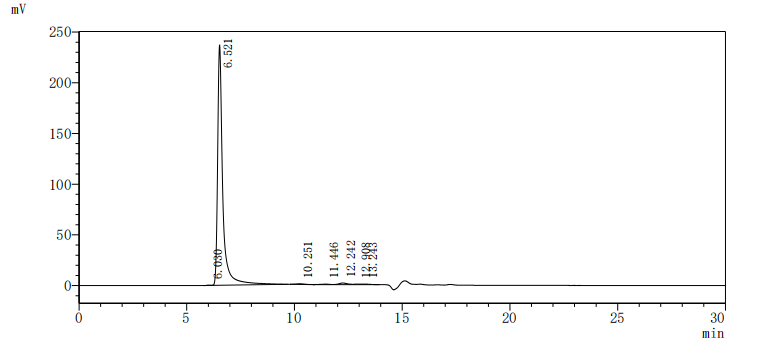
Recombinant Human C-C chemokine receptor type 5 (CCR5)-VLPs (Active); Code: CSB-MP004844HU
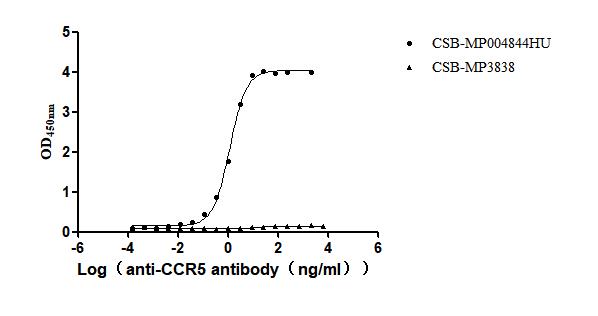
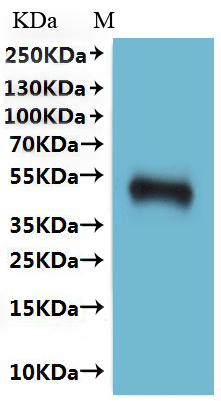
Activity validation: Functional ELISA binding activity; immobilized Human CCR5 (10 μg/mL) binds Anti-CCR5 recombinant antibody (CSB-RA004844MA1HU) with EC50 of 1.099-1.287 ng/mL
Quality control: SEC-HPLC purity ≥95%, endotoxin <1.0 EU/μg
Applications: CCR5/CCL5 signaling pathway research, HIV entry mechanism and drug screening, tumor microenvironment and immune regulation research, stroke/neural injury recovery exploration, antibody development and validation
References
[1] Chen J, Lin Q, Lan R, et al. A CCR5 antagonist enhances the radiosensitivity of hepatocarcinoma in a mouse model. Journal of Radiation Research. 2025;66(4):396-407.
[2] Schlechter BL, Stebbing J. CCR5 and CCL5 in metastatic colorectal cancer. Journal for ImmunoTherapy of Cancer. 2024;12(5):e008722.
[3] Joy MT, Ben Assayag E, et al. CCR5 is a therapeutic target for recovery after stroke and traumatic brain injury. Cell. 2019;176(5):1143-1157.
[4] Liu R, Paxton WA, Choe S, et al. Homozygous defect in HIV-1 coreceptor accounts for resistance to HIV-1 infection. Cell. 1996;86(3):367-377.
[5] Hutter G, Nowak D, et al. Long-term control of HIV by CCR5 Delta32/Delta32 stem-cell transplantation. N Engl J Med. 2009;360(7):692-698.
[6] Halama N, Zoernig M, et al. Tumoral immune cell exploitation in colorectal cancer metastases can be targeted effectively by anti-CCR5 therapy. Cancer Cell. 2016;30(5):769-783.
[7] Eitner F, Cui Y, et al. Chemokine receptor (CCR5) expression in human kidneys and in the HIV infected macaque. Kidney Int. 1998;54(6):1941-1952.
[8] Aldabe R, et al. CCR5-dependent macrophage infiltration contributes to renal inflammation and fibrosis. Rheumatology. 2022;61(7):3017-3028.
[9] Teixeira AL, et al. CCR5 in human health and disease. Prog Mol Biol Transl Sci. 2023;194:141-170.
Note: The studies cited in this article are all from published literature. Product information is based on publicly available data from the CUSABIO official website and is for information exchange purposes only. The views expressed do not represent CUSABIO's position. Products are for research use only and not for clinical diagnosis.




Comments
Leave a Comment