
Call us
301-363-4651 (Available 9 a.m. to 5 p.m. CST from Monday to Friday)

| Code | CSB-RA562580A0HU |
| Size | US$210 |
| Order now | |
| Image |
|
| Have Questions? | Leave a Message or Start an on-line Chat |
| Application | Recommended Dilution |
|---|---|
| IHC | 1:50-1:200 |
| IF | 1:50-1:200 |
Adiponectin receptor 1 (ADIPOR1) serves as a critical mediator of adiponectin signaling, playing essential roles in glucose regulation, fatty acid oxidation, and metabolic homeostasis. As a seven-transmembrane receptor predominantly expressed in skeletal muscle and liver, ADIPOR1 has emerged as a significant target in metabolic disease research, including studies of type 2 diabetes, obesity, and insulin resistance. Its involvement in cellular energy sensing pathways also makes it increasingly relevant to cancer metabolism investigations.
This recombinant monoclonal antibody, generated against a synthetic peptide from human ADIPOR1, offers the consistency and reliability that demanding experimental workflows require. As a sequence-defined recombinant clone (12E8), it eliminates the lot-to-lot variability inherent in traditional hybridoma-derived antibodies, ensuring reproducible results across long-term studies and multi-site collaborations. The rabbit IgG format provides excellent signal-to-noise characteristics for tissue and cell-based applications.
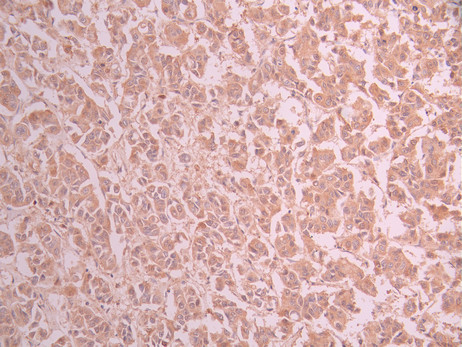
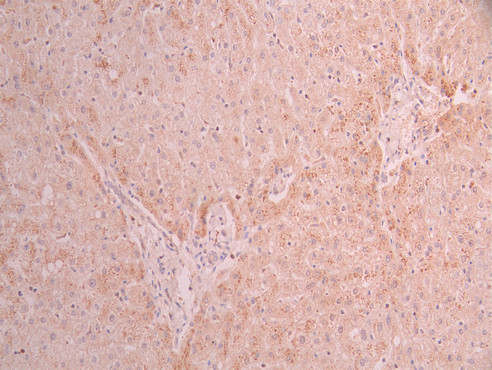
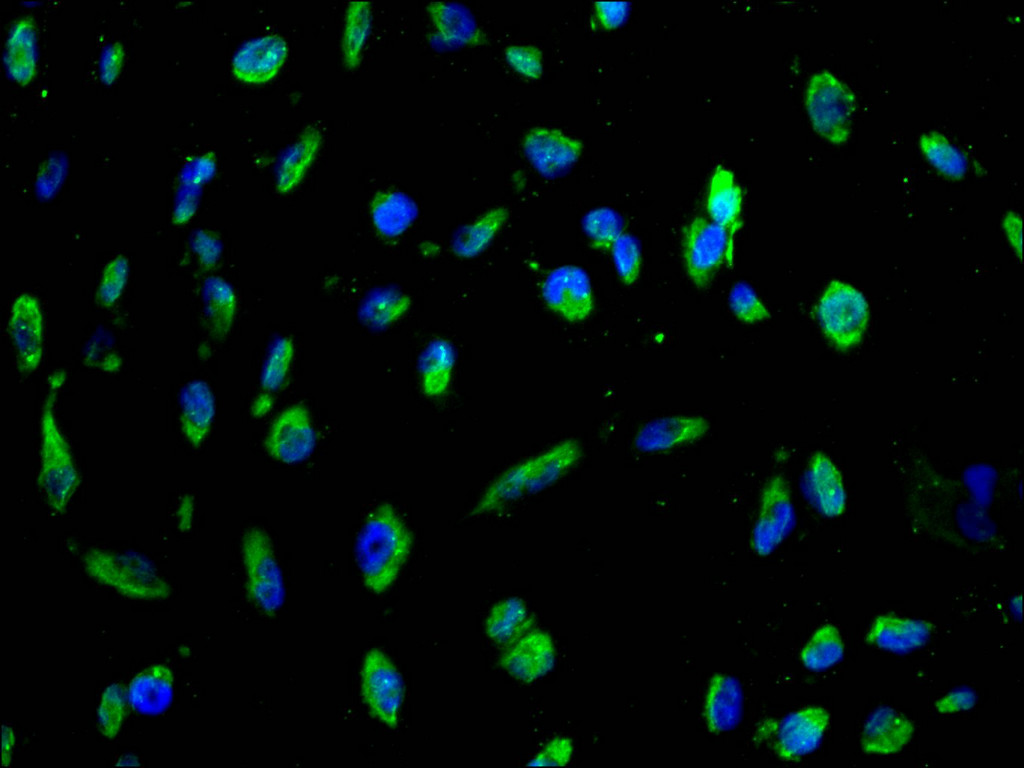
Validation studies demonstrate robust performance across multiple platforms. Immunohistochemistry staining in paraffin-embedded human breast cancer and liver tissue sections shows specific detection at 1:100 dilution using citrate buffer antigen retrieval, confirming utility for both tumor biology and metabolic tissue analysis. Immunofluorescence studies in MCF-7 cells further validate the antibody's performance in cell-based assays, revealing clear cytoplasmic and membrane localization patterns consistent with ADIPOR1's known subcellular distribution.
The unconjugated format and affinity-purified preparation provide flexibility for researchers to pair this antibody with their preferred detection systems. Whether investigating adiponectin signaling mechanisms, exploring metabolic dysfunction in disease models, or characterizing receptor expression in clinical specimens, this antibody delivers the specificity and reproducibility essential for meaningful experimental outcomes.
There are currently no reviews for this product.





