
Call us
301-363-4651 (Available 9 a.m. to 5 p.m. CST from Monday to Friday)

| Code | CSB-RA799763A0HU |
| Size | US$210 |
| Order now | |
| Image |
|
| Have Questions? | Leave a Message or Start an on-line Chat |
| Application | Recommended Dilution |
|---|---|
| WB | 1:500-1:5000 |
| IHC | 1:50-1:200 |
Aldehyde dehydrogenase 2 (ALDH2) serves as a critical mitochondrial enzyme responsible for acetaldehyde detoxification and plays an increasingly recognized role in cellular stress responses, lipid peroxidation, and cardioprotection. Researchers investigating alcohol metabolism, oxidative stress pathways, and cardiovascular disease mechanisms rely on precise detection of this enzyme, while its emerging connections to cancer biology and metabolic regulation continue to expand its relevance across multiple disciplines.
This recombinant monoclonal antibody, generated against a synthetic peptide derived from human ALDH2, offers the consistency and reproducibility that demanding experimental workflows require. Because the antibody sequence is defined and produced recombinantly in rabbit host cells, researchers benefit from lot-to-lot uniformity that eliminates the variability often encountered with traditional hybridoma-derived reagents. The monoclonal nature ensures recognition of a single epitope, providing specificity that supports confident data interpretation.
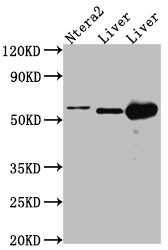
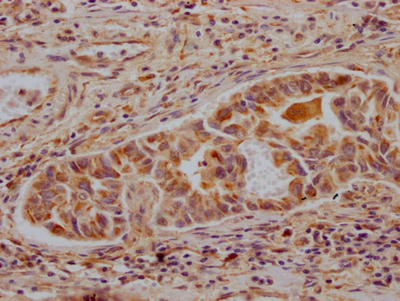
Validation studies demonstrate robust performance across Western blot and immunohistochemistry applications with cross-species reactivity spanning human, mouse, and rat samples. In Western blot analysis, the antibody detects ALDH2 at the expected 57 kDa molecular weight in Ntera-2 human cells as well as mouse and rat liver lysates, confirming reliable detection across these commonly used experimental models. For tissue-based studies, immunohistochemical staining has been validated in paraffin-embedded human liver cancer sections using standard antigen retrieval protocols, revealing clear localization patterns suitable for pathological assessment.
The flexible dilution ranges accommodate optimization across different sample types and detection systems, while the unconjugated format allows pairing with preferred secondary detection reagents. Whether investigating ALDH2 in cancer metabolism, cardiovascular signaling, or toxicological studies, this antibody provides a dependable tool for advancing research across these interconnected fields.
There are currently no reviews for this product.





