
Call us
301-363-4651 (Available 9 a.m. to 5 p.m. CST from Monday to Friday)

| Code | CSB-RA951649A0HU |
| Size | US$210 |
| Order now | |
| Image |
|
| Have Questions? | Leave a Message or Start an on-line Chat |
| Application | Recommended Dilution |
|---|---|
| WB | 1:500-1:5000 |
| IHC | 1:50-1:200 |
Adenomatous polyposis coli protein serves as a critical tumor suppressor whose dysfunction underlies familial adenomatous polyposis and contributes to the majority of sporadic colorectal cancers. Beyond its well-established role in Wnt signaling regulation, APC participates in chromosomal segregation, cell migration, and neuronal development, making it a protein of significant interest across oncology, neuroscience, and stem cell research.
This recombinant monoclonal antibody, generated against a synthetic peptide derived from human APC, offers the reproducibility and sequence-defined consistency that demanding experimental workflows require. As a recombinant clone, it eliminates the lot-to-lot variability inherent in traditional hybridoma production, ensuring your results remain comparable across extended studies and collaborative projects.
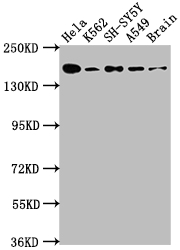
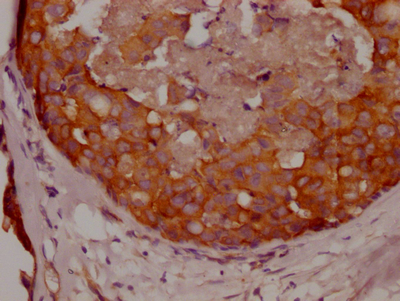
Validation across multiple platforms demonstrates this antibody's experimental versatility. Western blot analysis confirms reliable detection in HeLa, K562, SH-SY5Y, A549, and rat brain lysates, with the observed band at approximately 160 kDa rather than the predicted 301-312 kDa full-length protein. This size difference likely reflects detection of well-characterized truncated APC isoforms or proteolytic fragments commonly observed in cell lysates, particularly in cancer cell lines where APC truncation is frequently associated with disease pathology. The cross-species reactivity between human cell lines and rat brain tissue provides flexibility for researchers working across model systems. Immunohistochemical staining in paraffin-embedded human breast cancer tissue further extends its utility for tissue-based investigations.
Whether you are investigating Wnt pathway dysregulation in cancer models, exploring APC's role in neuronal polarity, or examining its function in cardiovascular or stem cell biology, this antibody delivers the consistency and validated performance essential for meaningful experimental outcomes.
There are currently no reviews for this product.





