
Call us
301-363-4651 (Available 9 a.m. to 5 p.m. CST from Monday to Friday)

| Code | CSB-RA552618A0HU |
| Size | US$210 |
| Order now | |
| Image |
|
| Have Questions? | Leave a Message or Start an on-line Chat |
| Application | Recommended Dilution |
|---|---|
| WB | 1:500-1:5000 |
| IHC | 1:50-1:200 |
| FC | 1:50-1:200 |
BNIP3 (BCL2/adenovirus E1B 19 kDa protein-interacting protein 3) is a pro-apoptotic BH3-only member of the BCL2 family that plays a central role in hypoxia-induced cell death and mitophagy. As a key mediator of cellular responses to oxygen deprivation, BNIP3 has become an important focus in cancer biology, cardiovascular research, and studies of metabolic stress. Its expression is tightly regulated by hypoxia-inducible factors, making it a valuable marker for investigating tumor microenvironments and ischemic conditions.
This recombinant rabbit monoclonal antibody (clone 5E11) offers the reproducibility and consistency that demanding research requires. Generated against a synthetic peptide derived from human BNIP3, the antibody is produced using recombinant technology, ensuring sequence-defined specificity and eliminating the lot-to-lot variability that can complicate longitudinal studies or multi-site collaborations. Affinity purification further enhances performance by reducing background signal.
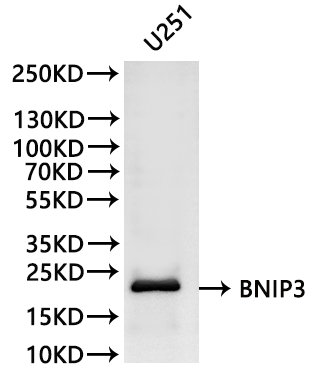
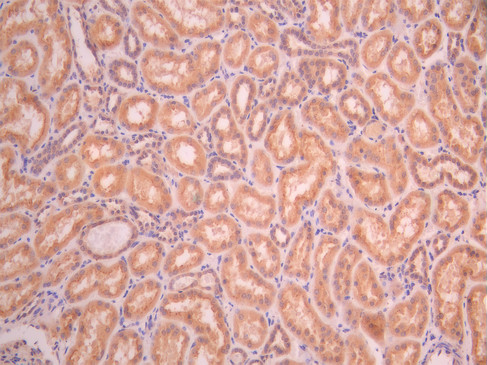
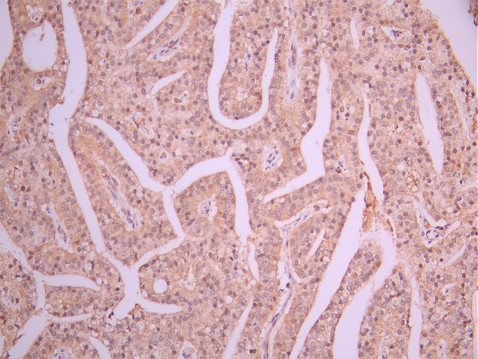
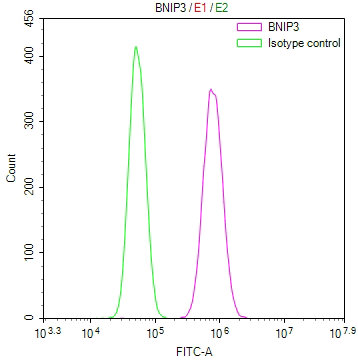
Validation data demonstrate reliable detection across multiple experimental platforms. Western blot analysis of U-251MG glioblastoma cell lysates reveals a clean band at the predicted 22 kDa molecular weight, confirming accurate target recognition. For tissue-based studies, immunohistochemistry has been validated in paraffin-embedded human kidney and prostate cancer sections, providing researchers with confidence when examining BNIP3 expression in both normal and malignant contexts. Flow cytometry validation using 786-O renal carcinoma cells demonstrates clear positive signal separation from isotype controls, supporting intracellular detection workflows.
Whether you are investigating hypoxia signaling pathways, characterizing mitophagy mechanisms, or exploring BNIP3 as a potential biomarker in oncology research, this antibody provides the flexibility and reliability needed for rigorous cell biology investigations.
There are currently no reviews for this product.





