
Call us
301-363-4651 (Available 9 a.m. to 5 p.m. CST from Monday to Friday)

| Code | CSB-RA045623A0HU |
| Size | US$210 |
| Order now | |
| Image |
|
| Have Questions? | Leave a Message or Start an on-line Chat |
| Application | Recommended Dilution |
|---|---|
| WB | 1:500-1:2000 |
| IHC | 1:50-1:200 |
| IF | 1:50-1:200 |
| FC | 1:50-1:200 |
Cyclin E2 plays a central role in cell cycle progression, functioning as a regulatory subunit of CDK2 to drive the G1/S phase transition. As a key component of the cell cycle machinery, CCNE2 is frequently dysregulated in various cancers, making it an important marker for studies investigating proliferation, tumorigenesis, and cell cycle checkpoint control.
This recombinant monoclonal antibody, generated from clone 14F8, offers the consistency and reliability that demanding research applications require. Because recombinant antibodies are produced from defined sequences rather than traditional hybridoma methods, you can expect reproducible performance across experiments and between lots—an essential consideration for longitudinal studies or when establishing standardized protocols in your laboratory.
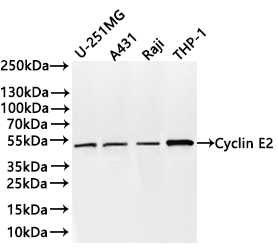
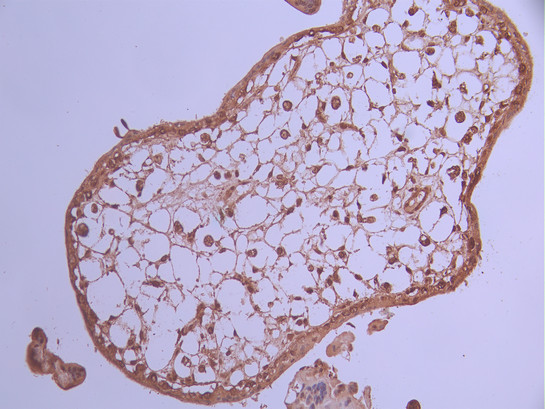
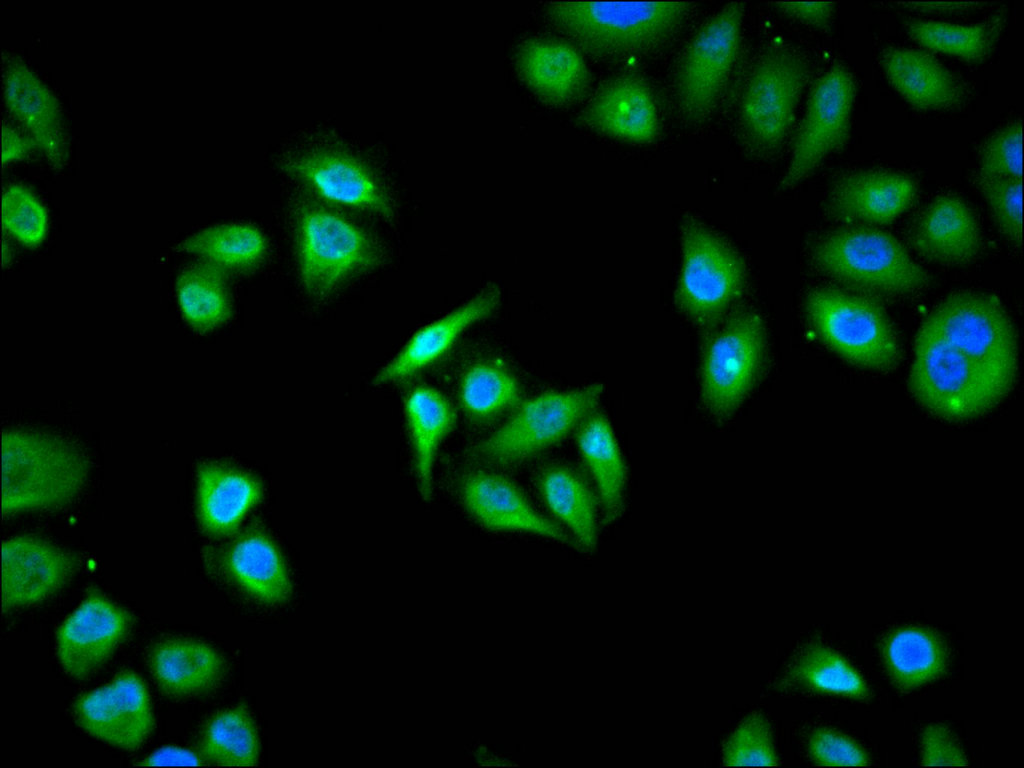
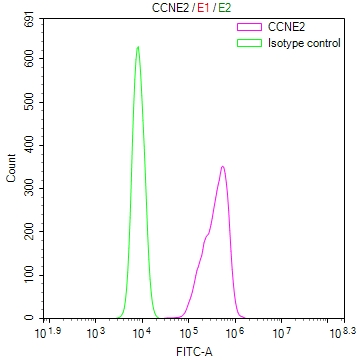
Validation testing demonstrates robust performance across multiple experimental platforms. Western blot analysis detects CCNE2 at the expected 47 kDa molecular weight in human cell lines including U-251MG glioblastoma, A431 epidermoid carcinoma, Raji B lymphocytes, and THP-1 monocytic cells, confirming reliable detection across diverse cellular contexts. Immunohistochemistry staining has been validated in paraffin-embedded human placenta tissue using citrate buffer antigen retrieval, while immunofluorescence studies in HeLa cells reveal the expected nuclear and cytoplasmic localization pattern consistent with cyclin E2's biological function. Flow cytometry validation further extends the utility of this antibody for quantitative single-cell analysis of CCNE2 expression levels.
This antibody serves researchers investigating cell cycle regulation, cancer biology, and proliferative disorders. Its validated performance across immunoblotting, tissue staining, cellular imaging, and flow cytometric applications provides flexibility for comprehensive characterization of CCNE2 expression in your experimental systems.
There are currently no reviews for this product.





