
Call us
301-363-4651 (Available 9 a.m. to 5 p.m. CST from Monday to Friday)

| Code | CSB-RA005087A0HU |
| Size | US$210 |
| Order now | |
| Image |
|
| Have Questions? | Leave a Message or Start an on-line Chat |
| Application | Recommended Dilution |
|---|---|
| WB | 1:500-1:5000 |
| IHC | 1:50-1:200 |
| IF | 1:20-1:200 |
CDKN1B, commonly known as p27Kip1, serves as a critical regulator of cell cycle progression by inhibiting cyclin-dependent kinases, particularly those driving the G1 to S phase transition. Its role as a tumor suppressor makes it a focal point in cancer research, where loss or cytoplasmic mislocalization of p27 frequently correlates with aggressive tumor behavior and poor prognosis. Understanding p27 expression and localization provides valuable insights into proliferative states and therapeutic responses across diverse cancer models.
This recombinant monoclonal antibody, generated against a synthetic peptide derived from human CDKN1B, offers the reproducibility and sequence-defined consistency that demanding quantitative studies require. Because recombinant production eliminates the batch variability inherent in traditional hybridoma methods, you can confidently compare results across extended experimental timelines without concerns about antibody drift affecting your data.
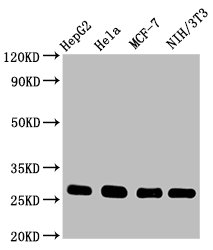
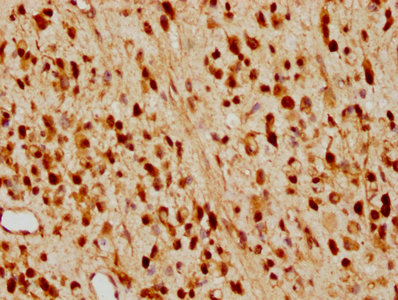
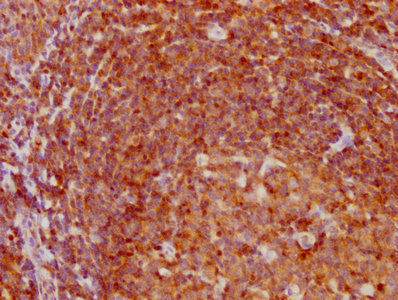
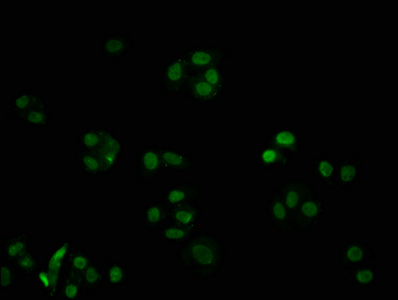
Validation across multiple platforms demonstrates this antibody's versatility in your workflow. Western blot analysis confirms specific detection in human cell lines including HepG2, HeLa, and MCF-7, as well as mouse NIH/3T3 cells, supporting cross-species reactivity for comparative studies. The observed band at 27 kDa, slightly higher than the 23 kDa predicted molecular weight, reflects the post-translational modifications, including phosphorylation events, that regulate p27 stability and function in vivo. Immunohistochemistry performance has been validated in paraffin-embedded human glioma and tonsil tissues, while immunofluorescence staining in HepG2 cells enables subcellular localization studies critical for understanding p27's nuclear versus cytoplasmic distribution.
Whether investigating cell cycle checkpoints, characterizing tumor suppressor pathways, or examining proliferative responses to therapeutic intervention, this antibody provides a reliable tool for advancing your cell biology research.
There are currently no reviews for this product.





