
Call us
301-363-4651 (Available 9 a.m. to 5 p.m. CST from Monday to Friday)

| Code | CSB-RA147192A0HU |
| Size | US$210 |
| Order now | |
| Image |
|
| Have Questions? | Leave a Message or Start an on-line Chat |
| Application | Recommended Dilution |
|---|---|
| IHC | 1:50-1:200 |
CEACAM1, also known as biliary glycoprotein 1 or CD66a, serves as a critical cell adhesion molecule with diverse regulatory functions spanning immune checkpoint signaling, cell proliferation, and apoptosis. This multifunctional glycoprotein has garnered significant attention in cancer research due to its complex role in tumor progression, where it can function as either a tumor suppressor or promoter depending on cellular context. Its involvement in T cell inhibition has also positioned CEACAM1 as an emerging target in immunotherapy studies.
This recombinant monoclonal antibody, clone 10H8, offers the reproducibility essential for longitudinal studies and multi-site collaborations. Generated against a synthetic peptide derived from human CEACAM1 and produced in rabbit host, the recombinant format ensures sequence-defined consistency between lots, eliminating the variability that can compromise experimental comparisons over time. Affinity chromatography purification delivers a preparation suitable for demanding detection applications.
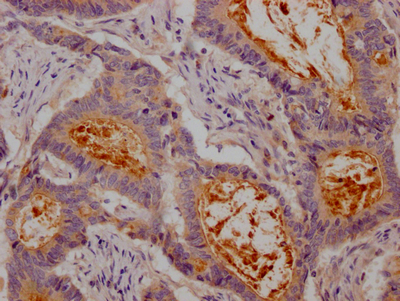
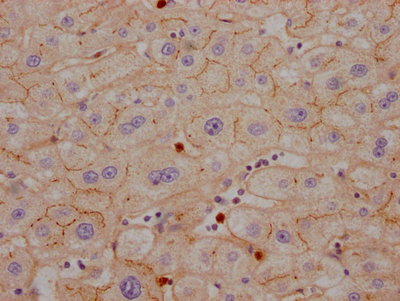
Validation studies demonstrate reliable performance in immunohistochemistry on formalin-fixed, paraffin-embedded human tissues. Testing on human colon cancer and liver cancer sections at 1:100 dilution using citrate buffer antigen retrieval reveals clear target detection, making this antibody particularly relevant for researchers investigating CEACAM1 expression patterns in gastrointestinal and hepatic malignancies. The recommended working range of 1:50–1:200 for IHC provides flexibility for optimization across different tissue types and detection systems. Additional compatibility with ELISA extends its utility for quantitative applications.
Whether you are exploring CEACAM1's role in tumor microenvironment interactions, investigating its function as an immune checkpoint molecule, or characterizing its expression in patient-derived samples, this antibody provides a dependable tool for advancing your cancer biology and immunology research.
There are currently no reviews for this product.





