
Call us
301-363-4651 (Available 9 a.m. to 5 p.m. CST from Monday to Friday)

| Code | CSB-RA006047MA1HU |
| Size | $49.9 |
| Order now | |
| Promotion |

|
| Image |
|
| Have Questions? | Leave a Message or Start an on-line Chat |
| Application | Recommended Dilution |
|---|---|
| IF | 1:50-1:200 |
CSF2RB, also known as the common beta chain or CD131, serves as a critical shared signaling subunit for the receptors of GM-CSF, IL-3, and IL-5. This positioning at the convergence of multiple cytokine pathways makes CSF2RB essential for understanding hematopoietic cell development, immune cell activation, and inflammatory responses. Researchers investigating myeloid cell biology, allergic inflammation, or cytokine signaling networks will find CSF2RB detection particularly valuable for dissecting these interconnected pathways.
This recombinant monoclonal antibody, clone 9C9, offers the reproducibility and consistency that demanding experimental workflows require. Because recombinant antibodies are produced from defined sequences rather than hybridoma-derived sources, researchers can expect reliable performance across experiments and between lots, eliminating a common source of variability in longitudinal studies or multi-site collaborations. The human IgG1 isotype format and affinity-chromatography purification further ensure high specificity for your target.
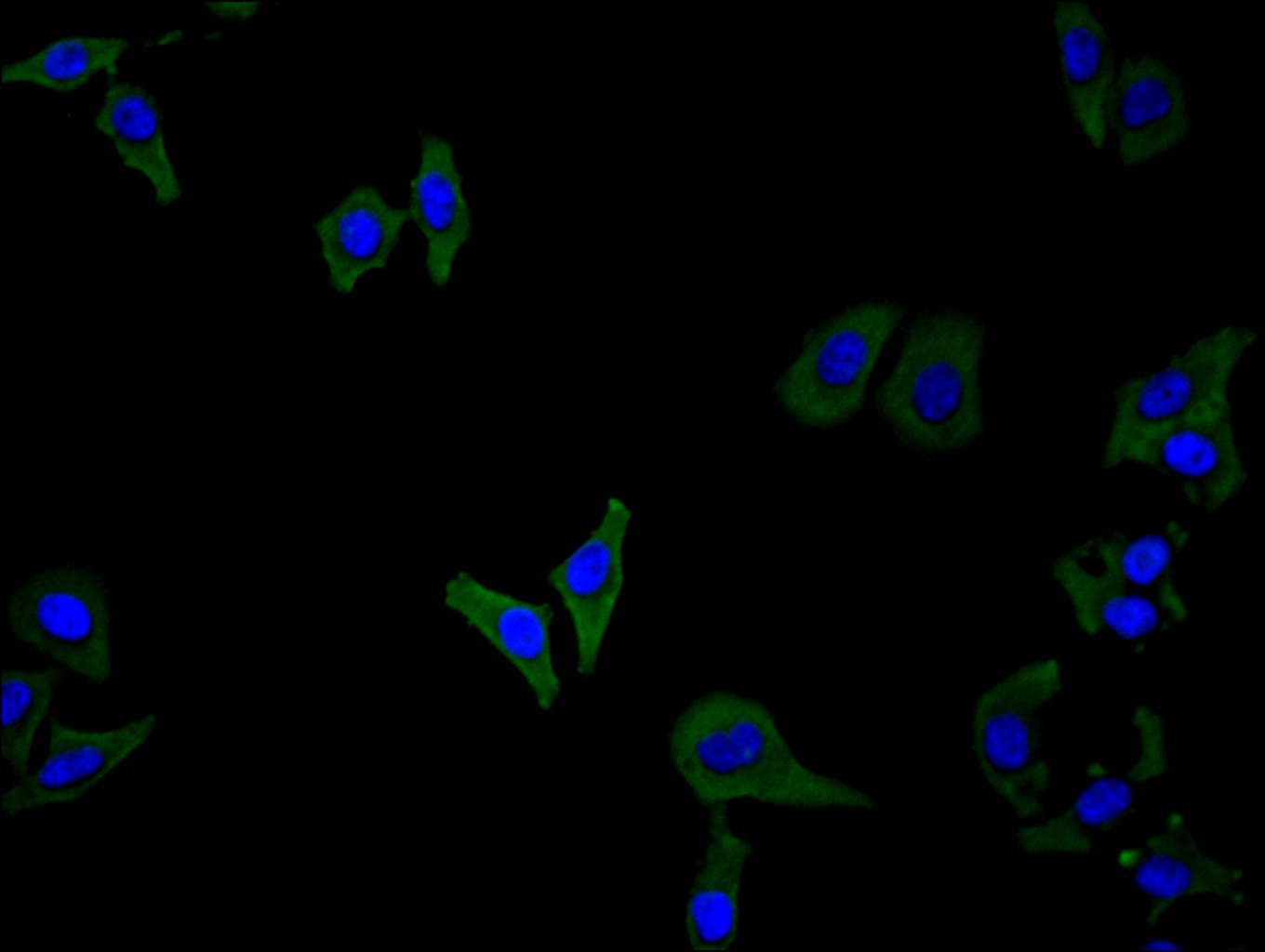
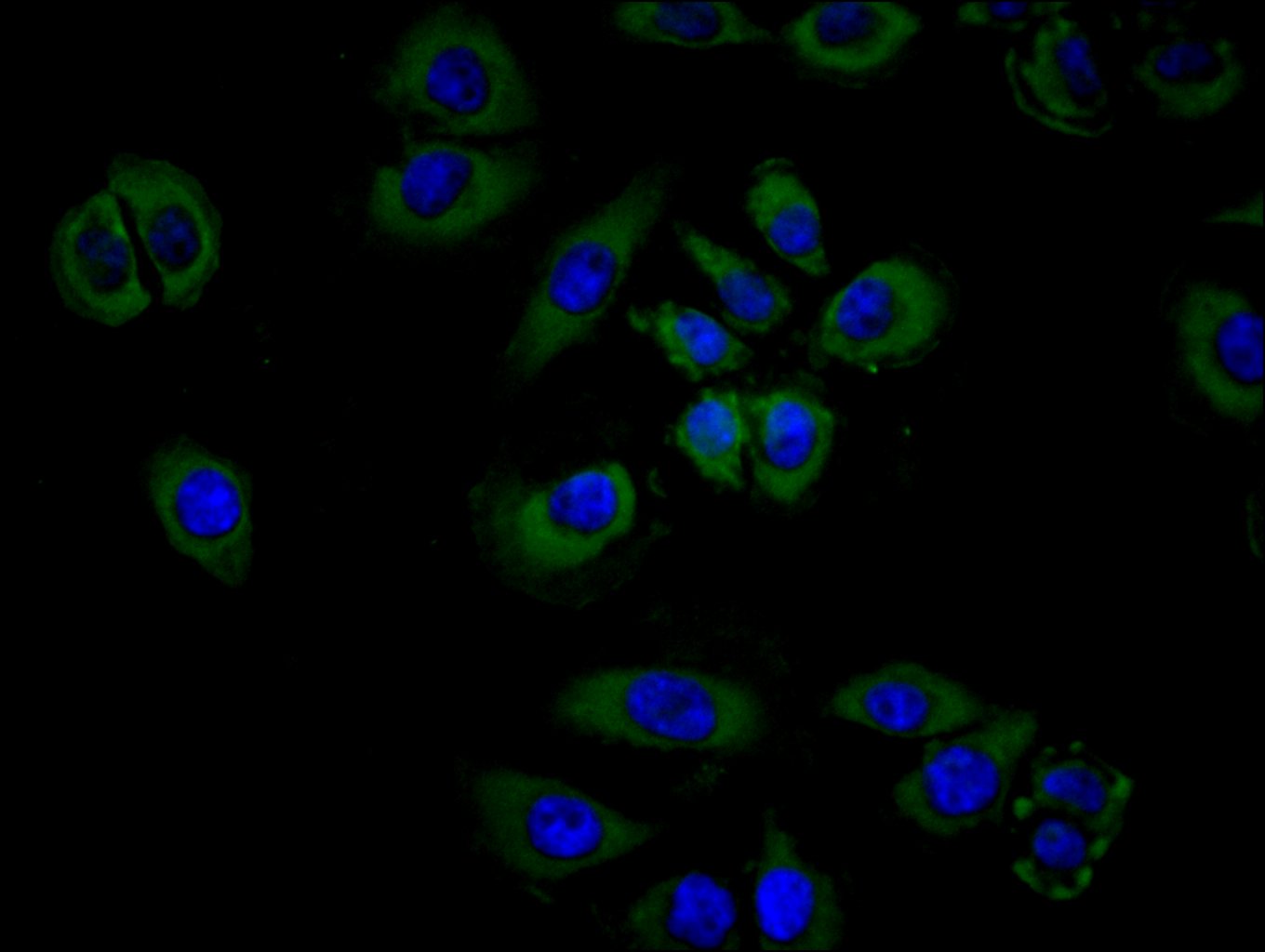
Validation studies demonstrate effective performance in immunofluorescence applications, with successful staining confirmed in both HeLa and A549 human cell lines at 1:100 dilution. These experiments, using standard fixation with 4% formaldehyde and overnight primary antibody incubation at 4°C, produced clear signal detection when paired with FITC-conjugated secondary antibodies and DAPI counterstaining. The antibody is also validated for ELISA, providing flexibility for researchers who need both quantitative and spatial information about CSF2RB expression.
For immunology researchers studying cytokine receptor biology, hematopoietic disorders, or inflammatory conditions, this antibody provides a dependable tool for examining CSF2RB expression and localization in human samples. The validated immunofluorescence protocol offers a starting point that can be optimized for specific experimental contexts.
There are currently no reviews for this product.





