
Call us
301-363-4651 (Available 9 a.m. to 5 p.m. CST from Monday to Friday)

| Code | CSB-RA948135A0HU |
| Size | US$210 |
| Order now | |
| Image |
|
| Have Questions? | Leave a Message or Start an on-line Chat |
| Application | Recommended Dilution |
|---|---|
| WB | 1:500-1:2000 |
| IHC | 1:50-1:200 |
| FC | 1:50-1:200 |
DLX5 is a homeobox transcription factor that plays essential roles in craniofacial development, osteogenesis, and neuronal differentiation. As a key regulator of bone formation, DLX5 drives osteoblast maturation and skeletal patterning, making it a critical target for researchers investigating developmental biology, bone disorders, and cancer progression where aberrant DLX5 expression has been implicated.
This recombinant monoclonal antibody, generated in rabbit against a synthetic peptide from human DLX5, offers the consistency and reliability that demanding experimental workflows require. Because the antibody sequence is defined and production occurs through recombinant technology, you can expect reproducible performance across lots, eliminating the variability that can compromise longitudinal studies or multi-site collaborations.
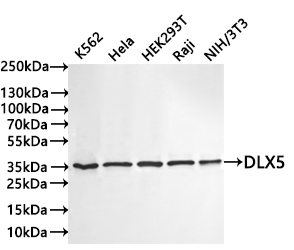
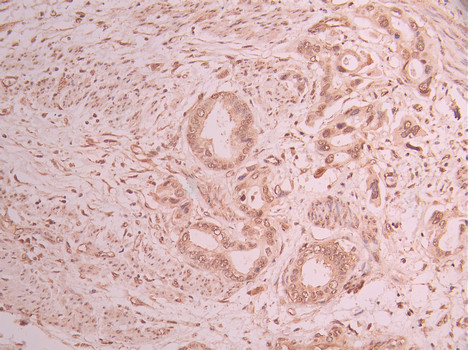
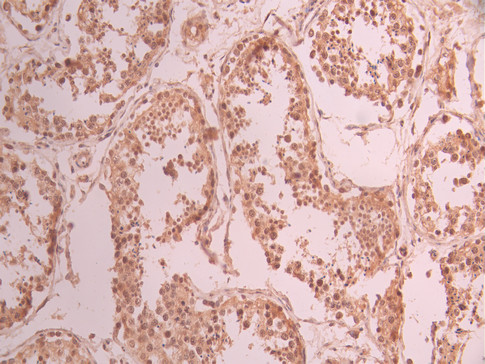
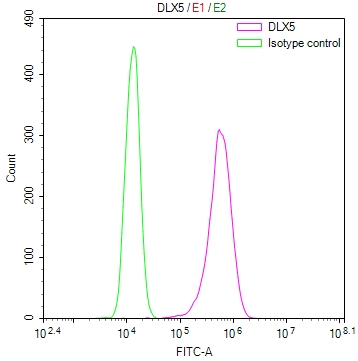
Validation across multiple platforms demonstrates this antibody's versatility in your research toolkit. Western blot analysis confirms specific detection in diverse cell lines including K562, HeLa, HEK293T, Raji, and NIH/3T3 lysates, with the observed band at approximately 35 kDa slightly above the predicted 32 kDa molecular weight. This modest shift likely reflects post-translational modifications common to transcription factors. Immunohistochemistry staining has been validated in paraffin-embedded human cervical cancer and testis tissues using citrate buffer antigen retrieval, revealing clear nuclear localization patterns consistent with DLX5's function as a transcription factor. Flow cytometry applications have been confirmed using 786-O renal carcinoma cells, enabling quantitative analysis of DLX5 expression at the single-cell level.
With cross-species reactivity for human and mouse samples, this antibody supports both clinical specimen analysis and model organism studies. Researchers investigating skeletal development, stem cell differentiation, or tumor biology will find this antibody well-suited for their mechanistic and translational studies.
There are currently no reviews for this product.





