
Call us
301-363-4651 (Available 9 a.m. to 5 p.m. CST from Monday to Friday)

| Code | CSB-RA547028A0HU |
| Size | US$210 |
| Order now | |
| Image |
|
| Have Questions? | Leave a Message or Start an on-line Chat |
| Application | Recommended Dilution |
|---|---|
| WB | 1:500-1:2000 |
| IHC | 1:50-1:200 |
| FC | 1:50-1:200 |
EIF1AX plays a fundamental role in protein synthesis as a key component of the translation initiation machinery. This eukaryotic translation initiation factor facilitates the proper positioning of methionyl-tRNA within the ribosomal complex, making it essential for accurate protein production in all cells. Mutations in EIF1AX have been identified in various cancers, including uveal melanoma and thyroid carcinoma, positioning this protein as an important subject for oncology research and studies investigating translational control mechanisms.
This recombinant monoclonal antibody, generated from clone 5D5 in rabbit host, offers the reproducibility and consistency that demanding research applications require. Because the antibody sequence is defined and production occurs through recombinant expression, you can expect uniform performance across experiments and over time, eliminating the lot-to-lot variability that can complicate long-term studies or multi-site collaborations.
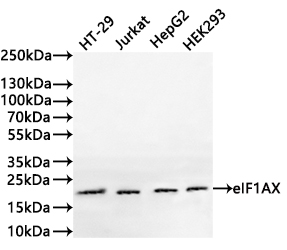
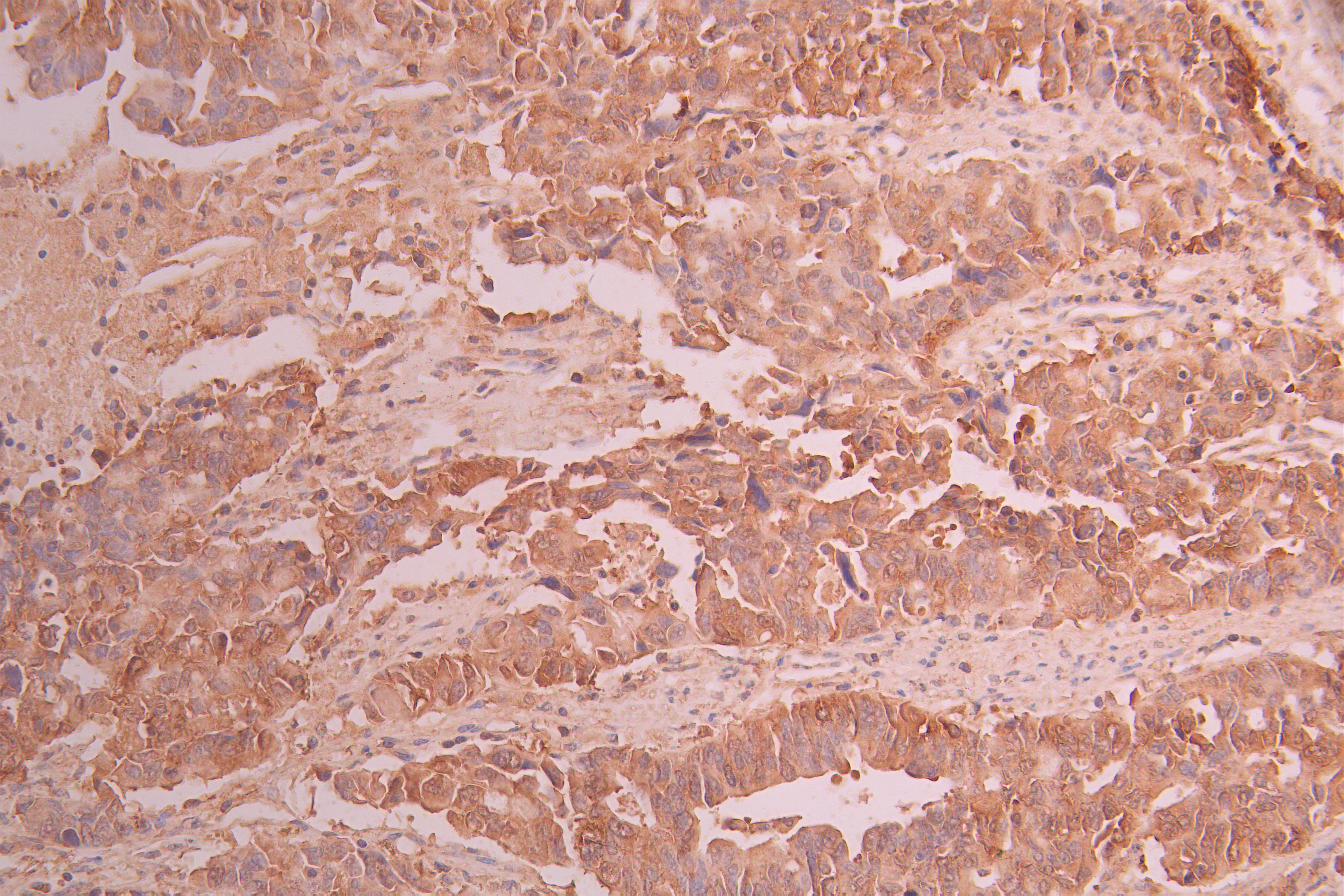
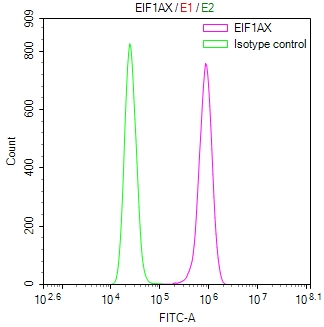
Validation across multiple platforms demonstrates this antibody's versatility in your experimental workflows. Western blot analysis confirms reliable detection in human cell lines including HT-29, Jurkat, HepG2, and HEK293 lysates, with optimal performance at dilutions between 1:500 and 1:2000. The observed band appears at approximately 20 kDa rather than the predicted 16 kDa, a shift commonly attributed to post-translational modifications such as glycosylation or the protein's highly basic nature affecting gel migration. Immunohistochemistry validation in human endometrial carcinoma tissue demonstrates clear staining at 1:100 dilution, while flow cytometry analysis in HeLa cells shows distinct signal separation from isotype controls.
Whether investigating translational regulation, exploring EIF1AX's emerging role in cancer biology, or characterizing protein expression across tissue types, this antibody provides a dependable tool for advancing your research.
There are currently no reviews for this product.





