

Call us
301-363-4651 (Available 9 a.m. to 5 p.m. CST from Monday to Friday)

| Code | CSB-RA698596A0HU |
| Size | US$210 |
| Order now | |
| Image |
|
| Have Questions? | Leave a Message or Start an on-line Chat |
| Application | Recommended Dilution |
|---|---|
| WB | 1:500-1:5000 |
| IHC | 1:50-1:200 |
| FC | 1:50-1:200 |
EIF1AX plays a fundamental role in the initiation of protein synthesis, functioning as a critical component of the translation machinery that facilitates ribosomal scanning and start codon recognition. This eukaryotic translation initiation factor has garnered significant research attention due to its involvement in various cellular processes and its emerging connections to cancer biology, particularly in uveal melanoma and thyroid carcinomas where EIF1AX mutations have been identified as potential drivers.
This recombinant monoclonal antibody, generated against a synthetic peptide from human EIF1AX, offers the reproducibility and consistency that demanding experimental workflows require. As a sequence-defined reagent produced through recombinant technology, clone 15E4 eliminates the lot-to-lot variability that can compromise longitudinal studies and multi-site collaborations, ensuring your results remain comparable across experiments.
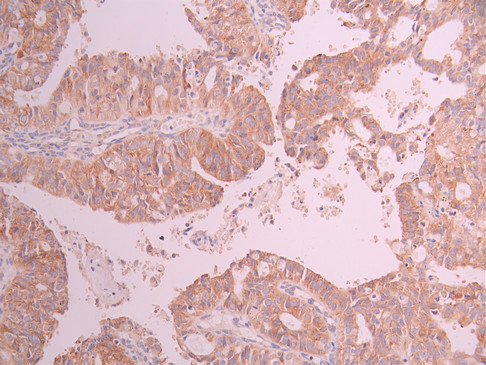
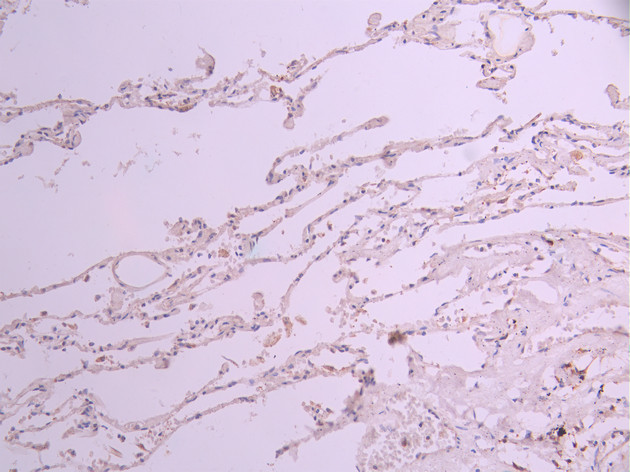
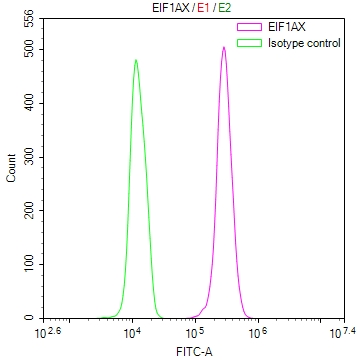
Validation data demonstrates robust performance across multiple applications and sample types. Western blot analysis confirms reliable detection in human cell lines including HeLa, A549, HEK293, A375, and HepG2, with the observed band appearing at approximately 18 kDa rather than the predicted 16 kDa—a shift likely attributable to post-translational modifications common to translation factors. Cross-species reactivity extends to mouse liver and rat brain tissue lysates, broadening utility for comparative studies. Immunohistochemistry validation in human ovarian cancer and lung tissue sections demonstrates clear staining patterns suitable for pathological investigations, while flow cytometry data from HeLa cells confirms applicability for single-cell analysis of intracellular EIF1AX expression.
Whether investigating translational control mechanisms, exploring cancer-associated mutations, or characterizing protein synthesis pathways, this antibody provides a dependable tool for researchers working at the intersection of gene expression regulation and disease biology.
There are currently no reviews for this product.





