
Call us
301-363-4651 (Available 9 a.m. to 5 p.m. CST from Monday to Friday)

| Code | CSB-RA906662A0HU |
| Size | US$210 |
| Order now | |
| Image |
|
| Have Questions? | Leave a Message or Start an on-line Chat |
| Application | Recommended Dilution |
|---|---|
| WB | 1:500-1:5000 |
| IHC | 1:50-1:200 |
HDAC3 (Histone deacetylase 3) plays a central role in epigenetic regulation by removing acetyl groups from histone lysine residues, thereby modulating chromatin structure and gene expression. As a Class I histone deacetylase, HDAC3 participates in transcriptional repression complexes and has emerged as a key player in cancer progression, metabolic regulation, and cardiovascular biology. Its involvement in these diverse pathways makes it an attractive target for researchers investigating epigenetic mechanisms and therapeutic interventions.
This recombinant monoclonal antibody, generated from clone 4D4, offers the reproducibility and consistency that demanding experimental workflows require. Because recombinant antibodies are produced from defined sequences rather than traditional hybridoma methods, you can expect reliable performance across experiments and between lots, eliminating a common source of variability in long-term studies.
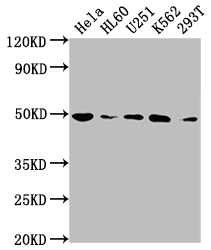
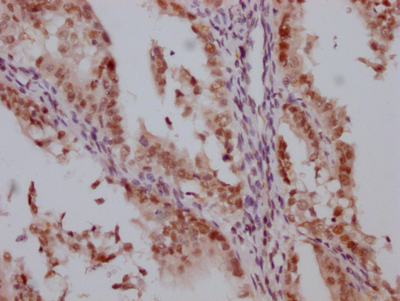
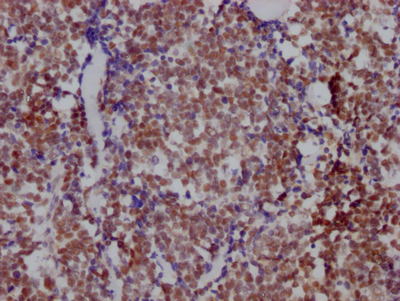
The antibody has been validated for Western blotting and immunohistochemistry applications, providing flexibility across your experimental pipeline. In Western blot analysis, it detects HDAC3 at the expected molecular weight of 49 kDa across multiple human cell lines, including HeLa, HL60, U251, K562, and 293T, demonstrating robust performance in diverse cellular contexts at dilutions ranging from 1:500 to 1:5000. For tissue-based studies, immunohistochemical validation in paraffin-embedded human endometrial cancer and lung cancer sections confirms nuclear localization patterns consistent with HDAC3's biological function, with effective staining achieved at 1:100 dilution.
Whether you're exploring HDAC3's role in tumor biology, investigating metabolic regulation, or studying stem cell differentiation, this antibody provides a dependable tool for advancing your research into epigenetic signaling mechanisms.
There are currently no reviews for this product.





