

Call us
301-363-4651 (Available 9 a.m. to 5 p.m. CST from Monday to Friday)

| Code | CSB-RA189750A0HU |
| Size | US$210 |
| Order now | |
| Image |
|
| Have Questions? | Leave a Message or Start an on-line Chat |
| Application | Recommended Dilution |
|---|---|
| WB | 1:500-1:5000 |
| IHC | 1:50-1:200 |
| IF | 1:50-1:200 |
| FC | 1:50-1:200 |
Homeodomain-interacting protein kinase 2 (HIPK2) serves as a critical nuclear serine/threonine kinase that orchestrates cellular responses to DNA damage, hypoxia, and developmental signals. This kinase phosphorylates key transcription factors and tumor suppressors, positioning it as an important regulator of apoptosis, cell cycle progression, and differentiation pathways. Researchers investigating stress response mechanisms, cancer biology, and developmental processes will find HIPK2 a compelling target for understanding how cells integrate diverse signals to determine cell fate decisions.
This recombinant monoclonal antibody, generated against a synthesized peptide from human HIPK2, offers the reproducibility that demanding experimental workflows require. As a sequence-defined reagent produced from a single rabbit clone (19E5), it delivers consistent performance across experiments and eliminates the lot-to-lot variability that can complicate longitudinal studies or multi-site collaborations. The affinity-chromatography purification ensures high specificity for your target.
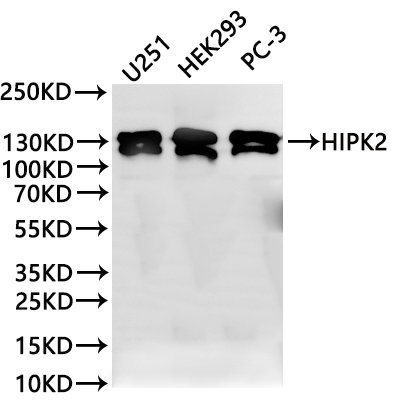
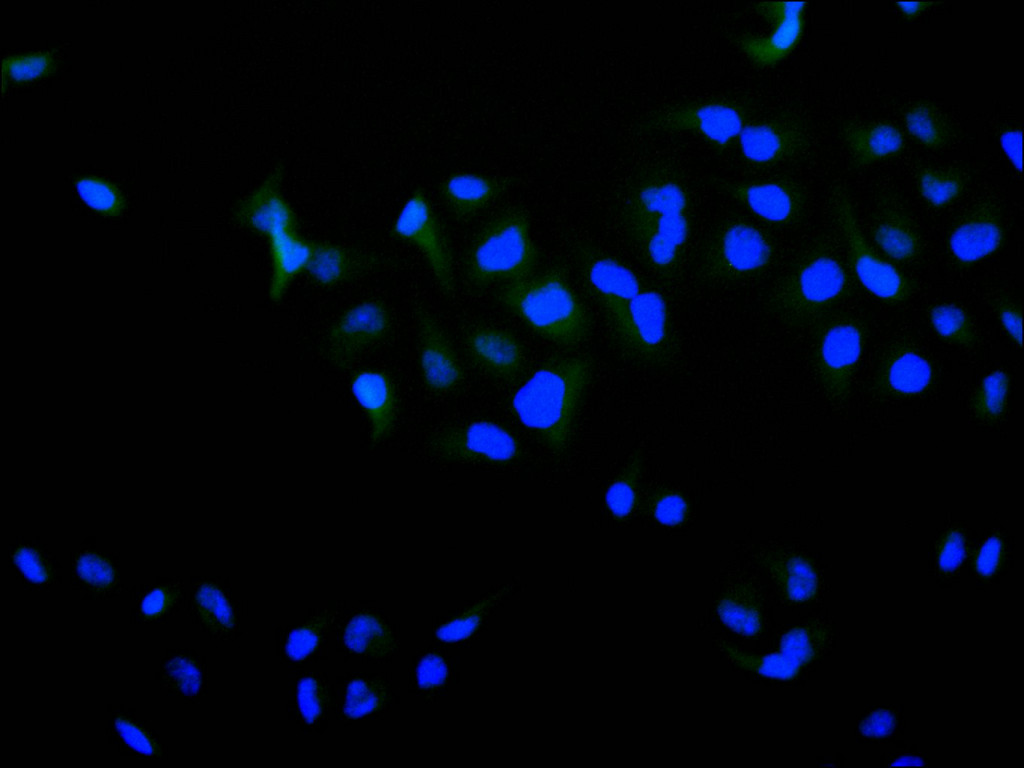
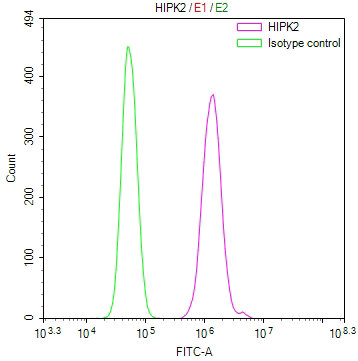
Validation testing demonstrates robust performance across multiple detection platforms. Western blot analysis confirms specific detection at the predicted 130 kDa molecular weight in U251 glioma, HEK293, and PC-3 prostate cancer cell lysates, providing confidence when working with diverse human cell models. Immunohistochemistry staining has been validated in paraffin-embedded human glioma tissue sections, while immunofluorescence studies in HeLa cells reveal the expected nuclear localization pattern. Flow cytometry validation in 786-O renal carcinoma cells further extends the application flexibility available to researchers.
Whether you are examining HIPK2 expression changes in cancer models, mapping its subcellular distribution during stress responses, or quantifying protein levels across experimental conditions, this antibody provides a reliable tool for cell biology investigations requiring consistent, publication-quality results.
There are currently no reviews for this product.





