
Call us
301-363-4651 (Available 9 a.m. to 5 p.m. CST from Monday to Friday)

| Code | CSB-RA829343A0HU |
| Size | US$210 |
| Order now | |
| Image |
|
| Have Questions? | Leave a Message or Start an on-line Chat |
| Application | Recommended Dilution |
|---|---|
| WB | 1:500-1:2000 |
| IHC | 1:50-1:200 |
| IF | 1:50-1:200 |
| FC | 1:50-1:200 |
Heterogeneous nuclear ribonucleoprotein A1 (hnRNP A1) serves as a critical regulator of mRNA metabolism, influencing pre-mRNA splicing, mRNA stability, and translation. This RNA-binding protein participates in telomere maintenance and has emerged as a significant factor in cancer biology, where its dysregulation contributes to altered splicing patterns that promote tumor progression. For researchers investigating RNA processing mechanisms, splicing regulation, or cancer-associated transcriptional changes, reliable detection of hnRNP A1 is essential.
This recombinant monoclonal antibody, generated against a synthetic peptide from human HNRNPA1, offers the consistency and reproducibility that demanding experimental workflows require. As a sequence-defined recombinant clone, it eliminates the lot-to-lot variability inherent in traditional hybridoma-derived antibodies, ensuring your optimization efforts translate reliably across experiments and projects.
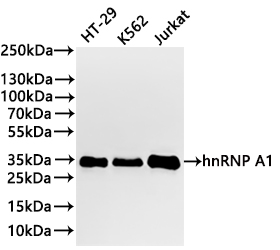
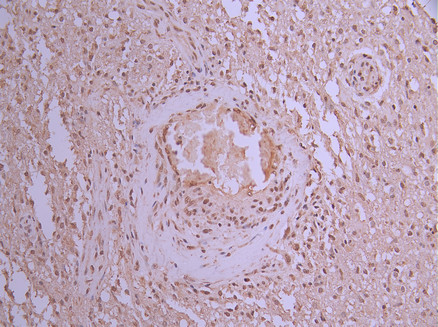
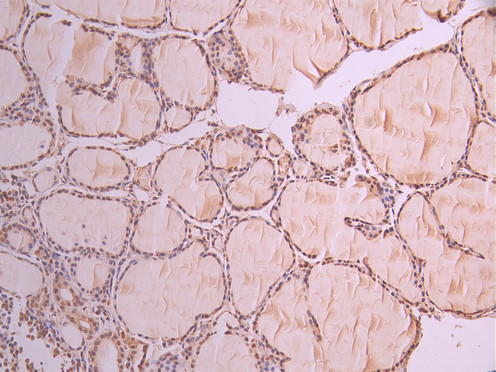
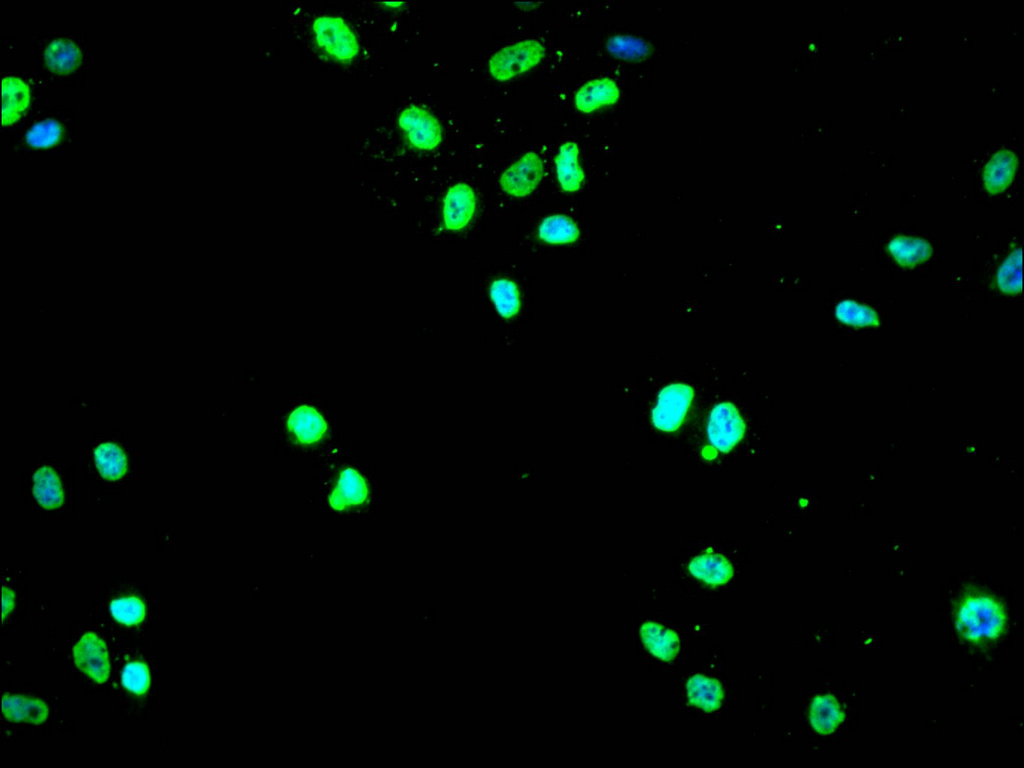
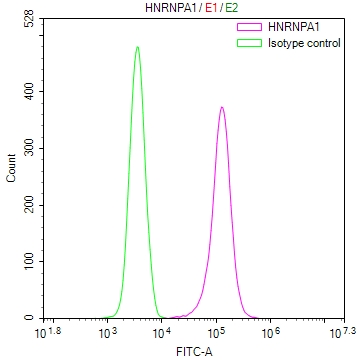
Validation across multiple platforms demonstrates genuine experimental flexibility. Western blot analysis detects hnRNP A1 in human cell lines including HT-29, K562, and Jurkat lysates, with an observed band at 34 kDa rather than the predicted 39 kDa—a difference likely attributable to proteolytic processing or post-translational modifications affecting electrophoretic mobility. Immunohistochemistry staining has been validated in paraffin-embedded human glioma and thyroid tissues, while immunofluorescence studies in HeLa cells reveal the expected nuclear localization pattern characteristic of this RNA-binding protein. Flow cytometry applications have been confirmed using Jurkat cells with clear separation from isotype controls.
Whether your research focuses on alternative splicing mechanisms, RNA-protein interactions, or the role of hnRNP A1 in disease pathology, this antibody provides a dependable tool for protein detection and localization studies across diverse experimental contexts.
There are currently no reviews for this product.





