
Call us
301-363-4651 (Available 9 a.m. to 5 p.m. CST from Monday to Friday)

| Code | CSB-RA010429A0HU |
| Size | US$210 |
| Order now | |
| Image |
|
| Have Questions? | Leave a Message or Start an on-line Chat |
| Application | Recommended Dilution |
|---|---|
| IHC | 1:50-1:500 |
Histone H4 serves as one of the four core histone proteins that form the nucleosome, the fundamental unit of chromatin organization. As a highly conserved protein across eukaryotes, Histone H4 plays essential roles in DNA packaging, gene regulation, and epigenetic inheritance. Post-translational modifications of Histone H4, including acetylation and methylation of specific lysine residues, constitute critical epigenetic marks that influence transcriptional activity and chromatin accessibility, making this protein a central focus in cancer biology, developmental studies, and chromatin research.
This recombinant monoclonal antibody, clone 21E8, offers researchers the reproducibility and consistency that recombinant technology provides. Generated against a synthetic peptide immunogen and produced in rabbit host cells, this antibody delivers sequence-defined specificity with minimal lot-to-lot variation, ensuring that your experimental conditions remain stable across long-term studies and multi-site collaborations.
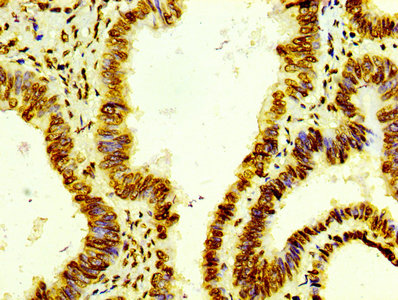
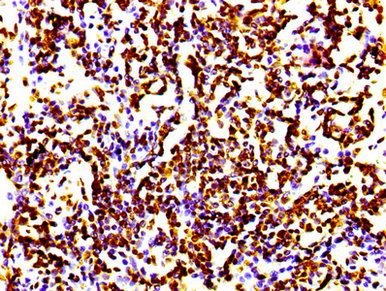
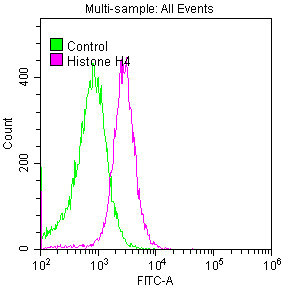
Validation studies demonstrate robust performance in immunohistochemistry applications using human tissue samples. Testing in paraffin-embedded human colon cancer and lung cancer tissues at 1:100 dilution reveals clear nuclear staining patterns consistent with Histone H4 localization, following citrate buffer antigen retrieval. Flow cytometry validation using HeLa cells confirms intracellular detection capability, with distinct signal separation from control antibody when cells are fixed with ethanol and permeabilized with Triton X-100.
The recommended working dilution range of 1:50 to 1:500 for immunohistochemistry provides flexibility for optimization across different tissue types and experimental conditions. This antibody supports researchers investigating epigenetics and nuclear signaling pathways, offering a reliable tool for examining chromatin biology in both normal and pathological contexts.
There are currently no reviews for this product.





