
Call us
301-363-4651 (Available 9 a.m. to 5 p.m. CST from Monday to Friday)

| Code | CSB-RA011629MA3HU |
| Size | US$210 |
| Order now | |
| Image |
|
| Have Questions? | Leave a Message or Start an on-line Chat |
| Application | Recommended Dilution |
|---|---|
| IHC | 1:50-1:200 |
Interleukin-2 stands as a cornerstone cytokine in adaptive immunity, functioning as the primary driver of T cell clonal expansion following antigen recognition. Originally identified as T-cell growth factor, IL-2 orchestrates critical immune responses by promoting the proliferation and differentiation of activated T lymphocytes, making it an essential target for researchers investigating immune regulation, autoimmunity, and cancer immunotherapy.
This recombinant monoclonal antibody against human IL-2 offers the reproducibility and consistency that demanding immunological research requires. Developed using recombinant technology with clone 5B2, this antibody provides a sequence-defined reagent that eliminates the lot-to-lot variability often encountered with traditional hybridoma-derived antibodies. The mouse IgG1 isotype and affinity chromatography purification ensure high specificity for your target while minimizing background interference.
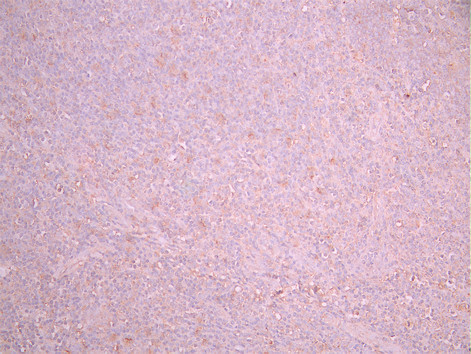
Validation in immunohistochemistry demonstrates reliable detection of IL-2 in paraffin-embedded human tonsil tissue, a lymphoid organ where IL-2-producing T cells naturally reside. Testing on a Leica Bond system with citrate buffer antigen retrieval at pH 6.0 and overnight primary antibody incubation at 4°C yielded clear visualization using HRP-polymer detection. Recommended working dilutions of 1:50 to 1:200 for IHC provide flexibility to optimize signal intensity for your specific tissue preparations. The antibody is also validated for ELISA applications, extending its utility across different experimental platforms.
Supplied in a stabilized liquid format containing 50% glycerol in PBS with Proclin 300 preservative, this antibody maintains activity through proper storage at -20°C or -80°C. Researchers studying T cell biology, cytokine signaling, transplant immunology, or immunotherapeutic mechanisms will find this reagent well-suited for characterizing IL-2 expression in human tissue samples.
There are currently no reviews for this product.





