
Call us
301-363-4651 (Available 9 a.m. to 5 p.m. CST from Monday to Friday)

| Code | CSB-RA011658MA1HU |
| Size | $49.9 |
| Order now | |
| Promotion |

|
| Image |
|
| Have Questions? | Leave a Message or Start an on-line Chat |
| Application | Recommended Dilution |
|---|---|
| IHC | 1:50-1:200 |
IL3RA, commonly known as CD123, serves as the alpha subunit of the interleukin-3 receptor and plays a central role in hematopoietic cell development and immune regulation. This receptor is particularly significant in immunology research due to its elevated expression on plasmacytoid dendritic cells, basophils, and notably on leukemic stem cells in acute myeloid leukemia, making it a valuable marker for both basic research and translational studies.
This recombinant monoclonal antibody, clone 29E11, offers the consistency and reliability that demanding experimental workflows require. Because it is produced using recombinant technology with a defined sequence, researchers benefit from exceptional lot-to-lot reproducibility, eliminating the variability often encountered with traditional hybridoma-derived antibodies. The human IgG1 isotype format and affinity-chromatography purification ensure high specificity and minimal background in detection systems.
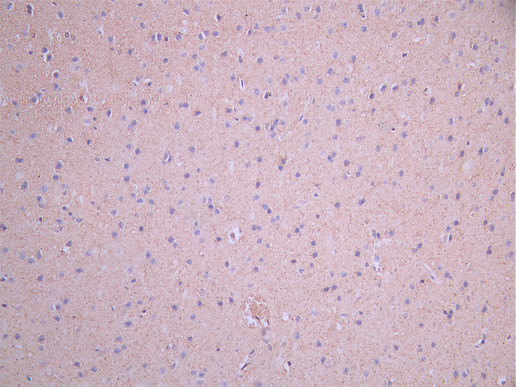
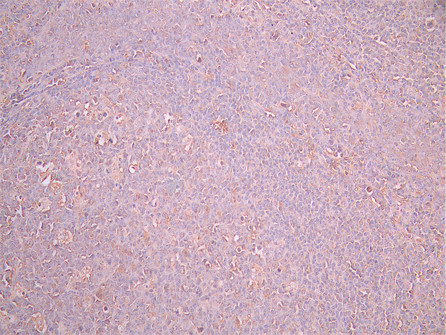
Validated for immunohistochemistry applications, this antibody has demonstrated effective staining in both human tonsil tissue and mouse brain tissue at dilutions of 1:50, with a recommended working range of 1:50 to 1:200. The cross-species reactivity with human and mouse samples provides flexibility for researchers working across different model systems. Validation studies employed citrate buffer antigen retrieval at pH 6.0 with overnight primary antibody incubation at 4°C, followed by HRP-conjugated anti-human IgG detection and DAB visualization on a Leica Bond system.
Whether investigating IL3RA expression patterns in immune cell populations, characterizing hematopoietic malignancies, or exploring cytokine receptor biology, this antibody delivers the performance and reproducibility essential for generating publication-quality immunohistochemistry data in immunology research.
There are currently no reviews for this product.





