
Call us
301-363-4651 (Available 9 a.m. to 5 p.m. CST from Monday to Friday)

| Code | CSB-RA157463A0HU |
| Size | US$210 |
| Order now | |
| Image |
|
| Have Questions? | Leave a Message or Start an on-line Chat |
| Application | Recommended Dilution |
|---|---|
| WB | 1:500-1:5000 |
| IHC | 1:50-1:200 |
| IP | 1:200-1:1000 |
INPP5D, commonly known as SHIP-1, serves as a critical negative regulator of phosphoinositide 3-kinase signaling pathways, playing essential roles in immune cell development, activation, and homeostasis. This lipid phosphatase hydrolyzes the 5-phosphate from phosphatidylinositol 3,4,5-trisphosphate, effectively dampening PI3K-mediated signaling cascades. SHIP-1's predominant expression in hematopoietic cells makes it a key focus in immunology research, particularly in studies examining immune cell function, inflammatory responses, and hematological malignancies.
This recombinant monoclonal antibody, clone 9G11, offers the reproducibility and consistency that demanding experimental workflows require. Generated against a synthetic peptide derived from human SHIP, the antibody is produced using recombinant technology, ensuring sequence-defined specificity and eliminating the lot-to-lot variability that can compromise longitudinal studies. Affinity chromatography purification delivers a reagent ready for sensitive detection applications.
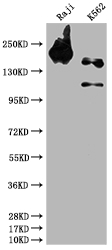
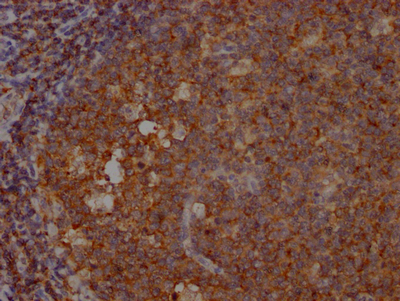
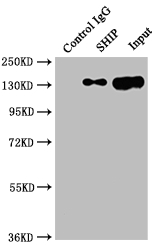
Validation studies demonstrate robust performance across multiple experimental platforms. Western blot analysis in Raji and K562 whole cell lysates reveals detection at approximately 145 kDa, slightly higher than the predicted molecular weights of 134 and 110 kDa, a difference likely attributable to post-translational modifications such as glycosylation or phosphorylation events common to this protein. Immunohistochemistry staining in paraffin-embedded human tonsil tissue confirms utility for tissue-based studies, while immunoprecipitation experiments in Raji lysates validate the antibody's capacity to capture native SHIP-1 protein complexes for downstream analysis.
Whether investigating SHIP-1's role in signal transduction pathways or exploring its function in immune regulation, this antibody provides researchers with a reliable tool validated for western blotting, immunohistochemistry, immunoprecipitation, and ELISA applications in human samples.
There are currently no reviews for this product.





