
Call us
301-363-4651 (Available 9 a.m. to 5 p.m. CST from Monday to Friday)

| Code | CSB-RA342667A0HU |
| Size | US$210 |
| Order now | |
| Image |
|
| Have Questions? | Leave a Message or Start an on-line Chat |
| Application | Recommended Dilution |
|---|---|
| IHC | 1:50-1:200 |
| FC | 1:50-1:200 |
NCOA1, also known as Steroid Receptor Coactivator 1 (SRC-1), functions as a critical transcriptional coactivator that bridges nuclear hormone receptors to the basal transcription machinery. This protein possesses intrinsic histone acetyltransferase activity and plays essential roles in hormone-dependent gene regulation, making it a key target for researchers investigating steroid signaling pathways, metabolic regulation, and hormone-responsive cancers.
This recombinant monoclonal antibody against human NCOA1 offers the consistency and reliability that demanding experimental workflows require. Generated from a defined sequence and produced as clone 10C12, this rabbit IgG antibody eliminates the lot-to-lot variability inherent in traditional hybridoma-derived reagents. Researchers can confidently design long-term studies knowing that antibody performance will remain stable across multiple experiments and reorders.
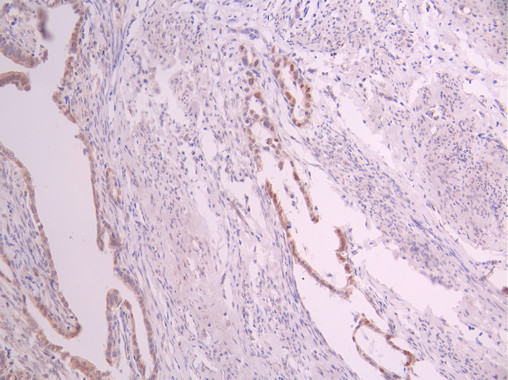
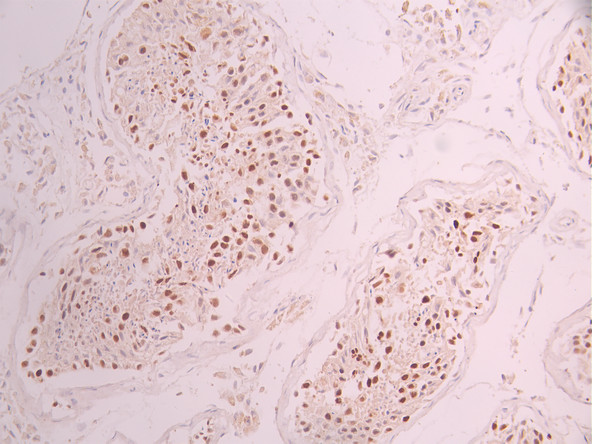
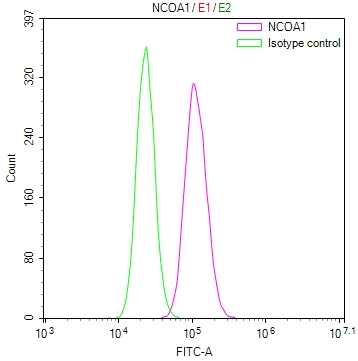
Validation studies demonstrate robust performance across multiple applications. Immunohistochemistry testing on paraffin-embedded human tissues reveals clear nuclear staining patterns in both cervical cancer and testis sections at 1:100 dilution using citrate buffer antigen retrieval. Flow cytometry analysis using the PC-3 prostate cancer cell line shows distinct positive signal separation from isotype control, confirming utility for intracellular protein detection in fixed and permeabilized cells. The antibody is also validated for ELISA applications.
The unconjugated format provides flexibility for researchers to pair this antibody with their preferred detection systems, while the liquid formulation in glycerol-containing buffer ensures stability during storage at recommended temperatures.
This NCOA1 antibody serves researchers exploring nuclear receptor signaling, transcriptional regulation, and hormone-dependent malignancies, providing a reliable tool for characterizing coactivator expression and localization in human tissues and cell models.
There are currently no reviews for this product.





