
Call us
301-363-4651 (Available 9 a.m. to 5 p.m. CST from Monday to Friday)

| Code | CSB-RA351810MA1HU |
| Size | US$210 |
| Order now | |
| Image |
|
| Have Questions? | Leave a Message or Start an on-line Chat |
| Application | Recommended Dilution |
|---|---|
| IF | 1:50-1:200 |
| FC | 1:50-1:200 |
Peptidyl-prolyl cis-trans isomerase A, commonly known as Cyclophilin A, serves as a critical molecular chaperone that catalyzes the cis-trans isomerization of proline residues in proteins, facilitating proper protein folding and cellular homeostasis. Beyond its enzymatic role, PPIA participates in diverse biological processes including immune regulation, viral replication, and inflammatory signaling, making it a target of significant interest in immunology, infectious disease research, and studies of cellular stress responses. Its well-characterized interaction with the immunosuppressant cyclosporin A has established PPIA as a key player in transplant biology and autoimmune disease research.
This recombinant monoclonal antibody, clone 11B12, offers researchers the reproducibility and consistency that recombinant technology provides. Because the antibody sequence is defined and produced in controlled expression systems, you can expect uniform performance across experiments and over time, eliminating the lot-to-lot variability that can complicate long-term studies or multi-site collaborations. The human IgG1 isotype format and affinity-chromatography purification ensure high specificity for human PPIA detection.
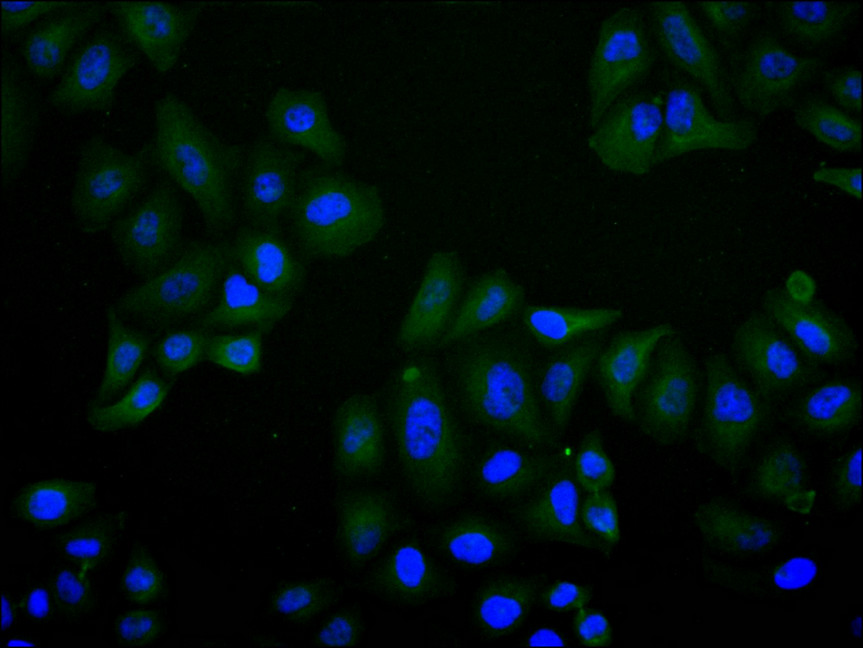
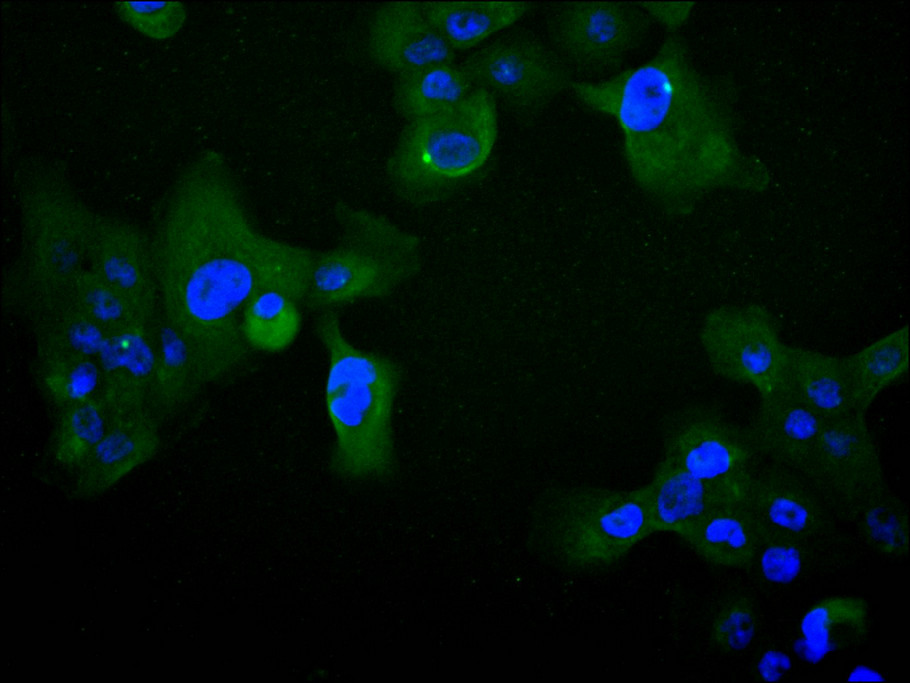
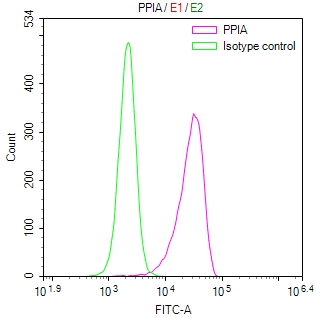
Validation studies demonstrate reliable performance in immunofluorescence applications, where the antibody successfully detected PPIA in both HeLa and A431 cell lines at dilutions of 1:30, revealing the expected cytoplasmic localization pattern. Flow cytometry analysis using Raji cells confirmed specific detection with clear separation from isotype control, supporting quantitative studies of PPIA expression at the single-cell level. These validated applications provide flexibility for researchers investigating PPIA in fixed and permeabilized cell preparations.
This antibody supports investigations into protein folding mechanisms, cyclosporin A-mediated immunosuppression, viral pathogenesis, and inflammatory disease pathways where PPIA dysregulation has been implicated.
There are currently no reviews for this product.





