
Call us
301-363-4651 (Available 9 a.m. to 5 p.m. CST from Monday to Friday)

| Code | CSB-RA051594A0HU |
| Size | US$210 |
| Order now | |
| Image |
|
| Have Questions? | Leave a Message or Start an on-line Chat |
| Application | Recommended Dilution |
|---|---|
| IHC | 1:50-1:200 |
| FC | 1:50-1:200 |
Tau protein phosphorylation at serine 199 represents a critical early event in the pathological cascade underlying Alzheimer's disease and related tauopathies. This specific phosphorylation site contributes to tau's detachment from microtubules, promoting the formation of neurofibrillary tangles that serve as hallmark pathological features in neurodegenerative conditions. Detecting phospho-MAPT at S199 enables researchers to investigate disease progression mechanisms and evaluate potential therapeutic interventions targeting tau hyperphosphorylation.
This recombinant monoclonal antibody, generated against a synthetic peptide from human MAPT, offers the reproducibility essential for longitudinal studies and multi-site collaborations. The sequence-defined nature of recombinant production eliminates the lot-to-lot variability that can compromise experimental consistency, particularly important when tracking subtle changes in phosphorylation states across disease models or treatment conditions.
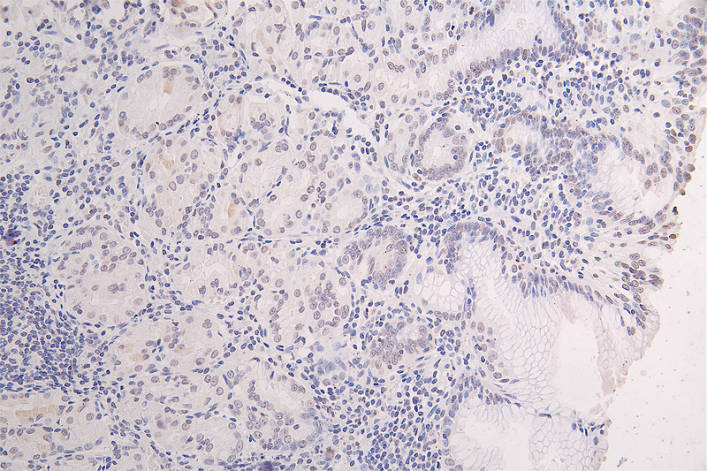
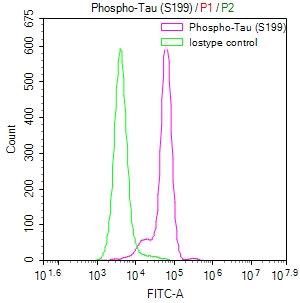
Validation studies demonstrate reliable performance across complementary detection platforms. Immunohistochemistry on paraffin-embedded human brain tissue using a Leica Bond system with citrate buffer antigen retrieval produces clear signal at dilutions between 1:50 and 1:200, enabling visualization of phospho-tau distribution in clinically relevant specimens. Flow cytometry analysis using SH-SY5Y neuroblastoma cells confirms intracellular detection capability, with distinct positive population shifts compared to isotype controls following formaldehyde fixation and Triton X-100 permeabilization. This neuronal cell line represents a widely used model for studying tau biology and neurodegenerative mechanisms.
The combination of tissue-based and cell-based validation provides workflow flexibility for researchers investigating tau phosphorylation dynamics in both archival clinical samples and experimental cell culture systems, supporting studies spanning basic neuroscience through translational signal transduction research.
There are currently no reviews for this product.





