
Call us
301-363-4651 (Available 9 a.m. to 5 p.m. CST from Monday to Friday)

| Code | CSB-RA618984A359phHU |
| Size | US$210 |
| Order now | |
| Image |
|
| Have Questions? | Leave a Message or Start an on-line Chat |
| Application | Recommended Dilution |
|---|---|
| WB | 1:500-1:5000 |
| IF | 1:20-1:200 |
| IP | 1:200-1:1000 |
RPS6KA1, also known as p90RSK or RSK-1, serves as a critical downstream effector in the MAPK/ERK signaling cascade, where it integrates mitogenic signals to regulate cell growth, proliferation, and survival. Phosphorylation at threonine 359 and serine 363 within the linker region represents a key activation event, making these residues valuable markers for monitoring pathway activity in response to growth factors, stress, and oncogenic signaling.
This recombinant monoclonal antibody, clone 1B6, offers researchers the reproducibility essential for phospho-specific detection. Generated against a synthetic phosphopeptide encompassing the T359 and S363 sites of human RPS6KA1, the antibody provides sequence-defined specificity that remains consistent across experiments and over time. The recombinant production format eliminates the lot-to-lot variability that can complicate longitudinal studies of dynamic phosphorylation events.
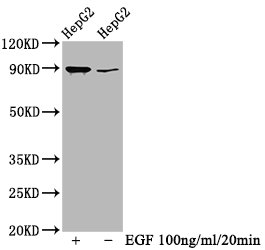
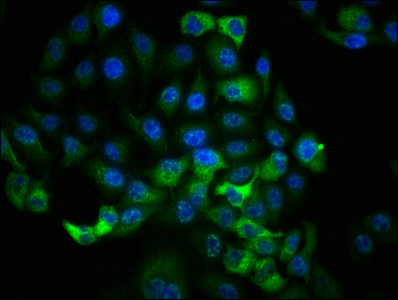
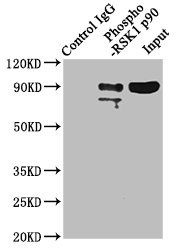
Validation across multiple experimental platforms demonstrates the antibody's versatility in signal transduction research. Western blot analysis in HepG2 cells reveals a clean 90 kDa band matching the predicted molecular weight, with EGF treatment conditions allowing researchers to assess stimulus-dependent phosphorylation changes. Immunofluorescence staining in HeLa cells enables visualization of subcellular localization patterns, while immunoprecipitation from HeLa lysates supports enrichment strategies for downstream analysis of RSK-1 activation complexes.
The antibody arrives in a stabilized liquid format containing glycerol and BSA for long-term storage at -20°C or -80°C, ready for immediate use across recommended working dilutions. For researchers investigating MAPK pathway dynamics, growth factor signaling, or the molecular mechanisms underlying proliferative disorders, this phospho-specific antibody provides a reliable tool for interrogating RSK-1 activation status in human experimental systems.
There are currently no reviews for this product.





