
Call us
301-363-4651 (Available 9 a.m. to 5 p.m. CST from Monday to Friday)

| Code | CSB-RA019260MA1HU |
| Size | US$210 |
| Order now | |
| Image |
|
| Have Questions? | Leave a Message or Start an on-line Chat |
| Application | Recommended Dilution |
|---|---|
| IF | 1:50-1:200 |
| FC | 1:50-1:200 |
RAD23B plays a central role in nucleotide excision repair and protein quality control, functioning as a key component of the XPC repair complex that recognizes and processes DNA damage caused by UV radiation and environmental mutagens. Beyond its DNA repair functions, RAD23B serves as a shuttle factor that delivers ubiquitinated substrates to the proteasome, positioning it at the intersection of genome maintenance and protein homeostasis pathways that are frequently dysregulated in cancer and neurodegenerative diseases.
This recombinant monoclonal antibody against human RAD23B offers the reproducibility and consistency that demanding research applications require. Generated through recombinant technology with a defined sequence, this clone (16H2) eliminates the lot-to-lot variability inherent in traditional hybridoma-derived antibodies, ensuring your experimental conditions remain stable across long-term studies. The human IgG1 isotype format, produced against recombinant human RAD23B protein and purified by affinity chromatography, delivers reliable target recognition for quantitative analyses.
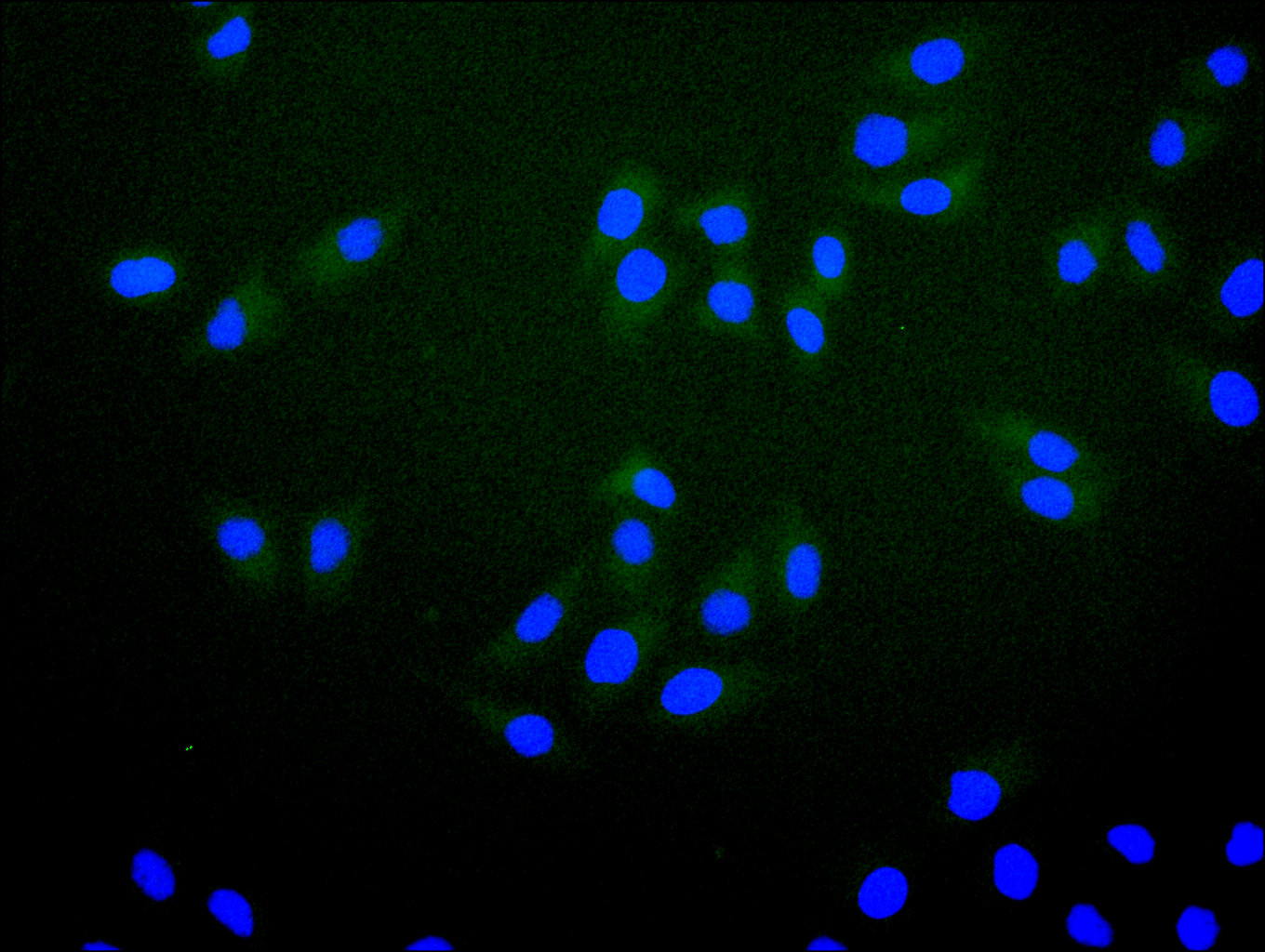
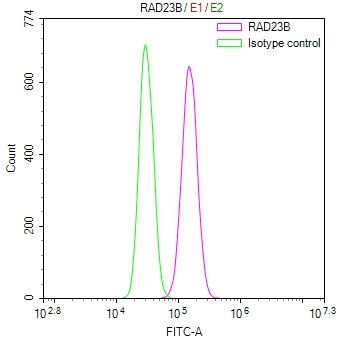
Validation studies demonstrate strong performance in both immunofluorescence and flow cytometry applications using HeLa cells. Immunofluorescence staining at dilutions of 1:50–1:200 reveals clear nuclear localization patterns consistent with RAD23B's known biological functions, while flow cytometry analysis shows distinct positive population shifts compared to isotype controls, confirming specific target detection in fixed and permeabilized cells.
This antibody supports investigations into DNA damage response mechanisms, ubiquitin-proteasome pathway regulation, and epigenetic signaling networks. Researchers studying nucleotide excision repair deficiencies, xeroderma pigmentosum complementation groups, or proteasomal degradation pathways will find this reagent well-suited for cellular localization studies and quantitative population analyses in human cell models.
There are currently no reviews for this product.





