
Call us
301-363-4651 (Available 9 a.m. to 5 p.m. CST from Monday to Friday)

| Code | CSB-RA253160A0HU |
| Size | US$210 |
| Order now | |
| Image |
|
| Have Questions? | Leave a Message or Start an on-line Chat |
| Application | Recommended Dilution |
|---|---|
| WB | 1:500-1:2000 |
| IHC | 1:50-1:200 |
| IF | 1:50-1:200 |
| FC | 1:50-1:200 |
RBM3 (RNA-binding motif protein 3) is a cold-inducible RNA-binding protein that plays a critical role in cellular stress responses, particularly under conditions of hypothermia and hypoxia. This protein has garnered significant research interest for its neuroprotective properties and its involvement in regulating mRNA stability and translation during cellular stress. RBM3 expression patterns have also emerged as relevant markers in cancer biology, where altered levels may influence tumor progression and patient outcomes.
This recombinant monoclonal antibody, clone 1D4, offers researchers the reproducibility and consistency that comes with sequence-defined production. Unlike traditional hybridoma-derived antibodies, recombinant technology ensures that every lot performs identically, eliminating the variability that can compromise longitudinal studies or multi-site collaborations. The rabbit IgG format provides excellent signal-to-noise characteristics across diverse experimental platforms.
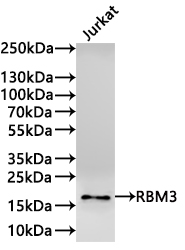
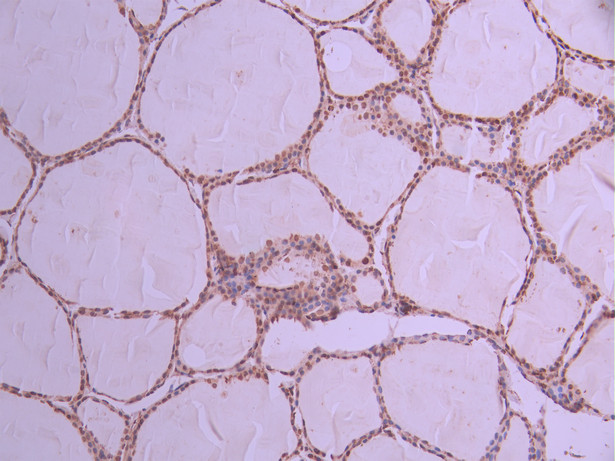
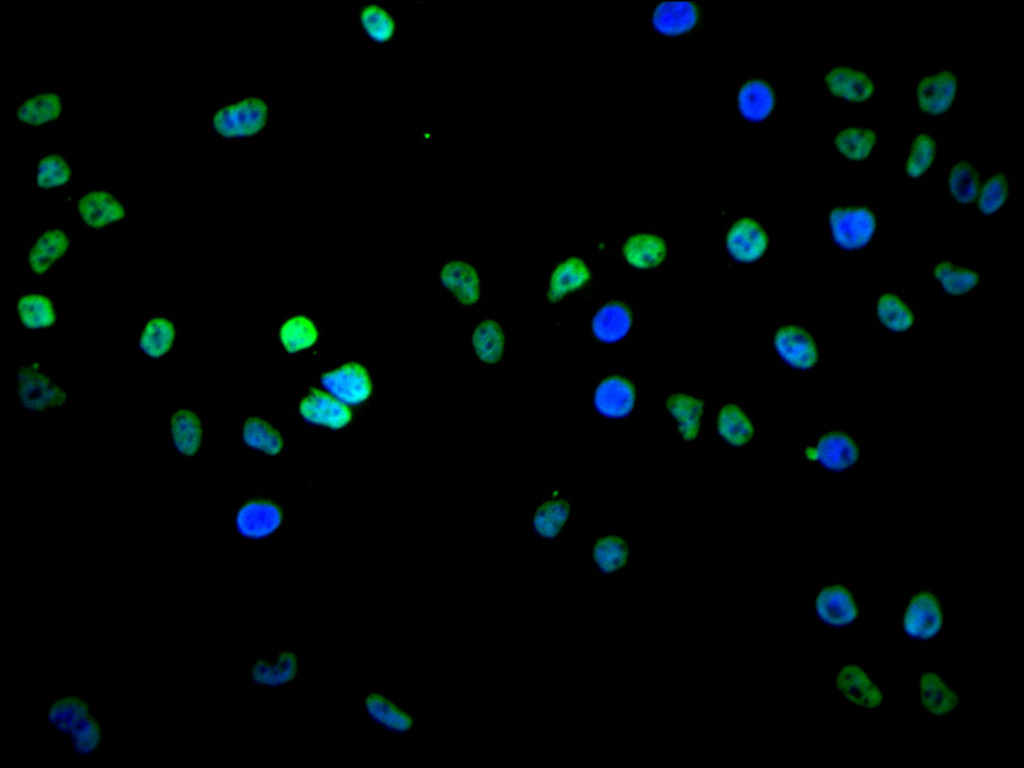
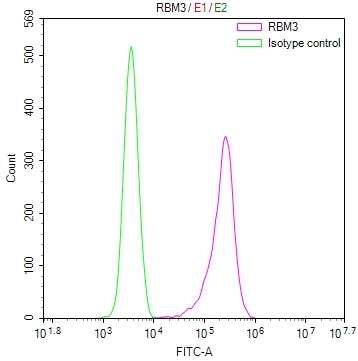
Validation testing demonstrates reliable performance across multiple applications, giving researchers flexibility in their experimental design. Western blot analysis in Jurkat whole cell lysate detects a clean band at the predicted 17 kDa molecular weight, confirming target specificity at dilutions between 1:500 and 1:2000. Immunohistochemistry staining in paraffin-embedded human thyroid tissue reveals clear localization patterns, while immunofluorescence studies in HeLa cells enable subcellular visualization of RBM3 distribution. Flow cytometry validation in Jurkat cells further expands utility for quantitative single-cell analysis.
The antibody is supplied in a glycerol-containing buffer optimized for long-term stability at -20°C or -80°C. This RBM3 antibody serves researchers investigating stress response mechanisms, hypothermia-induced neuroprotection, and cancer biomarker studies where consistent, high-quality detection is essential for meaningful results.
There are currently no reviews for this product.





