
Call us
301-363-4651 (Available 9 a.m. to 5 p.m. CST from Monday to Friday)

| Code | CSB-RA021369MA1HU |
| Size | US$210 |
| Order now | |
| Image |
|
| Have Questions? | Leave a Message or Start an on-line Chat |
| Application | Recommended Dilution |
|---|---|
| IHC | 1:20-1:200 |
| FC | 1:20-1:200 |
SLAMF7, also known as CS1 or CD319, is a cell surface glycoprotein belonging to the SLAM family of immunomodulatory receptors. Expressed predominantly on natural killer cells, activated B cells, and plasma cells, SLAMF7 plays a critical role in immune cell activation and cytotoxicity. Its elevated expression on multiple myeloma cells has made it a compelling therapeutic target, with SLAMF7-directed antibodies now established in clinical oncology. For researchers investigating immune cell biology, tumor immunology, or therapeutic antibody mechanisms, reliable detection of SLAMF7 is essential.
This recombinant monoclonal antibody, clone 7H1, offers the consistency and reproducibility that demanding immunological studies require. Generated against recombinant human SLAMF7 protein and produced using recombinant technology, this antibody provides sequence-defined specificity with minimal lot-to-lot variation. This means your experimental conditions remain stable across long-term projects and multi-site collaborations, reducing the troubleshooting burden that can accompany traditional hybridoma-derived reagents.
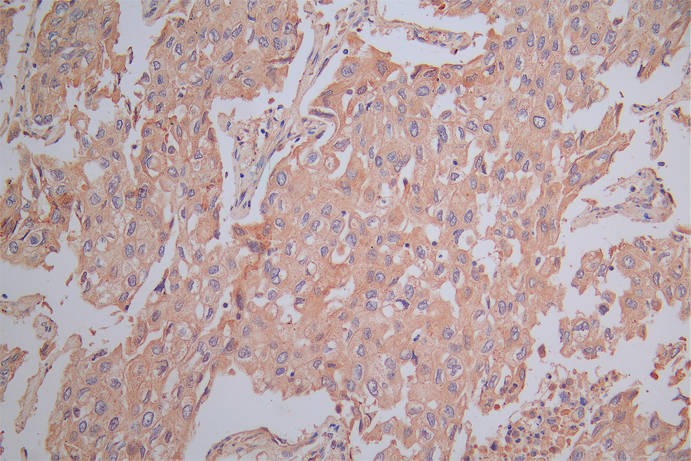
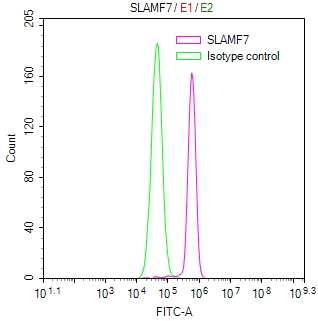
Validation studies confirm robust performance across multiple platforms. Immunohistochemical staining of paraffin-embedded human lung cancer tissue demonstrates clear target detection using citrate buffer antigen retrieval, with effective results at dilutions from 1:20 to 1:200. Flow cytometry analysis using A549 cells shows distinct surface staining with clean separation from isotype control, confirming specificity for cell surface SLAMF7 detection in human samples.
Whether you are characterizing immune cell populations, investigating SLAMF7 expression patterns in tumor microenvironments, or validating therapeutic targeting strategies, this antibody delivers the flexibility to move seamlessly between tissue-based and cell-based workflows. The unconjugated format allows pairing with your preferred detection systems across immunology and oncology research applications.
There are currently no reviews for this product.





