
Call us
301-363-4651 (Available 9 a.m. to 5 p.m. CST from Monday to Friday)

| Code | CSB-RA160607A0HU |
| Size | US$210 |
| Order now | |
| Image |
|
| Have Questions? | Leave a Message or Start an on-line Chat |
| Application | Recommended Dilution |
|---|---|
| IHC | 1:50-1:200 |
TNFRSF10D, also known as TRAIL-R4 or DcR2, functions as a decoy receptor within the TRAIL signaling pathway, playing a critical regulatory role in apoptosis. Unlike death-inducing TRAIL receptors, TNFRSF10D contains a truncated death domain that prevents it from transmitting apoptotic signals, effectively competing for TRAIL binding and protecting cells from programmed cell death. This protective mechanism has significant implications for cancer research, where tumor cells may exploit decoy receptor expression to evade TRAIL-mediated immune surveillance.
This recombinant monoclonal antibody, generated from clone 21F5 in rabbit host, offers the consistency and reliability that demanding research applications require. Because the antibody sequence is defined and produced through recombinant technology, you can expect reproducible performance across experiments and between lots, eliminating the variability that can complicate long-term studies or multi-site collaborations. The antibody was raised against a synthesized peptide derived from human TNFRSF10D protein, ensuring specificity for your target of interest.
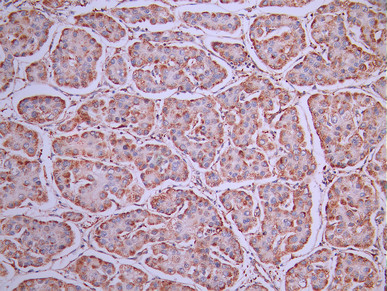
Validation in immunohistochemistry demonstrates effective performance in paraffin-embedded human tissue sections. Testing in human liver cancer tissue using a Leica Bond system with citrate buffer antigen retrieval and HRP-polymer detection confirmed clear staining at 1:100 dilution, with recommended working dilutions ranging from 1:50 to 1:200 depending on your specific tissue and detection system. The antibody is also validated for ELISA applications, providing flexibility across your experimental workflow.
Supplied in a stabilized liquid format with glycerol for convenient storage at -20°C or -80°C, this antibody is well-suited for researchers investigating TRAIL pathway regulation, apoptosis resistance mechanisms, and tumor biology.
There are currently no reviews for this product.





