
Call us
301-363-4651 (Available 9 a.m. to 5 p.m. CST from Monday to Friday)

| Code | CSB-RA067816A0HU |
| Size | US$210 |
| Order now | |
| Image |
|
| Have Questions? | Leave a Message or Start an on-line Chat |
| Application | Recommended Dilution |
|---|---|
| WB | 1:500-1:2000 |
| IF | 1:50-1:200 |
| FC | 1:50-1:200 |
Thioredoxin reductase 1 (TXNRD1) serves as a critical cytoplasmic selenoenzyme within the thioredoxin antioxidant system, playing an essential role in maintaining cellular redox homeostasis. This enzyme reduces oxidized thioredoxin, thereby supporting numerous downstream processes including DNA synthesis, cell proliferation, and protection against oxidative stress. TXNRD1 has garnered significant research attention due to its elevated expression in various cancer types and its emerging role as a therapeutic target, making reliable detection tools invaluable for investigators studying redox biology and oncology.
This recombinant monoclonal antibody, clone 6H12, offers the reproducibility and consistency that demanding research applications require. Produced using recombinant technology with a defined sequence, this rabbit IgG antibody eliminates the lot-to-lot variability often encountered with traditional hybridoma-derived reagents, ensuring your experimental results remain comparable across studies and timeframes.
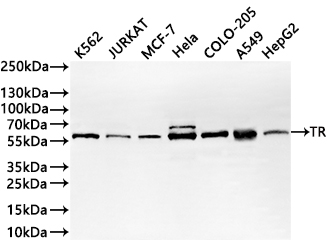
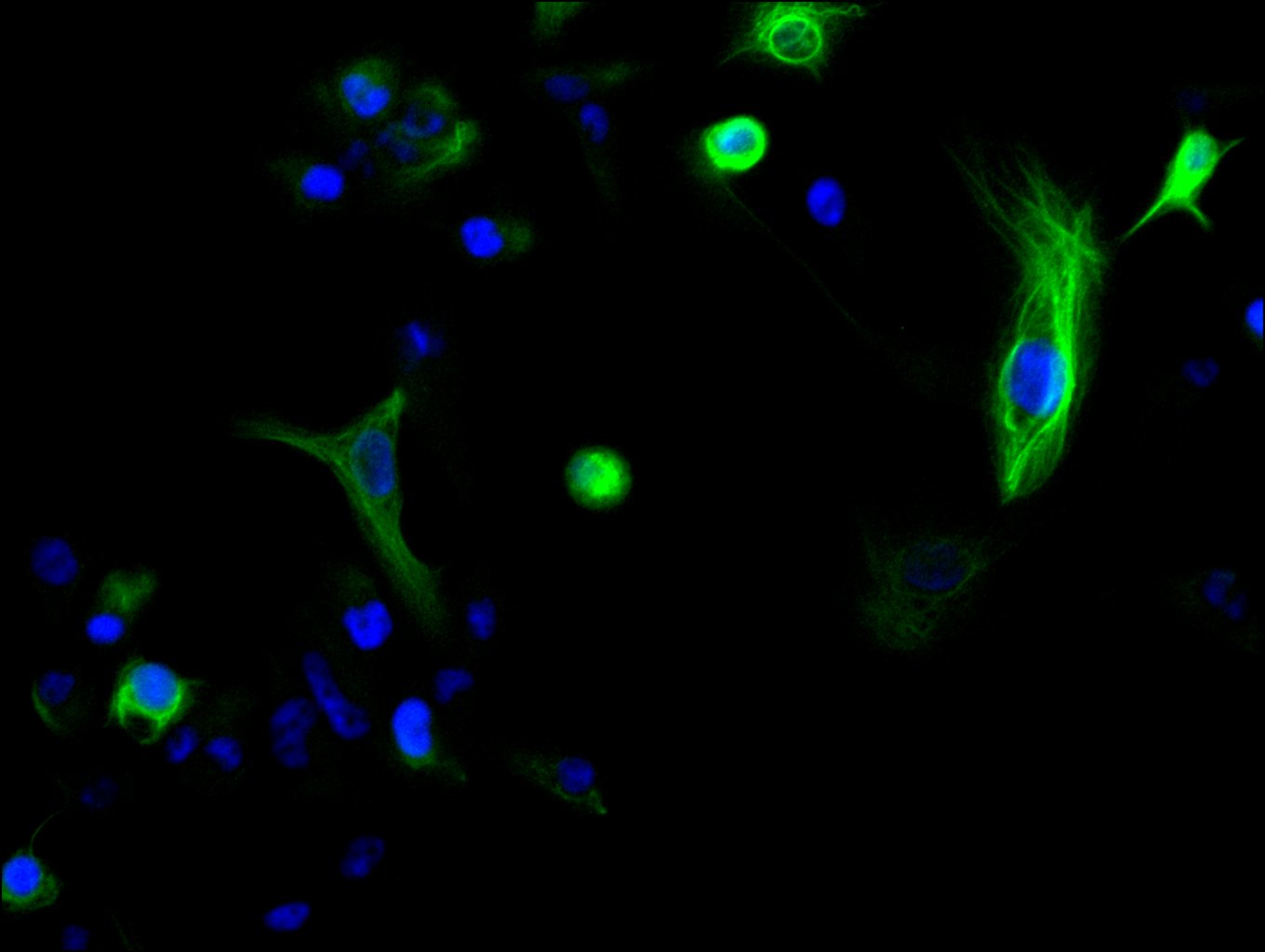
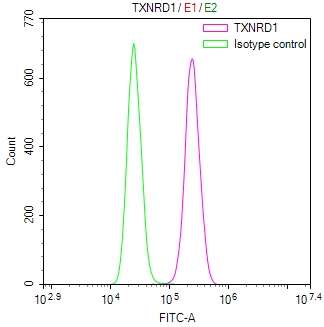
Validation across multiple platforms demonstrates the antibody's versatility for diverse experimental workflows. Western blot analysis confirms robust detection in human cell lines including K562, Jurkat, MCF-7, HeLa, COLO-205, A549, and HepG2, with an observed band at approximately 57 kDa. The observed ~57 kDa band corresponds to the mature, processed isoform of TXNRD1, while the predicted 71 kDa likely represents a longer, unverified theoretical precursor or database entry. Immunofluorescence staining in HepG2 cells reveals clear cytoplasmic localization consistent with the enzyme's known subcellular distribution, while flow cytometry analysis in HeLa cells demonstrates distinct positive population shifts suitable for quantitative single-cell studies.
Whether investigating oxidative stress responses, characterizing tumor cell metabolism, or exploring selenoprotein biology, this antibody provides a dependable tool for advancing your research into TXNRD1 function and regulation.
There are currently no reviews for this product.





