
Call us
301-363-4651 (Available 9 a.m. to 5 p.m. CST from Monday to Friday)

CD96 has emerged as a highly regarded immune checkpoint molecule in recent years, demonstrating increasing value in maintaining immune homeostasis and in disease treatment. This article systematically reviews the molecular background, mechanisms of action, signaling pathways, associated diseases, and drug research progress related to CD96, aiming to provide a reference for further mechanistic studies and the development of targeted therapeutic strategies.
1. What is CD96: Research Background and Clinical Value of an Emerging Immune Checkpoint
2. Molecular Structure, Expression Characteristics, and Cellular Distribution of CD96
3. CD96 Signaling Pathways and Mechanisms of Action: How Ligand Binding Regulates Immune Responses
4. The Dual Functions of CD96: Why It Can Both Suppress and Promote Immunity
5. CD96 and Disease: Cancer, Autoimmune Diseases, Pregnancy, and Viral Infections
Immune checkpoints play a critical role in maintaining immune homeostasis and treating various cancers and autoimmune diseases. Therapies targeting classic immune checkpoints such as PD-1 and CTLA-4 have achieved significant clinical success [1]. In this context, more novel immunomodulatory molecules have begun to attract attention, with the TIGIT-CD112R-CD96 axis becoming an important research direction in recent years [1]. CD96, also known as T cell activation and adhesion molecule (TACTILE), is a key member of this axis. It can bind to CD155 (PVR) and participate in the regulation of immune responses [1].
Unlike classic immune checkpoints, CD96 does not have a single inhibitory function but exhibits significant complexity. In different cell types and microenvironments, CD96 can provide co-stimulatory signals or mediate co-inhibitory effects, thereby regulating the activation, exhaustion, and effector functions of T cells and NK cells [1]. Studies have shown that CD96 expression is elevated in antigen-experienced T cells, tumor-infiltrating lymphocytes, and some NK cell populations, and is closely associated with the tumor immune status [2].
Pan-cancer analyses further reveal that the relationship between CD96 expression and prognosis is highly dependent on the tumor type [3]. For example, high CD96 expression in low-grade glioma is associated with a poorer prognosis, whereas in skin cutaneous melanoma, high CD96 expression correlates with better survival outcomes [3]. This disparity suggests that the clinical significance of CD96 cannot be understood without considering the specific cancer type and immune microenvironment. Concurrently, CD96 expression is closely related to the infiltration of various immune components, including CD8+ T cells, dendritic cells, macrophages, NK cells, and regulatory T cells [3]. Therefore, CD96 has emerged as a novel immune checkpoint molecule worthy of focused attention, with its molecular characteristics, functional mechanisms, disease relevance, and drug development progress holding significant research and translational value.
CD96, also known as Tactile, is a transmembrane glycoprotein belonging to the immunoglobulin superfamily. Its molecular structure suggests important roles in cell recognition, adhesion, and signal transduction. Although studies have attempted to elucidate the structural basis of CD96 as an immune receptor [4], the detailed structural mechanisms of its ligand binding remain to be further clarified.
CD96 exhibits distinct cell type specificity, and its expression is often regulated by cell activation status and the local microenvironment. In T cells, CD96 is an important expression molecule within the human lymphocyte lineage [2]. Research indicates that CD96 expression dynamically changes during T cell activation, and T cells with high CD96 expression typically possess distinct effector functions [2]. In the tumor environment, CD96 is elevated on antigen-experienced T cells and tumor-infiltrating lymphocytes, correlating with T cell marker expression [2].
CD96 is also significant in NK cells. In patients with hepatocellular carcinoma, the proportion, absolute number, and mean fluorescence intensity of CD96+ NK cells within the tumor tissue are significantly increased, accompanied by a disruption in the receptor balance among CD96, TIGIT, CD226, and their shared ligand CD155 [5]. These results suggest that CD96 may play a critical role in regulating NK cells within tumors.
The expression of CD96 is not limited to tumor-associated immune cells but also exhibits distinct characteristics in specific physiological environments. For instance, at the maternal-fetal interface during early pregnancy, CD96 is highly expressed on decidual natural killer (dNK) cells, while TIGIT is mainly expressed on T cells, and CD155 and CD112 are primarily distributed on interstitial stromal cells and trophoblast cells [6]. CD96+ dNK cells typically display a low-cytotoxicity, high-adhesion phenotype and participate in the immunosuppressive effects at the maternal-fetal interface [6]. This indicates that CD96 expression patterns are closely linked to its functional state and are crucial for understanding its biological roles.
The core function of CD96 is primarily mediated through binding to its ligand, CD155 (PVR). Studies have definitively confirmed that CD96 directly interacts with CD155, and this binding is the critical basis for initiating downstream signal transduction and regulating immune cell function [7]. Structurally, CD96 is a typical type I transmembrane glycoprotein with an extracellular region containing multiple Ig-like domains, with the N-terminal IgV domain considered the key region for CD155 binding [8]. CD155 also belongs to the Ig superfamily, with an extracellular region composed of three Ig-like domains. CD96 primarily recognizes the N-terminal IgV domain of CD155 via its own IgV domain [8].
CD96, TIGIT, and the co-stimulatory receptor CD226 (DNAM-1) together constitute a complex immunoregulatory network. They share ligands such as CD155 and CD112, creating a dynamic balance between immune activation and suppression [1], [9]. Among these, TIGIT can bind both CD155 and CD112, CD96 mainly binds CD155, while CD112R (PVRIG) primarily binds CD112 [1]. These inhibitory receptors compete with the co-stimulatory receptor CD226 for the same ligands, especially CD155 and CD112 [1], [10]. Consequently, the competition and cooperation among these receptors collectively determine the final functional state of T cells and NK cells.
Ligation of CD96 with its ligand triggers intracellular signal transduction, which is key to its biological functions. Studies show that CD96 can exert co-stimulatory functions in CD8+ T cells. Crosslinking CD96 on the surface of human or mouse CD8+ T cells induces cell activation, effector cytokine production, and proliferation [11]. This activation is primarily mediated through the MEK-ERK pathway [11]. Via this pathway, CD96 promotes the expression of transcription factors such as NUR77 and T-bet, enhances the cytotoxic effects of CD8+ T cells, and consequently influences effector T cell differentiation [11].
Related in vivo studies further indicate that both antibody blockade of CD96 activity and genetic knockout of CD96 impair the activation and effector functions of CD8+ T cells [11]. This suggests that, in specific cell types, CD96 is not merely an inhibitory receptor but may be a positive regulator required for effective T cell responses.
As an important immune checkpoint molecule, CD96 exhibits significant immunosuppressive effects in certain contexts, particularly associated with immune cell exhaustion and immune evasion within the tumor microenvironment.
This phenomenon is typical in NK cells. CD96+ NK cells are significantly increased in tumor tissues from hepatocellular carcinoma patients and exhibit a functionally exhausted state, characterized by impaired IFN-γ and TNF-α production alongside elevated expression of immunosuppressive factors like IL-10 and TGF-β1 [5]. These findings suggest that high CD96 expression in the tumor microenvironment may drive NK cells to lose their effective killing functions, thereby promoting tumor progression.
However, the inhibitory role of CD96 in NK cells is not universally significant across all systems. A CRISPR-Cas9 knockout study in expanded NK cells found that while effectively reducing CD96 protein expression, it did not significantly enhance anti-tumor activity against leukemia cells in vitro [12]. This result suggests that intervening in CD96 alone may be insufficient to significantly restore the anti-tumor capacity of already expanded and activated NK cells, indicating that its function is still influenced by other receptor networks and contextual factors.
CD96 can also exhibit inhibitory effects in T cells. Although its function in human T cells was once debated, CRISPR/Cas9 studies have shown that CD96 knockout enhances the killing ability of human T cells against leukemia cells [13]. Furthermore, constructing CAR-T cells containing an HER2-binding extracellular domain, the CD96 intracellular domain, and the CD3ζ intracellular domain revealed the inhibitory role of the CD96 intracellular domain in suppressing T cell anti-tumor effects [13]. These results indicate that CD96 can, in certain contexts, weaken T cell cytotoxicity via intracellular signals, contributing to tumor immune escape.
In contrast to the inhibitory functions described above, CD96 can also play a clear co-stimulatory role in CD8+ T cells [11]. As a member of the PVR-nectin family, CD96 participates in immune regulation alongside TIGIT and CD226. Early uncertainty regarding whether CD96 was inhibitory or stimulatory in CD8+ T cells was later clarified by research confirming that CD96 possesses the ability to enhance activation and effector responses in these cells [11]. Crosslinking CD96 promotes CD8+ T cell proliferation, cytokine secretion, and cytotoxic differentiation, enhancing NUR77 and T-bet-related responses via the MEK-ERK pathway [11]. Therefore, in the context of CD8+ T cells, CD96 functions more like a positive regulatory receptor than a traditional unidirectional inhibitory molecule.
One of the hallmarks of CD96 is that its function is not fixed but strongly dependent on cell type and microenvironmental context [1]. In CD8+ T cells, it can act as a co-stimulatory receptor, promoting activation and effector functions; whereas in NK cells within the tumor microenvironment, it is often associated with exhaustion and inhibitory phenotypes [5], [11]. Additionally, the complex receptor-ligand network, where CD96, TIGIT, and CD226 compete for CD155 and CD112, further amplifies these functional differences [1]. Therefore, when evaluating CD96 as a therapeutic target, it is essential to consider the specific cellular environment, disease state, and local immune background.
5.1.1 Relationship Between CD96 Expression and Tumor Prognosis
As a novel immune checkpoint molecule, the expression pattern and prognostic significance of CD96 exhibit notable heterogeneity across different tumors. Breast cancer research shows that high CD96 expression on tumor cells is associated with a higher risk of recurrence [9]. In studies on neoadjuvant chemotherapy for triple-negative breast cancer, the expression of CD96 and related axis molecules was also linked to treatment response [11]. In gastric cancer, high intratumoral infiltration of CD96+ cells is an independent predictor of poor prognosis and is associated with reduced benefit from fluorouracil-based adjuvant chemotherapy [14]. In hepatocellular carcinoma, an increase in CD96+ NK cells accompanied by functional exhaustion is observed, with high expression of CD96 or CD155 significantly correlating with shorter disease-free survival (DFS) and overall survival (OS) [5].
Concurrently, pan-cancer analyses reveal that the clinical implications of CD96 are not uniformly consistent [3]. High CD96 expression suggests a poor prognosis in low-grade glioma but is associated with better survival outcomes in melanoma [3]. This indicates that the prognostic value of CD96 is highly dependent on the tumor context.
5.1.2 How CD96 Influences the Tumor Immune Microenvironment and Treatment Response
CD96 plays a significant negative regulatory role in the tumor immune microenvironment, with its expression level closely related to the functional status of T cells and NK cells. In gastric cancer, high CD96+ cell infiltration is associated with CD8+ T cell exhaustion and contributes to an immunosuppressive tumor microenvironment [14]. In cervical cancer, CD96 on tumor-infiltrating lymphocytes is also linked to exhaustion phenotypes [15]. CD96 primarily inhibits the cytotoxic functions of NK cells and T cells by binding to CD155 and forms a complex regulatory network with DNAM-1 and TIGIT [16].
Importantly, CD96 is also associated with immunotherapy response and resistance. In cervical cancer, CD96 is further upregulated on CD8+ tumor-infiltrating lymphocytes (TILs) following PD-1 blockade, suggesting that CD96 may participate in compensatory immunosuppression [15]. Studies have found that blocking CD96 can enhance the anti-tumor efficacy of PD-1 blockade in mouse models and cervical cancer samples, improving CD8+ TIL function [15]. These findings provide a strong rationale for combining CD96 and PD-1 targeted therapies.
Research on CD96 has gradually expanded into the fields of autoimmune and inflammatory diseases. In a psoriasis-like dermatitis model, CD96-deficient mice exhibited milder inflammatory symptoms compared to wild-type mice, accompanied by reduced IL-17A production from dermal γδ T cells [17]. Further experiments demonstrated that CD96 directly regulates γδ T cell function in psoriasis-like inflammation [17]. This discovery indicates that CD96 is not only involved in tumor immunity but may also mediate key immune imbalances in inflammatory diseases.
At the maternal-fetal interface during early pregnancy, dNK cells are the core immune cell population, and abnormalities in their number or function are associated with recurrent miscarriage. Research shows that CD96 is highly expressed at the maternal-fetal interface, with dNK cells being the primary expressors; meanwhile, CD155 and CD112 are distributed on stromal cells and trophoblast cells [6]. CD96+ dNK cells exhibit a low-cytotoxicity, high-adhesion phenotype, contributing to the maintenance of immune tolerance at the maternal-fetal interface [6]. Thus, CD96 may play a crucial role in sustaining immune homeostasis during early pregnancy.
The role of CD96 in viral infections is also complex. Studies on HIV-1 infection show that CD96 expression is significantly downregulated in primary CD4+ T cells, a change regulated by viral proteins. Further analysis revealed that CD4+ T cells with high CD96 expression typically exhibit a pro-inflammatory TH1/TH17 phenotype and show enhanced capacity for IFN-γ and IL-17 secretion. Additionally, ligation of CD96 enhances IFN-γ release following viral peptide stimulation and promotes the secretion of TH1/TH17-related factors. These results suggest that HIV-1 may weaken the host anti-viral immune response by regulating CD96 expression. Concurrently, the CD96 ligand CD155 also plays a significant role in anti-viral immunity, with its expression regulated by genotoxic stress, RAS activation, and TLR-related pathways.
Currently, drug development targeting CD96 primarily focuses on monoclonal antibodies and bispecific antibodies. The indications under development are mainly non-small cell lung cancer, advanced malignant solid tumors, and various advanced cancers. The highest stage of development has progressed to Phase 2 clinical trials. Some pipelines under development are listed in the table below:
| Drug | Target | Drug Type | Indications Under Development | Developing Institutions | Highest Development Phase |
|---|---|---|---|---|---|
| Nelistotug | CD96 | Monoclonal Antibody | Non-small cell lung cancer | Advanced malignant solid tumors | Neoplasms | GSK Plc | 23andMe, Inc. | Phase 2 |
| BMS-986442 | CD96 x TIGIT | Bispecific Antibody | Advanced cancer | Locally advanced malignant solid tumor | Gastric cancer | Colon cancer | Gastroesophageal junction adenocarcinoma | Head and neck squamous cell carcinoma | Agenus, Inc. | Bristol-Myers Squibb Co. | Phase 1 |
| anti-CD96 antibody (Jiangsu hengrui) | CD96 | Monoclonal Antibody | Neoplasms | Jiangsu Hengrui Pharmaceuticals Co., Ltd. | Drug Discovery |
(Data as of March 25, 2026, sourced from Synapse)
CD96 is an immune checkpoint molecule with both potential and complexity, establishing itself as a crucial node in next-generation immunomodulation research. As its biological mechanisms are progressively clarified, and with the continuous advancement of diverse strategies including antibodies, small molecules, and gene editing, CD96 is expected to demonstrate more defined application value in cancer immunotherapy and the intervention of other immune-related diseases. CUSABIO provides CD96 recombinant proteins, antibodies, and ELISA kits to support your research into related mechanisms and targeted drug development.
● CD96 Recombinant Protein
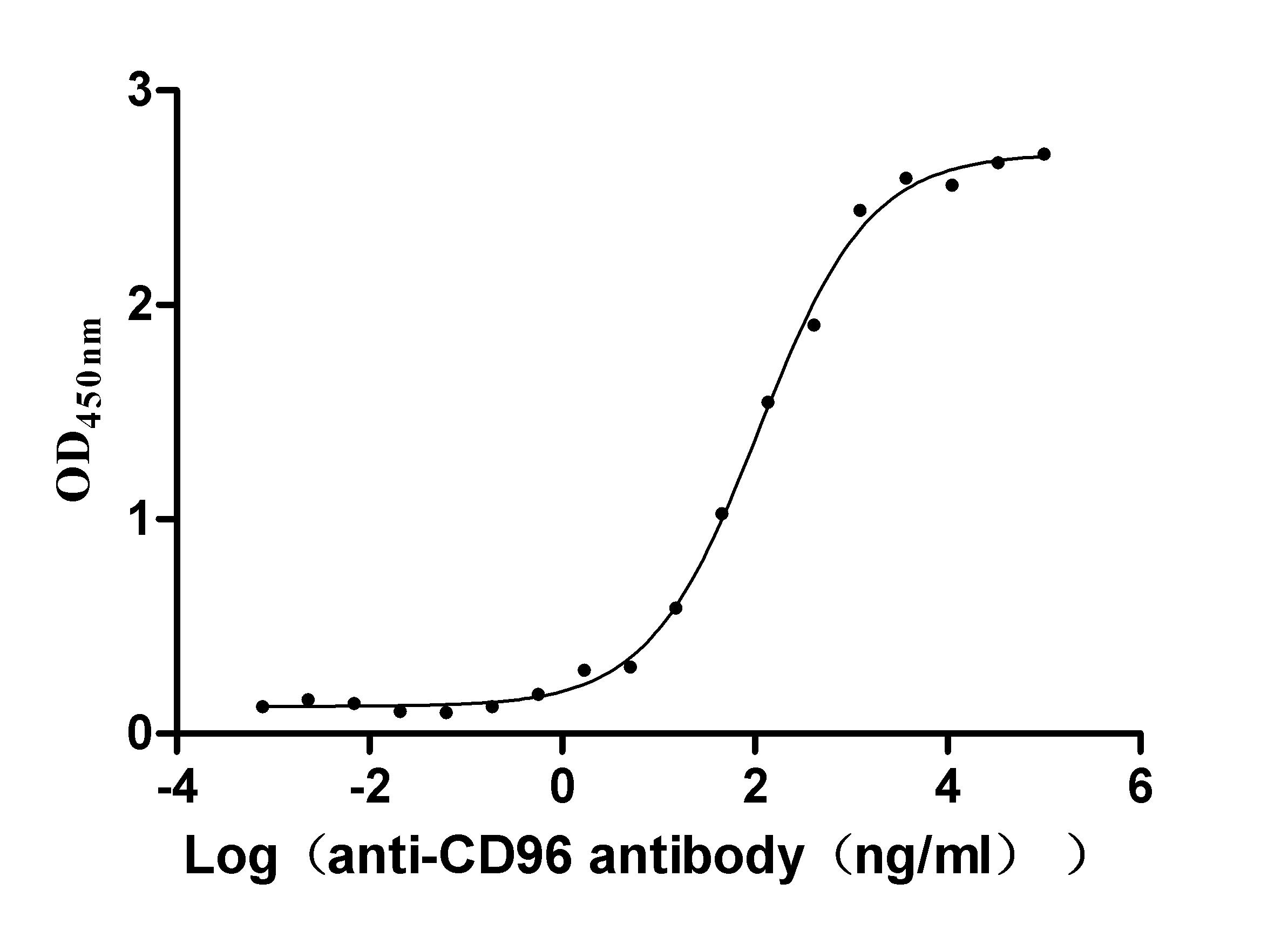
Recombinant Human T-cell surface protein tactile (CD96), partial (Active); CSB-MP004971HU1(F2)
-SDS.jpg)
-AC1.jpg)
● CD96 Antibody
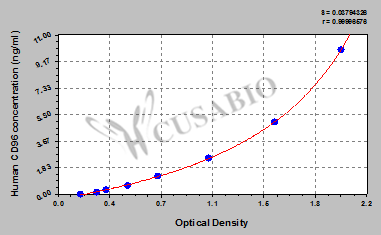
● CD96 ELISA Kit
References
[1] .(2023). Abstract 6651: MoA-based potency bioassays for immunotherapy programs targeting the TIGIT/CD112R/CD96 axis.
[2] A. Lepletier, V. Lutzky, D. Mittal, Kimberley A Stannard, Thomas S. Watkins, C. Ratnatunga, Corey Smith, H. McGuire, R. Kemp, P. Mukhopadhyay, N. Waddell, M. Smyth, W. Dougall, John J Miles.(2018). The immune checkpoint CD96 defines a distinct lymphocyte phenotype and is highly expressed on tumor‐infiltrating T cells.
[3] W. Ye, C. Luo, Fangkun Liu, Zhixiong Liu, Fenghua Chen.(2021). CD96 Correlates With Immune Infiltration and Impacts Patient Prognosis: A Pan-Cancer Analysis.
[4] Felix A. Deuss, G. M. Watson, Zhihui Fu, J. Rossjohn, R. Berry.(2019). Structural Basis for CD96 Immune Receptor Recognition of Nectin-like Protein-5, CD155.
[5] Haoyu Sun, Qiang Huang, Meijuan Huang, H. Wen, R. Lin, M. Zheng, K. Qu, Kun Li, Haiming Wei, Weihua Xiao, R. Sun, Z. Tian, Cheng-song Sun.(2019). Human CD96 Correlates to Natural Killer Cell Exhaustion and Predicts the Prognosis of Human Hepatocellular Carcinoma.
[6] Yingjie Wang, Yun Wang.(2023). Palmitic Acid Upregulates CD96 Expression to Mediate Maternal--Foetal Interface Immune Tolerance by Inhibiting Cytotoxic Activity and Promoting Adhesion Function in Human Decidual Natural Killer Cells.
[7] Hui Zhang, Qianwen Liu, Yiyan Lei, Jianwen Zhou, Wenting Jiang, Yongmei Cui, Qiong He, Junfeng Zhu, Zheng-zhi Zhu, Yu Sun, Zunfu Ke.(2020). Direct interaction between CD155 and CD96 promotes immunosuppression in lung adenocarcinoma.
[8] D. Meyer, S. Seth, J. Albrecht, M. Maier, L. Pasquier, I. Ravens, L. Dreyer, R. Burger, M. Gramatzki, R. Schwinzer, E. Kremmer, R. Foerster, G. Bernhardt.(2009). CD96 Interaction with CD155 via Its First Ig-like Domain Is Modulated by Alternative Splicing or Mutations in Distal Ig-like Domains.
[9] Xin Ou, Junyu Yin, F. Shi, Yanjie Zhao, Quan Zhou, Keyu Yuan, S. Lyu, Jiangping Wu, Yanping Li, Q. Song.(2025). CD155-TIGIT/CD96/CD226 immune checkpoint axis interacting with tumor-infiltrating lymphocytes to exhibit diverse prognostic effects on breast cancer: a cohort study.
[10] H. Stamm, J. Wellbrock, W. Fiedler.(2018). Interaction of PVR/PVRL2 with TIGIT/DNAM-1 as a novel immune checkpoint axis and therapeutic target in cancer.
[11] Keyu Yuan, Xin Ou, S. Lyu, Feng Shi, Quan Zhou, Yanjie Zhao, Jiangping Wu, Yu Cao, Yanping Li, Qingkun Song.(2025). The predictive effect of the CD155-TIGIT immune checkpoint axis complex on neoadjuvant chemotherapy efficacy in triple-negative breast cancer: A preliminary study.
[12] E. Chiang, Patrícia E. de Almeida, D. Nagata, Kristin Bowles, Xiangnan Du, A. Elgin, Karl L. Banta, Y. Kwon, Brent S. McKenzie, S. Mittman, R. Cubas, Keith Anderson, S. Warming, J. Grogan.(2020). CD96 Functions as a co‐stimulatory receptor to enhance CD8+ T cell activation and effector responses.
[13] Tahereh Mohammadian Gol, Miso Kim, Ralph Sinn, Guillermo Ureña-Bailén, Sarah Stegmeyer, P. G. Gratz, Fatemeh Zahedipour, Alicia Roig-Merino, Justin S Antony, Markus Mezger.(2023). CRISPR-Cas9-Based Gene Knockout of Immune Checkpoints in Expanded NK Cells.
[14] Chelsia Qiuxia Wang, F. C. Choy, A. Sanny, Takashi Murakami, A. Tan, K. Lam.(2023). An Inhibitory Role for Human CD96 Endodomain in T Cell Anti-Tumor Responses.
[15] Chang Xu, H. Fang, Yun Gu, K. Yu, Jieti Wang, Chao Lin, Heng Zhang, He Li, Hongyong He, Hao Liu, Ruochen Li.(2022). Impact of intratumoural CD96 expression on clinical outcome and therapeutic benefit in gastric cancer.
[16] Yumeng Wang, Congwen Wang, J. Qiu, Xinyu Qu, Jing Peng, Chong Lu, Meng Zhang, Mingxing Zhang, Xingling Qi, Guiling Li, K. Hua.(2022). Targeting CD96 overcomes PD-1 blockade resistance by enhancing CD8+ TIL function in cervical cancer.
[17] R. Maas, J. H. Hoogstad-van Evert, J. V. D. Van der Meer, V. Mekers, Somayeh Rezaeifard, A. Korman, P. D. de Jonge, J. Cany, R. Woestenenk, N. Schaap, L. Massuger, J. Jansen, W. Hobo, H. Dolstra.(2020). TIGIT blockade enhances functionality of peritoneal NK cells with altered expression of DNAM-1/TIGIT/CD96 checkpoint molecules in ovarian cancer.




Comments
Leave a Comment