
Call us
301-363-4651 (Available 9 a.m. to 5 p.m. CST from Monday to Friday)

| Code | CSB-RA296617A0HU |
| Size | $600 |
| Order now | |
| Image |
|
| Have Questions? | Leave a Message or Start an on-line Chat |
| Application | Recommended Dilution |
|---|---|
| WB | 1:500-1:5000 |
| IHC | 1:50-1:200 |
AIFM1, also known as apoptosis-inducing factor 1, is a mitochondrial flavoprotein that plays a dual role in cellular homeostasis. Under normal conditions, it functions as an oxidoreductase essential for mitochondrial respiratory chain function, while during apoptosis, it translocates to the nucleus where it triggers caspase-independent chromatin condensation and DNA fragmentation. This bifunctional nature makes AIFM1 a compelling target for researchers investigating programmed cell death pathways, mitochondrial biology, and the metabolic alterations characteristic of cancer cells.
This recombinant monoclonal antibody, generated from clone 4B2, offers the reproducibility and sequence-defined consistency that demanding experimental workflows require. Because the antibody sequence is fixed and produced recombinantly in rabbit host cells, you can expect uniform performance across different lots, eliminating a common source of experimental variability that can complicate longitudinal studies or multi-site collaborations.
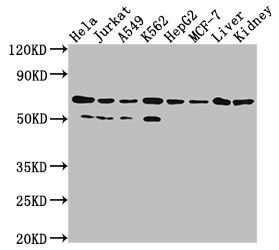
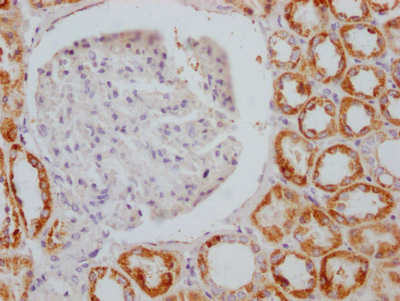
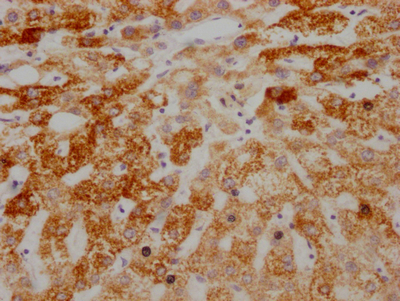
Validation data demonstrates robust performance across multiple applications. In western blot experiments, the antibody detects a clear band at the expected 67 kDa molecular weight across a diverse panel of human cell lines including HeLa, Jurkat, A549, HepG2, and MCF-7, with effective detection at 1:2000 dilution. Cross-species reactivity extends to rat samples, with confirmed detection in both liver and kidney tissue lysates. For immunohistochemistry, the antibody has been validated in paraffin-embedded human kidney and liver tissue sections at 1:100 dilution using citrate buffer antigen retrieval, producing specific staining patterns consistent with AIFM1's known tissue distribution.
Whether you're exploring apoptotic signaling mechanisms, investigating mitochondrial dysfunction in disease models, or characterizing metabolic reprogramming in cancer research, this antibody provides a reliable tool for detecting AIFM1 across your experimental systems.
There are currently no reviews for this product.





