
Call us
301-363-4651 (Available 9 a.m. to 5 p.m. CST from Monday to Friday)

| Code | CSB-RA993633A0HU |
| Size | US$210 |
| Order now | |
| Image |
|
| Have Questions? | Leave a Message or Start an on-line Chat |
| Application | Recommended Dilution |
|---|---|
| IHC | 1:50-1:200 |
ANPEP, also known as CD13 or Aminopeptidase N, is a zinc-dependent metalloprotease that plays diverse roles in cellular processes ranging from peptide metabolism to signal transduction. Expressed prominently on myeloid cells, epithelial cells, and certain stem cell populations, this membrane-bound glycoprotein serves as a valuable marker in immunology research and stem cell biology. Its involvement in tumor angiogenesis, viral entry mechanisms, and immune cell function makes it a compelling target for investigators exploring these interconnected pathways.
This recombinant monoclonal antibody, clone 6E9, offers the reproducibility that demanding research protocols require. Generated against a synthetic peptide derived from human CD13, the antibody is produced using recombinant technology, ensuring sequence-defined consistency between lots. This eliminates the variability often encountered with traditional hybridoma-derived antibodies, allowing you to confidently compare results across extended studies or collaborative projects.
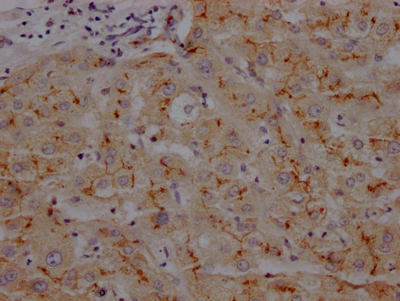
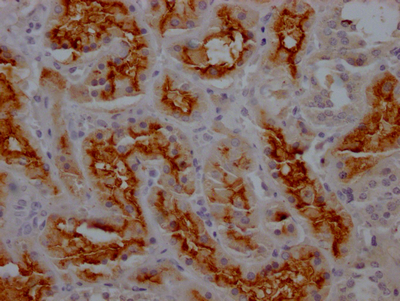
Validation testing demonstrates reliable performance in immunohistochemistry applications on human tissues. At a 1:100 dilution, the antibody successfully detected ANPEP in paraffin-embedded human liver and kidney sections using a standard citrate buffer antigen retrieval protocol and HRP-polymer detection system. These tissues represent physiologically relevant contexts where ANPEP expression is well-documented, providing confidence in the antibody's specificity. The recommended working range of 1:50 to 1:200 for IHC gives you flexibility to optimize staining intensity for your specific tissue preparations.
Supplied in a glycerol-containing buffer for stability, this affinity-purified rabbit IgG antibody is well-suited for researchers investigating myeloid cell biology, stem cell characterization, or tissue-specific aminopeptidase expression patterns in human samples.
There are currently no reviews for this product.





