
Call us
301-363-4651 (Available 9 a.m. to 5 p.m. CST from Monday to Friday)

| Code | CSB-RA132237A0HU |
| Size | US$210 |
| Order now | |
| Image |
|
| Have Questions? | Leave a Message or Start an on-line Chat |
| Application | Recommended Dilution |
|---|---|
| WB | 1:500-1:5000 |
| IHC | 1:50-1:200 |
| IF | 1:50-1:200 |
| FC | 1:50-1:200 |
Apolipoprotein E plays a central role in lipid metabolism and cholesterol transport, serving as a ligand for receptors that mediate the clearance of lipoprotein particles from circulation. Beyond its metabolic functions, APOE has garnered significant attention in neuroscience research due to its genetic variants being strongly associated with Alzheimer's disease risk and other neurodegenerative conditions. Understanding APOE expression patterns and localization remains essential for researchers investigating cardiovascular disease, neurodegeneration, and lipid disorders.
This recombinant monoclonal antibody, clone 14C2, offers the consistency and reliability that demanding research applications require. Produced using recombinant technology with a sequence-defined approach, this antibody eliminates the lot-to-lot variability that can compromise experimental reproducibility. The rabbit host origin and monoclonal nature ensure high specificity for human APOE, while affinity chromatography purification delivers a clean reagent suitable for sensitive detection methods.
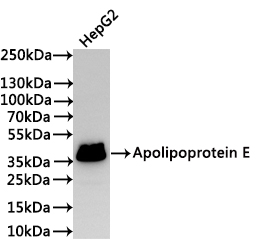
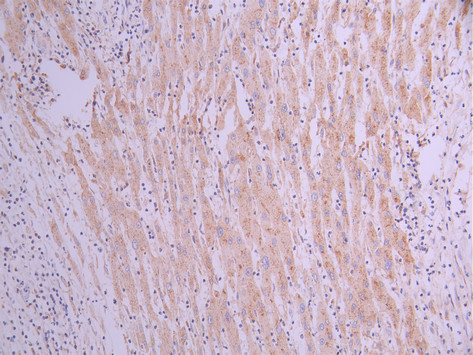
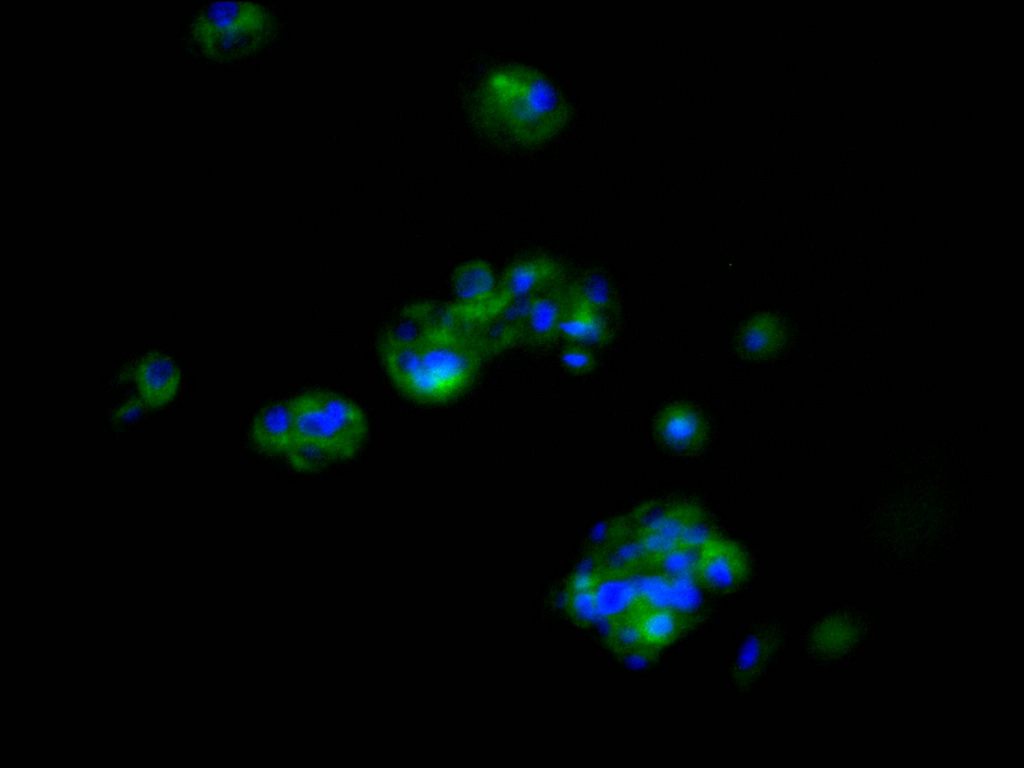
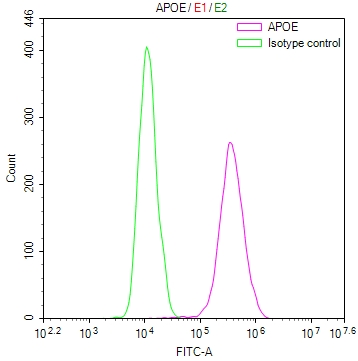
Validation studies demonstrate robust performance across multiple experimental platforms. Western blot analysis of HepG2 whole cell lysate reveals a clean band at the predicted 36 kDa molecular weight, confirming accurate target recognition in this hepatocyte-derived cell line known for endogenous APOE expression. Immunohistochemistry on paraffin-embedded human liver cancer tissue shows reliable staining using standard citrate buffer antigen retrieval, while immunofluorescence studies in HepG2 cells successfully visualize intracellular APOE distribution. Flow cytometry validation further confirms utility for quantitative single-cell analysis of APOE expression levels.
This antibody supports researchers investigating lipid metabolism disorders, hepatic lipoprotein biology, and the expanding field of APOE-related neurodegeneration research, providing a versatile tool adaptable to diverse experimental workflows from tissue sections to cell-based assays.
There are currently no reviews for this product.





