
Call us
301-363-4651 (Available 9 a.m. to 5 p.m. CST from Monday to Friday)

| Code | CSB-RA010429A16acHU |
| Size | US$210 |
| Order now | |
| Image |
|
| Have Questions? | Leave a Message or Start an on-line Chat |
| Application | Recommended Dilution |
|---|---|
| WB | 1:500-1:2000 |
| ICC | 1:50-1:500 |
| IF | 1:50-1:200 |
Acetylation of histone H4 at lysine 16 represents one of the most extensively studied epigenetic modifications, playing a central role in chromatin structure regulation and transcriptional activation. This specific modification disrupts higher-order chromatin folding, promoting a more open and transcriptionally permissive state. Researchers investigating gene regulation, cellular differentiation, and disease mechanisms frequently rely on precise detection of H4K16ac to understand how cells modulate their epigenetic landscape.
This recombinant monoclonal antibody, generated in rabbit using clone 2B8, offers the reproducibility that epigenetics research demands. Because recombinant technology produces antibodies from a defined sequence, you can expect consistent performance across experiments and between lots—an essential consideration when tracking subtle changes in histone modification patterns over time or across treatment conditions.
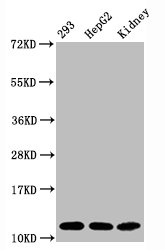
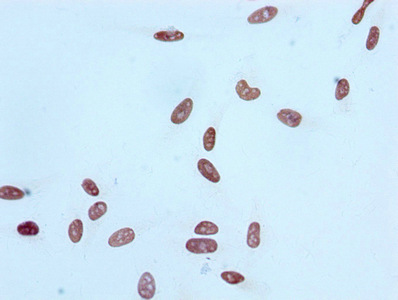
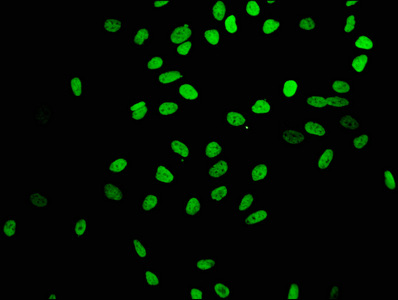
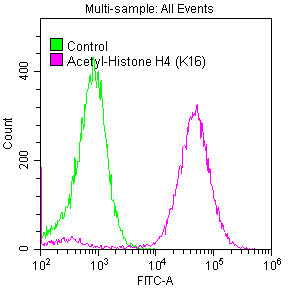
Validation across multiple experimental platforms demonstrates this antibody's versatility in your workflow. Western blot analysis confirms specific detection at the expected 11 kDa band size in 293 whole cell lysates, HepG2 whole cell lysates, and mouse kidney tissue, supporting cross-species reactivity between human and mouse samples. Immunocytochemistry and immunofluorescence studies in HeLa cells, including sodium butyrate-treated samples to enhance acetylation signals, show clear nuclear localization patterns consistent with histone targeting. Flow cytometry validation further extends the antibody's utility for quantitative single-cell analysis of H4K16ac levels.
The unconjugated format and affinity-purified preparation provide flexibility for pairing with your preferred detection systems. Whether you are mapping acetylation dynamics in cancer cell models, investigating chromatin remodeling during development, or characterizing epigenetic responses to pharmacological agents, this antibody delivers the specificity and consistency your research requires.
There are currently no reviews for this product.





