
Call us
301-363-4651 (Available 9 a.m. to 5 p.m. CST from Monday to Friday)

| Code | CSB-RA010429A05acHU |
| Size | US$210 |
| Order now | |
| Image |
|
| Have Questions? | Leave a Message or Start an on-line Chat |
| Application | Recommended Dilution |
|---|---|
| WB | 1:500-1:2000 |
| ICC | 1:50-1:500 |
| IF | 1:30-1:200 |
Acetylation of histone H4 at lysine 5 represents a critical epigenetic modification that influences chromatin accessibility and transcriptional regulation. This specific acetylation mark participates in the complex histone code that governs gene expression, DNA repair, and cell cycle progression, making it an essential target for researchers investigating epigenetic mechanisms and nuclear signaling pathways.
This recombinant monoclonal antibody, generated in rabbit using clone 2C9, offers the reproducibility and consistency that epigenetics research demands. Because recombinant antibodies are produced from defined sequences rather than animal immunizations, you can expect uniform performance across experiments and over time—particularly valuable when tracking subtle changes in histone modification patterns across treatment conditions or developmental stages.
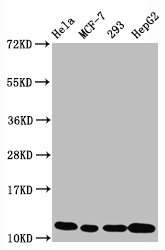
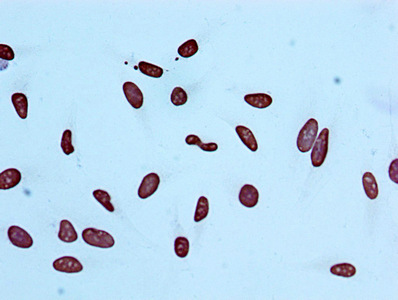
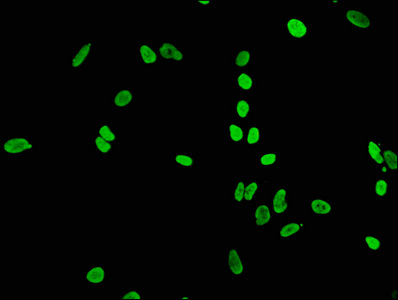
Validation studies confirm reliable detection in human cell lines including HeLa, MCF-7, 293, and HepG2 whole cell lysates by western blot, where the antibody detects the expected 11 kDa band corresponding to histone H4. The antibody performs effectively across multiple detection platforms, with demonstrated utility in immunocytochemistry and immunofluorescence applications. Notably, immunofluorescence validation using sodium butyrate-treated HeLa cells—a standard approach for enhancing histone acetylation—confirms the antibody's ability to detect induced acetylation changes, providing confidence for experiments examining dynamic epigenetic responses.
The unconjugated format and affinity-purified preparation offer flexibility for pairing with your preferred secondary detection systems. Whether you're mapping acetylation landscapes, investigating chromatin remodeling complexes, or studying how environmental signals translate into epigenetic changes, this antibody provides a dependable tool for advancing your understanding of histone biology and transcriptional regulation.
There are currently no reviews for this product.





