
Call us
301-363-4651 (Available 9 a.m. to 5 p.m. CST from Monday to Friday)

| Code | CSB-RA016426A0MO |
| Size | US$210 |
| Order now | |
| Image |
|
| Have Questions? | Leave a Message or Start an on-line Chat |
| Application | Recommended Dilution |
|---|---|
| IHC | 1:50-1:200 |
Adiponectin, encoded by the Adipoq gene, serves as a critical adipokine secreted by adipose tissue that plays essential roles in metabolic regulation, insulin sensitivity, and cardiovascular health. This protein has emerged as a significant biomarker in research exploring obesity-related disorders, type 2 diabetes, and cardiovascular disease, making reliable detection tools indispensable for investigators working across these interconnected fields.
This recombinant monoclonal antibody, developed from clone 7F8 in a rabbit host, offers the reproducibility and consistency that demanding research protocols require. Because recombinant antibodies are produced from defined genetic sequences rather than traditional hybridoma methods, researchers can expect uniform performance across different lots, eliminating the variability that can complicate long-term studies or multi-site collaborations. The affinity-chromatography purification ensures high specificity for your target while minimizing background interference.
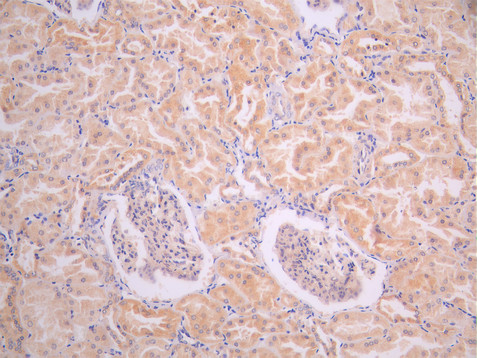
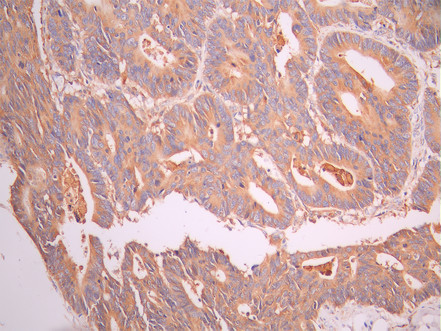
Validation through immunohistochemistry demonstrates this antibody's utility in tissue-based studies, with successful staining confirmed in paraffin-embedded human kidney tissue and human colorectal cancer samples. These validation experiments, performed using citrate buffer antigen retrieval at pH 6.0 with overnight primary antibody incubation at 4°C, provide researchers with an optimized starting protocol. The recommended working dilution range of 1:50 to 1:200 for IHC applications allows flexibility to fine-tune signal intensity based on your specific tissue types and detection systems.
For cardiovascular and metabolic disease researchers investigating adiponectin's protective roles or its dysregulation in pathological states, this antibody provides a dependable tool for characterizing protein expression patterns in clinical specimens. The validated performance in both normal and diseased human tissues supports its application in studies examining adiponectin's involvement in tissue-specific metabolic processes.
There are currently no reviews for this product.





