
Call us
301-363-4651 (Available 9 a.m. to 5 p.m. CST from Monday to Friday)

| Code | CSB-RA303909A0HU |
| Size | US$210 |
| Order now | |
| Image |
|
| Have Questions? | Leave a Message or Start an on-line Chat |
| Application | Recommended Dilution |
|---|---|
| WB | 1:500-1:5000 |
| IHC | 1:50-1:200 |
| FC | 1:20-1:200 |
Complement C3 stands as the central component of the complement system, a critical arm of innate immunity that bridges inflammatory responses with adaptive immune mechanisms. Through proteolytic cleavage, C3 generates multiple bioactive fragments including the anaphylatoxin C3a and opsonin C3b, which orchestrate pathogen elimination, immune cell recruitment, and tissue homeostasis. Beyond classical immunology, C3 has emerged as a significant player in neuroscience research, where complement-mediated synaptic pruning influences neural development and neurodegenerative disease progression.
This recombinant monoclonal antibody, clone 4D12, offers the reproducibility and consistency that demanding research applications require. Generated against a synthetic peptide derived from human C3, the antibody benefits from sequence-defined production that eliminates the lot-to-lot variability inherent in traditional hybridoma-based manufacturing. Researchers can confidently build on previous results knowing that antibody performance remains constant across experiments and extended study timelines.
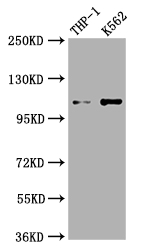
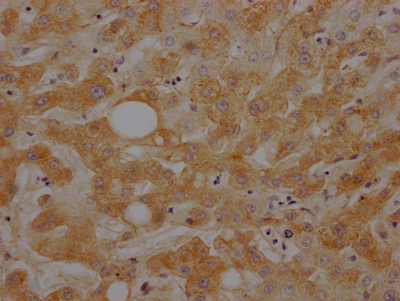
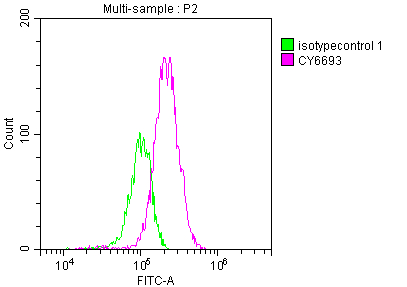
Validation studies demonstrate reliable performance across multiple experimental platforms. In Western blot applications, the antibody detects C3 in THP-1 and K562 whole cell lysates at dilutions ranging from 1:500 to 1:5000. The observed band at approximately 115 kDa likely represents the C3 beta chain or processed alpha chain fragments, consistent with the extensive proteolytic processing characteristic of this protein. Immunohistochemistry validation in paraffin-embedded human liver tissue confirms utility for tissue-based studies, while flow cytometry analysis of HepG2 cells demonstrates suitability for single-cell applications.
Whether investigating complement activation in inflammatory disease, exploring synaptic elimination mechanisms, or characterizing immune cell populations, this antibody provides a dependable tool for advancing C3-focused research across immunology and neuroscience disciplines.
There are currently no reviews for this product.





