
Call us
301-363-4651 (Available 9 a.m. to 5 p.m. CST from Monday to Friday)

| Code | CSB-RA576116A0HU |
| Size | US$210 |
| Order now | |
| Image |
|
| Have Questions? | Leave a Message or Start an on-line Chat |
| Application | Recommended Dilution |
|---|---|
| IHC | 1:50-1:200 |
E-cadherin, encoded by the CDH1 gene, serves as a critical calcium-dependent cell adhesion molecule that maintains epithelial tissue integrity and polarity. Its functional loss or downregulation represents a hallmark of epithelial-to-mesenchymal transition, a process intimately linked to cancer invasion and metastasis. Beyond its structural role, E-cadherin participates in complex signaling networks that regulate cell proliferation and differentiation, making it an essential marker for researchers investigating tumor progression, developmental processes, and cellular signaling pathways.
This recombinant monoclonal antibody, clone 1E1, offers the reproducibility and consistency that demanding research applications require. Generated against a synthetic peptide derived from human E-cadherin and produced using recombinant technology in rabbit host, this antibody provides sequence-defined specificity that eliminates the lot-to-lot variability often encountered with traditional hybridoma-derived reagents. The monoclonal nature ensures that every vial delivers identical binding characteristics, supporting reliable experimental reproducibility across extended studies.
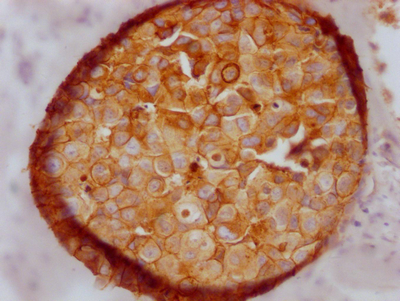
Validation in immunohistochemistry demonstrates strong performance in paraffin-embedded human breast cancer tissue, where the antibody effectively identifies E-cadherin expression patterns at dilutions ranging from 1:50 to 1:200. The validated protocol employed citrate buffer antigen retrieval under high pressure conditions, with overnight primary antibody incubation at 4°C followed by HRP-polymer detection, providing researchers with an established starting point for their own tissue analysis workflows.
This antibody supports investigations across oncology, developmental biology, and signal transduction research, offering particular value for studies examining epithelial integrity, tumor differentiation status, and cadherin-mediated signaling events in human specimens.
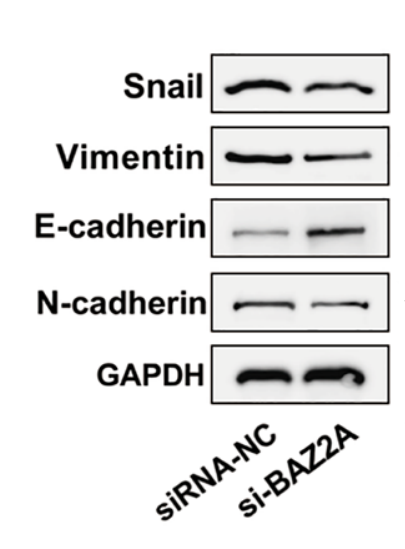
Applications : Western blot
Sample type: cells
Review: Western blot analysis of apoptosis- and EMT-related molecules in LM6 cells with BAZ2A knockdown.
By Anonymous





