
Call us
301-363-4651 (Available 9 a.m. to 5 p.m. CST from Monday to Friday)

| Code | CSB-RA005034MA1HU |
| Size | US$210 |
| Order now | |
| Image |
|
| Have Questions? | Leave a Message or Start an on-line Chat |
| Application | Recommended Dilution |
|---|---|
| WB | 1:1000-1:5000 |
| IHC | 1:20-1:200 |
| FC | 1:20-1:200 |
E-cadherin, encoded by the CDH1 gene, serves as a fundamental mediator of calcium-dependent cell-cell adhesion in epithelial tissues. This transmembrane glycoprotein plays a critical role in maintaining tissue architecture and polarity, with its downregulation or loss frequently associated with epithelial-to-mesenchymal transition, a hallmark of cancer progression and metastasis. Beyond its structural functions, E-cadherin participates in key signaling pathways that regulate cell proliferation and differentiation, making it an essential marker for researchers investigating developmental biology, oncology, and signal transduction mechanisms.
This recombinant monoclonal antibody, clone 30B12, offers the reproducibility and consistency that demanding experimental workflows require. Because recombinant antibodies are produced from defined sequences rather than traditional hybridoma methods, you can expect reliable performance across experiments and between lots, eliminating a common source of variability in long-term studies.
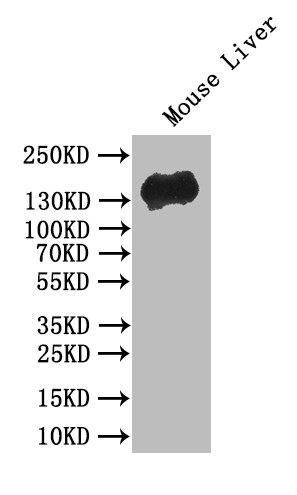
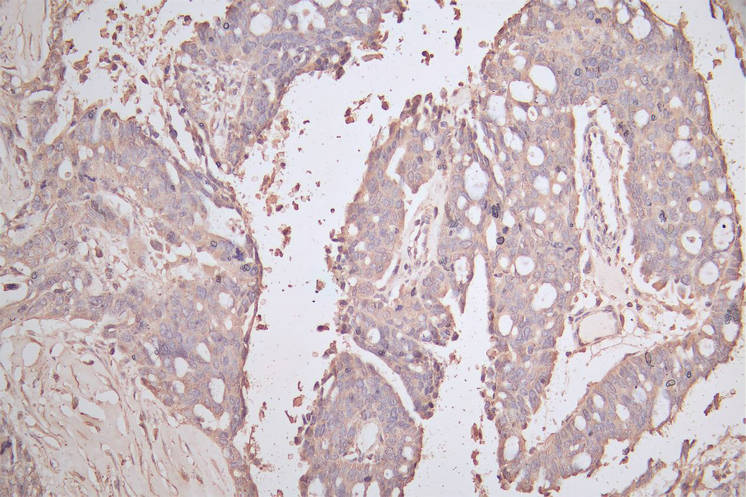
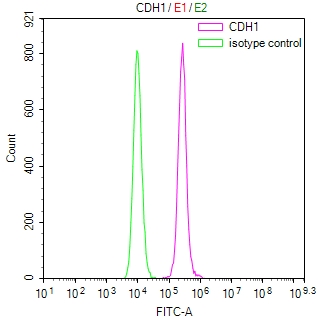
Validation testing demonstrates versatility across multiple applications. Western blot analysis of mouse liver tissue lysate reveals a band at 135 kDa, consistent with the mature, fully glycosylated form of E-cadherin. Immunohistochemistry has been validated in paraffin-embedded human endometrial cancer tissue, showing specific staining patterns suitable for pathological investigations. Flow cytometry analysis using MCF7 cells confirms utility for quantitative single-cell studies, with clear separation from isotype control signals demonstrating specificity.
With confirmed cross-species reactivity for both human and mouse samples, this antibody supports translational research comparing findings across model systems and clinical specimens. Whether you are examining adhesion dynamics in developmental contexts, characterizing tumor phenotypes, or investigating signaling pathway disruptions, this antibody provides a dependable tool for your E-cadherin detection needs.
There are currently no reviews for this product.





