
Call us
301-363-4651 (Available 9 a.m. to 5 p.m. CST from Monday to Friday)

| Code | CSB-RA005508MA3HU |
| Size | US$210 |
| Order now | |
| Image |
|
| Have Questions? | Leave a Message or Start an on-line Chat |
| Application | Recommended Dilution |
|---|---|
| FC | 1:50-1:200 |
Claudin-6 and Claudin-9 are closely related tight junction proteins that play essential roles in epithelial barrier formation and cell-cell adhesion. CLDN6 has garnered significant attention in cancer research due to its restricted expression pattern—largely silenced in normal adult tissues but aberrantly reactivated in various malignancies, making it an attractive target for therapeutic development and tumor biology studies. Both claudins also contribute to developmental processes and cellular signaling pathways, positioning them as valuable targets for researchers investigating stem cell biology, tissue morphogenesis, and signal transduction mechanisms.
This recombinant monoclonal antibody, clone 9E2, offers the reproducibility and sequence-defined consistency that demanding experimental workflows require. Unlike traditional hybridoma-derived antibodies, recombinant production ensures lot-to-lot uniformity, allowing researchers to confidently compare results across extended studies without concerns about antibody variability affecting their data.
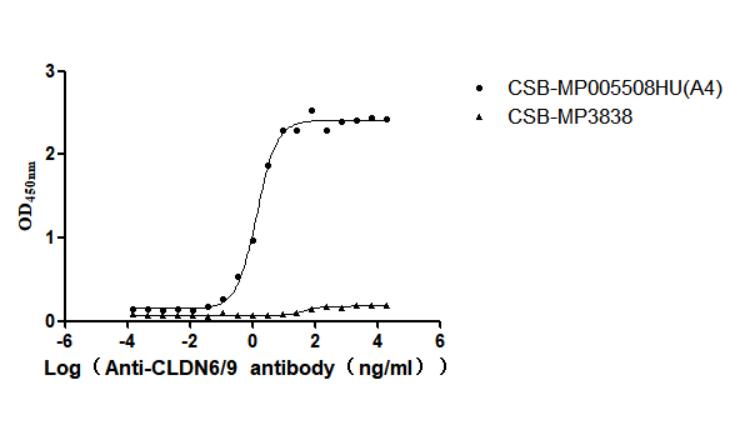
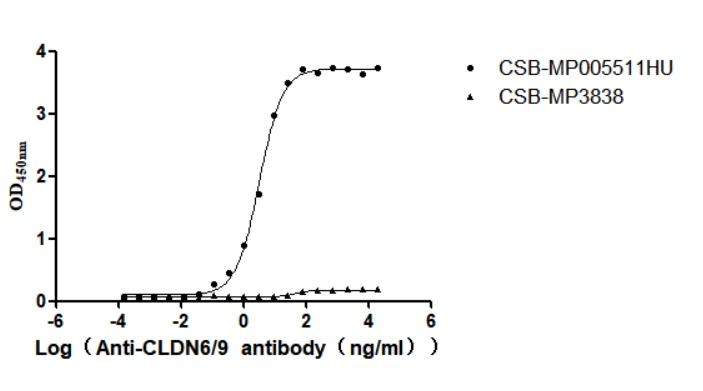
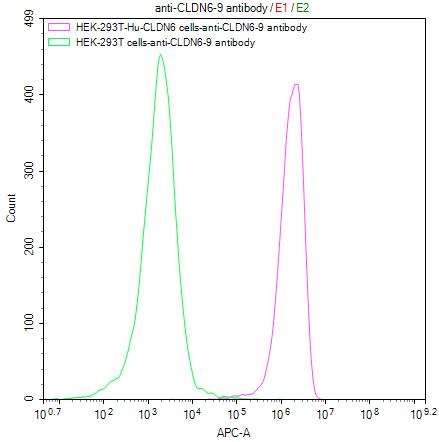
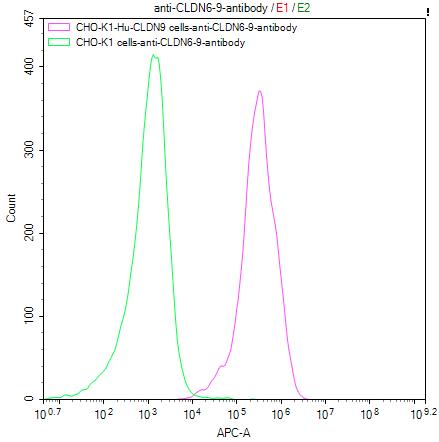
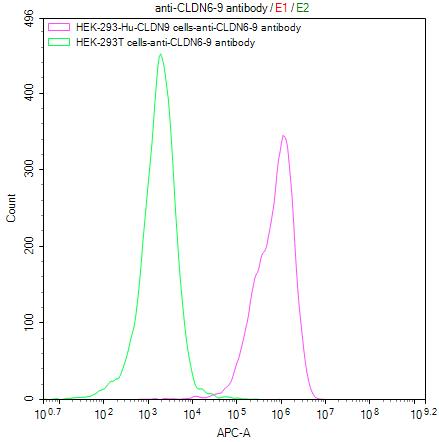
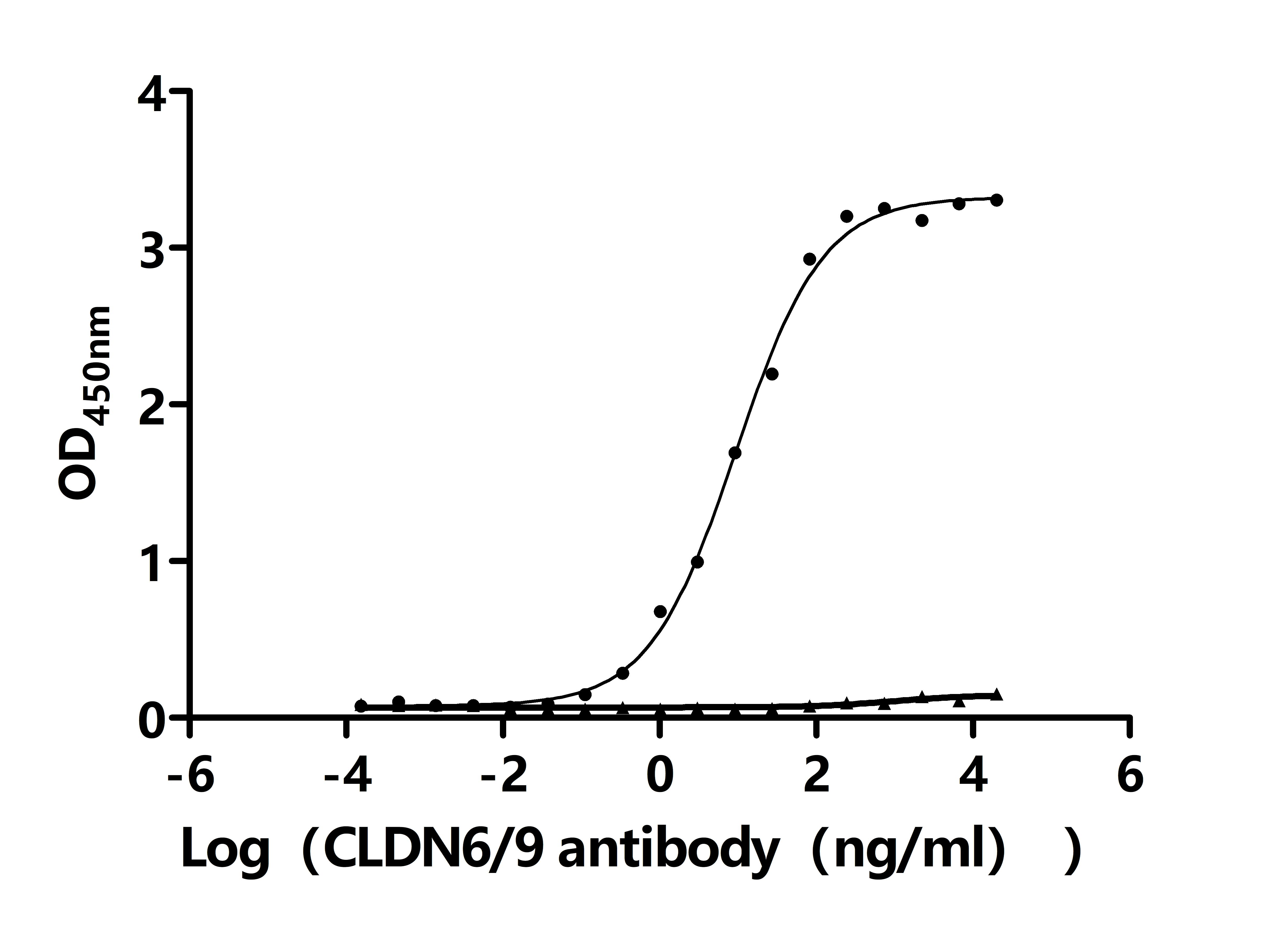
Validation studies demonstrate robust performance in both ELISA and flow cytometry applications. Functional ELISA testing confirms high-affinity binding to human CLDN6 with EC50 values in the low nanogram per milliliter range, while VLP negative controls verify binding specificity. Flow cytometry validation using CLDN6-transfected and CLDN9-transfected HEK-293T stable cell lines shows clear discrimination between transfected and untransfected populations, confirming the antibody's utility for detecting both claudin family members in cell-based assays. Cross-species reactivity extends to mouse CLDN6, as demonstrated by ELISA binding studies, providing flexibility for researchers working with murine model systems.
This antibody serves investigators exploring developmental biology, microbiology, signal transduction, and stem cell research, offering a reliable tool for characterizing claudin expression and function across multiple experimental platforms.
There are currently no reviews for this product.





