
Call us
301-363-4651 (Available 9 a.m. to 5 p.m. CST from Monday to Friday)

| Code | CSB-RA173792A0HU |
| Size | US$210 |
| Order now | |
| Image |
|
| Have Questions? | Leave a Message or Start an on-line Chat |
| Application | Recommended Dilution |
|---|---|
| WB | 1:500-1:5000 |
| IHC | 1:50-1:200 |
| FC | 1:50-1:200 |
CRK is a critical adaptor protein in signal transduction pathways, functioning as a molecular bridge that connects receptor tyrosine kinases to downstream signaling cascades. Originally identified as the cellular homolog of the v-crk oncogene from avian sarcoma virus CT10, CRK plays essential roles in cell migration, proliferation, and cytoskeletal reorganization. Its involvement in oncogenic signaling makes it a significant target for researchers investigating cancer biology, developmental processes, and cellular transformation mechanisms.
This recombinant monoclonal antibody, clone 3H9, offers the reproducibility and consistency that demanding experimental workflows require. Developed using recombinant technology with a defined sequence, this rabbit IgG provides lot-to-lot uniformity that traditional hybridoma-derived antibodies cannot guarantee. The antibody was raised against a synthesized peptide from human CRK protein and purified by affinity chromatography, ensuring high specificity for your target.
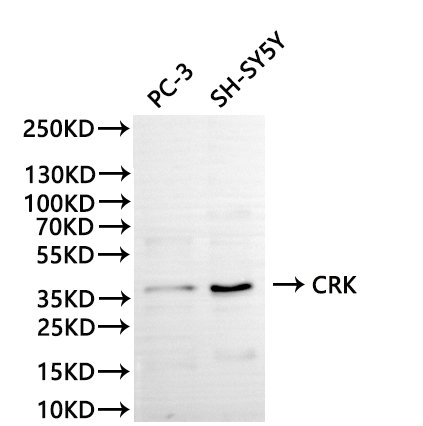
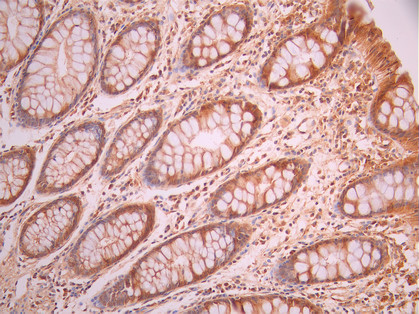
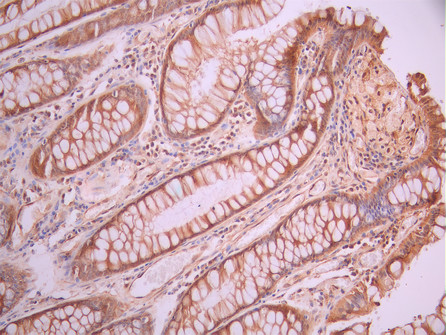
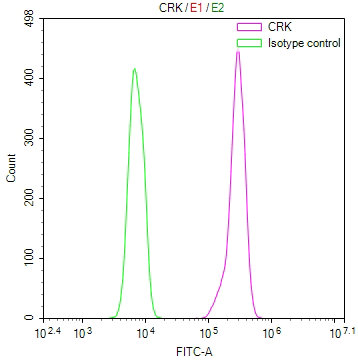
Validation studies demonstrate robust performance across multiple applications. Western blot analysis successfully detects CRK in PC-3 prostate cancer and SH-SY5Y neuroblastoma whole cell lysates, with an observed band size of approximately 38 kDa. The slight difference from the predicted 34 kDa molecular weight likely reflects post-translational modifications such as phosphorylation, which is consistent with CRK's role as a heavily regulated signaling molecule. Immunohistochemistry staining has been validated in paraffin-embedded human small intestine and colorectal cancer tissues, while flow cytometry analysis confirms intracellular detection in HeLa cells.
Whether you are examining CRK expression patterns in cancer specimens, investigating signaling pathway dynamics, or characterizing adaptor protein interactions, this antibody provides the flexibility to move seamlessly between detection platforms while maintaining experimental confidence.
There are currently no reviews for this product.





