
Call us
301-363-4651 (Available 9 a.m. to 5 p.m. CST from Monday to Friday)

| Code | CSB-RA927191A0HU |
| Size | US$210 |
| Order now | |
| Image |
|
| Have Questions? | Leave a Message or Start an on-line Chat |
| Application | Recommended Dilution |
|---|---|
| IHC | 1:50-1:200 |
DPP4, also known as CD26, is a multifunctional serine protease that plays pivotal roles in glucose metabolism, immune regulation, and tumor biology. As a key enzyme that inactivates incretin hormones, DPP4 has become a major therapeutic target in type 2 diabetes research. Beyond its metabolic functions, DPP4 serves as a T-cell activation marker and has been implicated in cancer progression, making it a protein of significant interest across immunology, oncology, and metabolic disease research.
This recombinant monoclonal antibody, clone 6G7, offers the reproducibility and consistency that demanding research protocols require. Generated against a synthetic peptide derived from human CD26 and produced using recombinant technology in rabbit host, this antibody provides sequence-defined specificity that eliminates the lot-to-lot variability often encountered with traditional hybridoma-derived reagents. The result is reliable performance across extended studies and multi-site collaborations where experimental consistency is paramount.
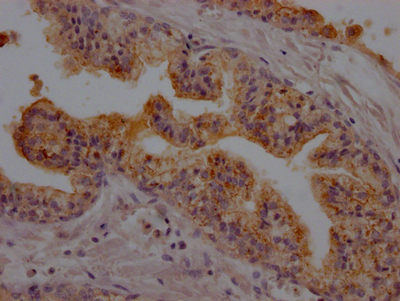
Validation in immunohistochemistry demonstrates clear detection in human prostate cancer tissue sections, with optimal staining achieved at dilutions between 1:50 and 1:200. The validated protocol employed citrate buffer antigen retrieval at pH 6.0 under high pressure conditions, followed by overnight primary antibody incubation at 4°C, providing researchers with an established starting point for their own tissue analysis workflows. The antibody is also validated for ELISA applications, offering flexibility for researchers requiring both quantitative and spatial analysis of DPP4 expression.
Supplied in a glycerol-containing buffer optimized for long-term stability, this antibody supports investigations spanning cancer biology, immunological studies, metabolic research, and stem cell applications where DPP4 expression patterns provide meaningful biological insights.
There are currently no reviews for this product.





