
Call us
301-363-4651 (Available 9 a.m. to 5 p.m. CST from Monday to Friday)

| Code | CSB-RA949799A0HU |
| Size | US$210 |
| Order now | |
| Image |
|
| Have Questions? | Leave a Message or Start an on-line Chat |
| Application | Recommended Dilution |
|---|---|
| WB | 1:500-1:5000 |
| IHC | 1:50-1:200 |
| IF | 1:20-1:200 |
HDAC2 (Histone deacetylase 2) plays a central role in epigenetic regulation by removing acetyl groups from histone lysine residues, leading to chromatin condensation and transcriptional repression. This enzyme participates in critical cellular processes including cell cycle progression, differentiation, and apoptosis, making it a key target in epigenetics research as well as cardiovascular and stem cell biology. Dysregulation of HDAC2 has been implicated in various pathological conditions, positioning it as both a mechanistic focus and potential therapeutic target.
This recombinant monoclonal antibody, clone 9H4, offers the reproducibility and sequence-defined consistency that demanding experimental workflows require. Because recombinant production eliminates the batch variability inherent in traditional hybridoma methods, you can expect reliable performance across long-term studies and multi-site collaborations without the need to re-optimize conditions between lots.
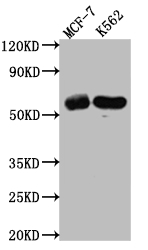
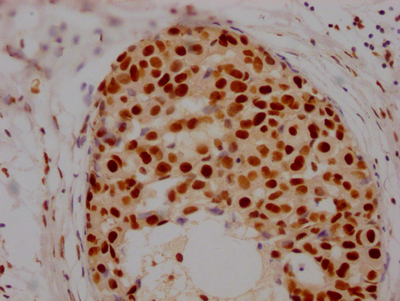
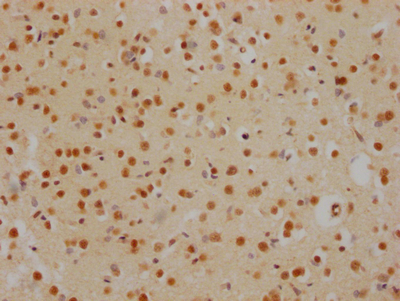
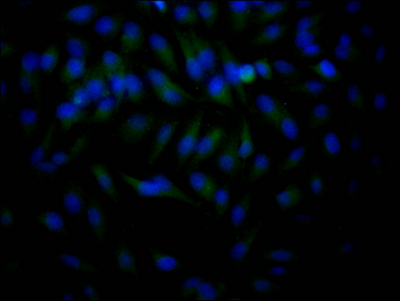
The antibody has been validated across multiple applications, providing flexibility for diverse experimental approaches. In Western blot analysis, it detects HDAC2 in MCF-7 and K562 whole cell lysates at dilutions ranging from 1:500 to 1:5000. The observed band at approximately 60 kDa runs slightly higher than the predicted molecular weights of 52-56 kDa, which is consistent with post-translational modifications such as phosphorylation or sumoylation known to occur on HDAC2. Immunohistochemistry validation demonstrates clear nuclear staining in paraffin-embedded human breast cancer and brain tissue sections, while immunofluorescence studies in HeLa cells confirm nuclear localization with distinct signal separation from DAPI counterstaining.
Whether you are investigating chromatin remodeling mechanisms, exploring HDAC2's role in cardiac development, or characterizing stem cell differentiation pathways, this antibody delivers the specificity and application versatility your research demands.
There are currently no reviews for this product.





