
Call us
301-363-4651 (Available 9 a.m. to 5 p.m. CST from Monday to Friday)

| Code | CSB-RA183183A0HU |
| Size | US$210 |
| Order now | |
| Image |
|
| Have Questions? | Leave a Message or Start an on-line Chat |
| Application | Recommended Dilution |
|---|---|
| WB | 1:500-1:2000 |
| IHC | 1:50-1:200 |
| FC | 1:50-1:200 |
KITLG, commonly known as stem cell factor (SCF), serves as the essential ligand for the c-Kit receptor tyrosine kinase, playing fundamental roles in hematopoiesis, germ cell development, and melanocyte biology. This cytokine exists in both membrane-bound and soluble forms, with the soluble variant (sKITLG) generated through proteolytic cleavage, adding complexity to its signaling mechanisms. Dysregulation of the KITLG/c-Kit axis has been implicated in various malignancies and is actively studied in stem cell research and cancer biology.
This recombinant rabbit monoclonal antibody, clone 9D10, offers the reproducibility and consistency that demanding experimental workflows require. Because recombinant antibodies are produced from defined sequences rather than hybridoma cultures, researchers benefit from lot-to-lot uniformity, ensuring comparable results across extended studies and between laboratories.
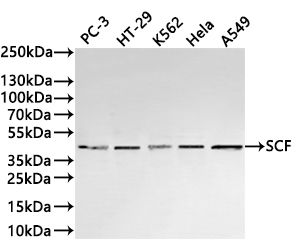
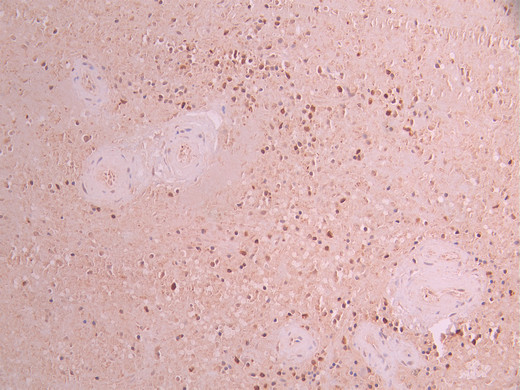
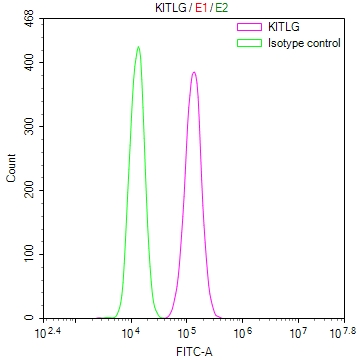
Validation studies demonstrate robust performance across multiple applications. In western blot analysis, the antibody detects KITLG in diverse human cell lines including PC-3, HT-29, K562, HeLa, and A549, with an observed molecular weight of approximately 40 kDa. This apparent size exceeds the predicted 31 kDa, which is consistent with known post-translational glycosylation of the native protein. Immunohistochemistry validation in human spleen tissue confirms utility for examining KITLG expression in tissue contexts, while flow cytometry analysis in 786-O cells demonstrates clear separation from isotype controls, supporting intracellular detection applications.
The unconjugated format provides flexibility for researchers to pair this antibody with their preferred secondary detection systems. Whether investigating hematopoietic stem cell maintenance, mast cell biology, or c-Kit-driven oncogenic pathways, this antibody delivers the specificity and validation data needed for confident experimental design.
There are currently no reviews for this product.





