
Call us
301-363-4651 (Available 9 a.m. to 5 p.m. CST from Monday to Friday)

| Code | CSB-RA013263MA2HU |
| Size | $49.9 |
| Order now | |
| Promotion |

|
| Image |
|
| Have Questions? | Leave a Message or Start an on-line Chat |
| Application | Recommended Dilution |
|---|---|
| ELISA | 1:5000-1:50000 |
LYPD3, also known as C4.4A, is a GPI-anchored protein belonging to the Ly6/PLAUR domain family that has garnered significant attention in cancer research due to its association with metastatic progression. This protein is frequently overexpressed in various carcinomas and has been implicated in tumor cell migration and invasion, making it a compelling target for both basic research and therapeutic development, as evidenced by its connection to the antibody therapeutic lupartumab.
This recombinant monoclonal antibody, clone 11G8, offers researchers the consistency and reliability that comes with sequence-defined production. Unlike traditional hybridoma-derived antibodies, recombinant technology ensures that every lot performs identically to the last, eliminating the variability that can compromise longitudinal studies or multi-site collaborations. The human IgG1 isotype format and affinity-chromatography purification further contribute to its defined performance characteristics.
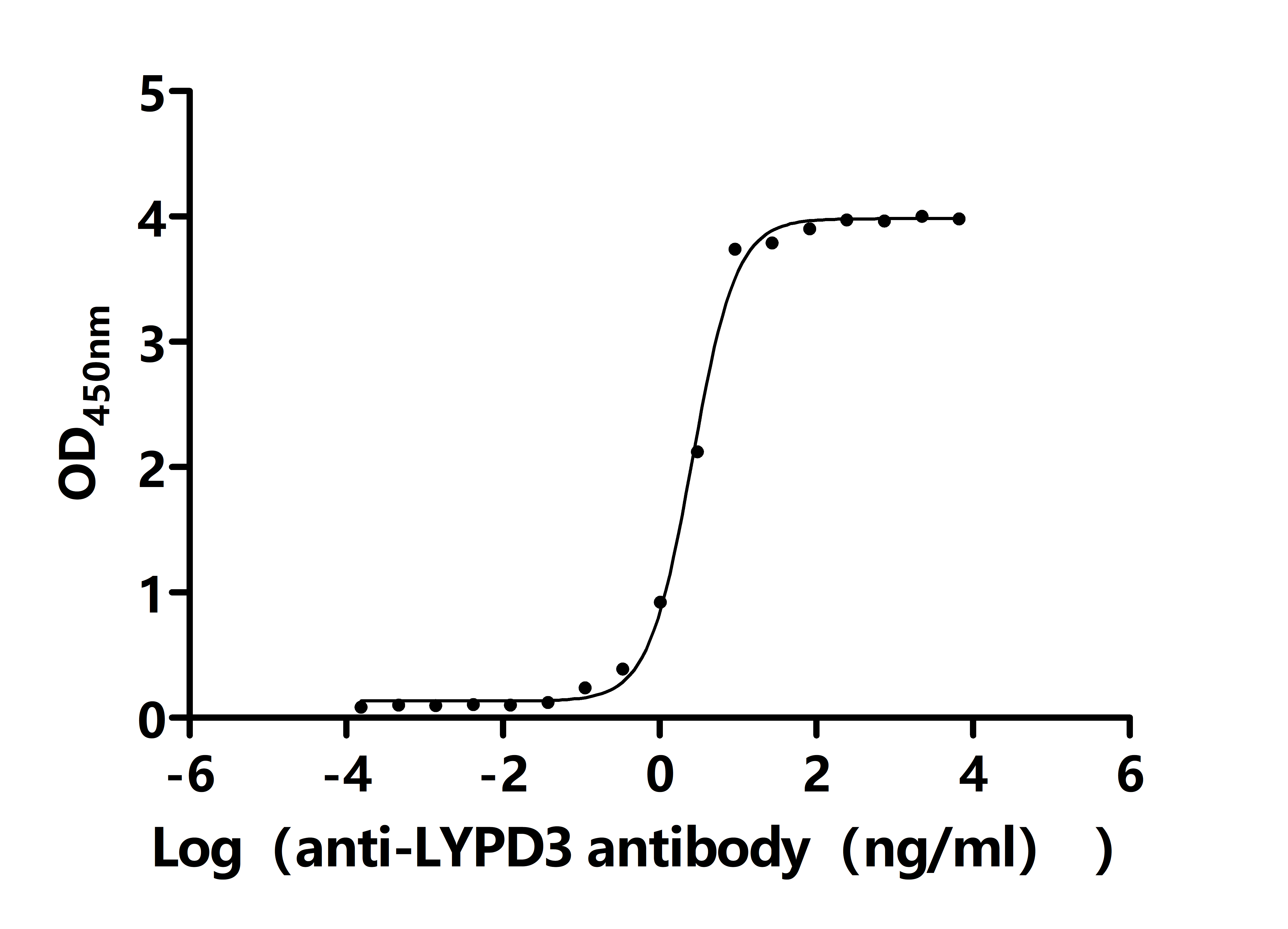
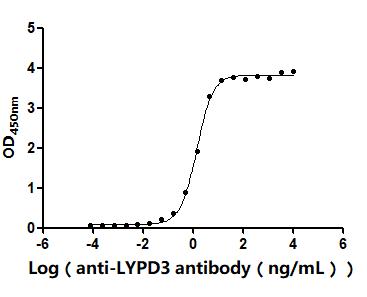
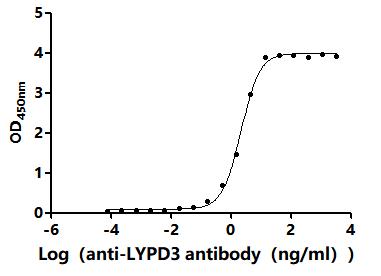
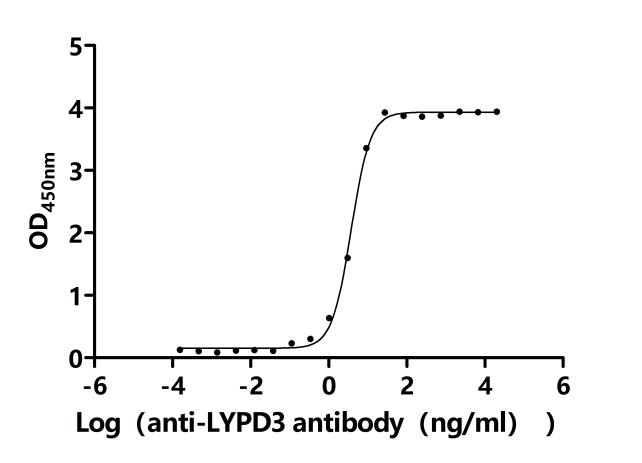
Functional ELISA validation demonstrates robust binding activity across multiple species, providing genuine cross-species reactivity for comparative studies. The antibody shows excellent sensitivity with EC50 values in the low nanogram range across human, mouse, rat, and cynomolgus macaque LYPD3 proteins. Notably, binding to macaque LYPD3 shows particularly high affinity with an EC50 of approximately 0.88-1.69 ng/mL, while human, mouse, and rat orthologs demonstrate EC50 values ranging from approximately 2-4 ng/mL. For ELISA applications, dilutions between 1:5000 and 1:50000 are recommended.
For researchers investigating LYPD3's role in cancer metastasis, tumor progression, or evaluating it as a therapeutic target, this antibody provides a well-characterized tool with documented multi-species utility, supporting translational research workflows from rodent models through primate studies.
There are currently no reviews for this product.





