
Call us
301-363-4651 (Available 9 a.m. to 5 p.m. CST from Monday to Friday)

| Code | CSB-RA586611A0HU |
| Size | US$210 |
| Order now | |
| Image |
|
| Have Questions? | Leave a Message or Start an on-line Chat |
| Application | Recommended Dilution |
|---|---|
| WB | 1:500-1:2000 |
| IHC | 1:50-1:200 |
| FC | 1:50-1:200 |
MCM2 serves as an essential component of the minichromosome maintenance complex, functioning as a critical DNA replication licensing factor that ensures chromosomes replicate only once per cell cycle. This protein's expression patterns make it a valuable proliferation marker, particularly relevant in cancer research where aberrant cell division drives disease progression.
This recombinant monoclonal antibody, clone 7F7, offers the consistency and reliability that demanding research applications require. Produced using recombinant technology with a defined sequence, it eliminates the lot-to-lot variability that can compromise longitudinal studies and reproducibility. The rabbit host and monoclonal nature ensure high specificity for MCM2 detection across your experimental workflows.
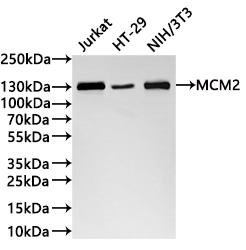
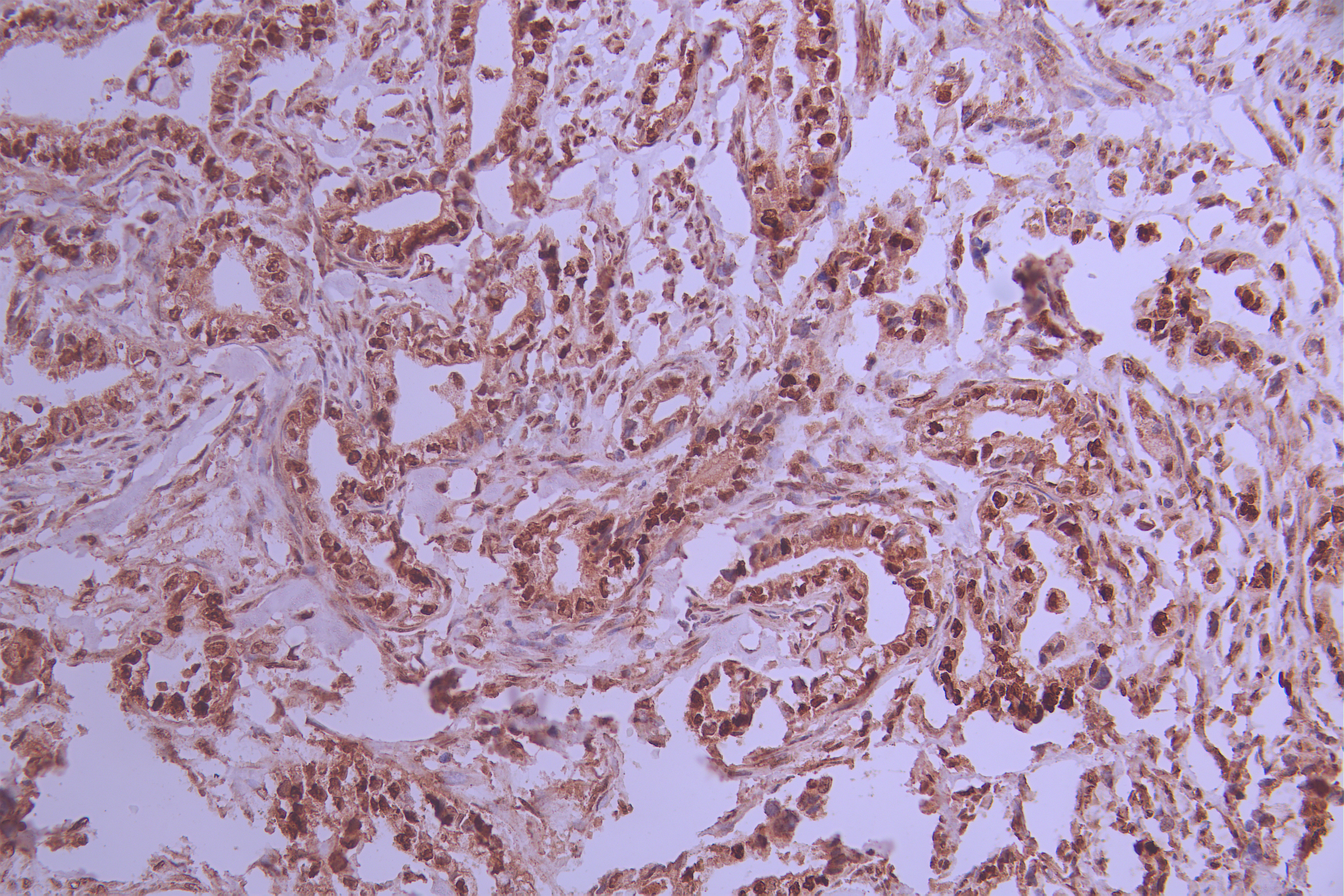
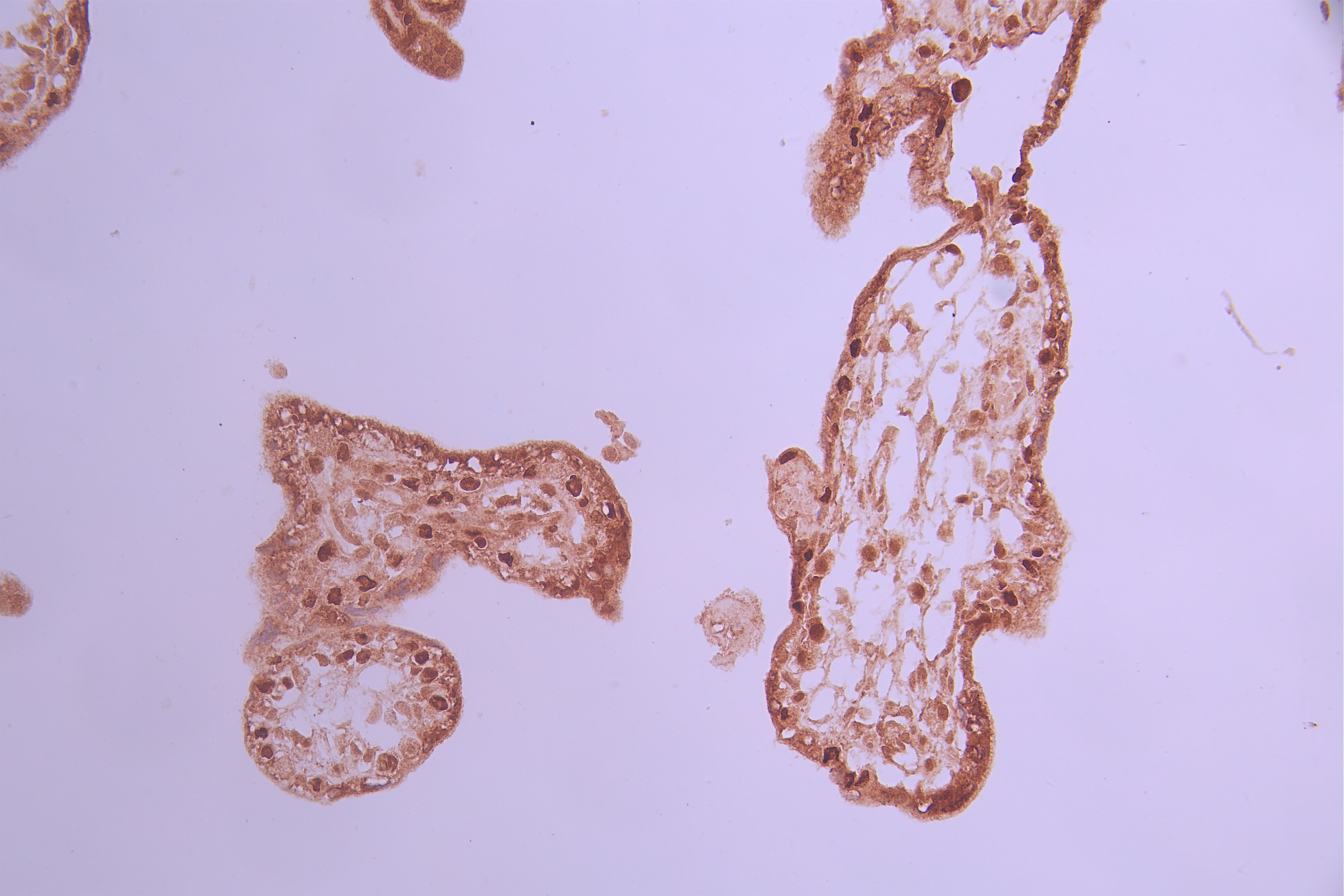
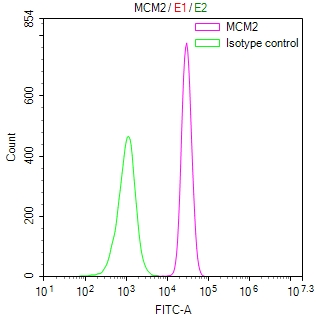
Validation data demonstrates robust performance across multiple platforms. Western blot analysis confirms detection in human cell lines including Jurkat and HT-29, as well as mouse NIH/3T3 cells, with optimal results at dilutions between 1:500 and 1:2000. The observed band at approximately 130 kDa runs higher than the predicted 102 kDa molecular weight, a shift commonly attributed to post-translational modifications such as phosphorylation, which is particularly relevant given MCM2's role in cell cycle regulation. Immunohistochemistry validation in paraffin-embedded human cervical cancer and placenta tissues at 1:100 dilution shows clear nuclear staining patterns consistent with MCM2's function. Flow cytometry analysis using Raji cells further confirms intracellular detection capability, expanding your options for single-cell analysis.
With validated cross-species reactivity for human and mouse samples, this antibody supports comparative studies and diverse model systems. Researchers investigating DNA replication, cell cycle dynamics, or using proliferation markers in oncology studies will find this antibody a dependable tool for their investigations.
There are currently no reviews for this product.





